
Your sales have hit a wall. Wondering why sales stopped increasing even though everything seems the same? Market changes, tough competition, or weak strategies could be pulling your numbers down.
Stay with us to uncover the reasons and smart fixes!
Key Takeaways
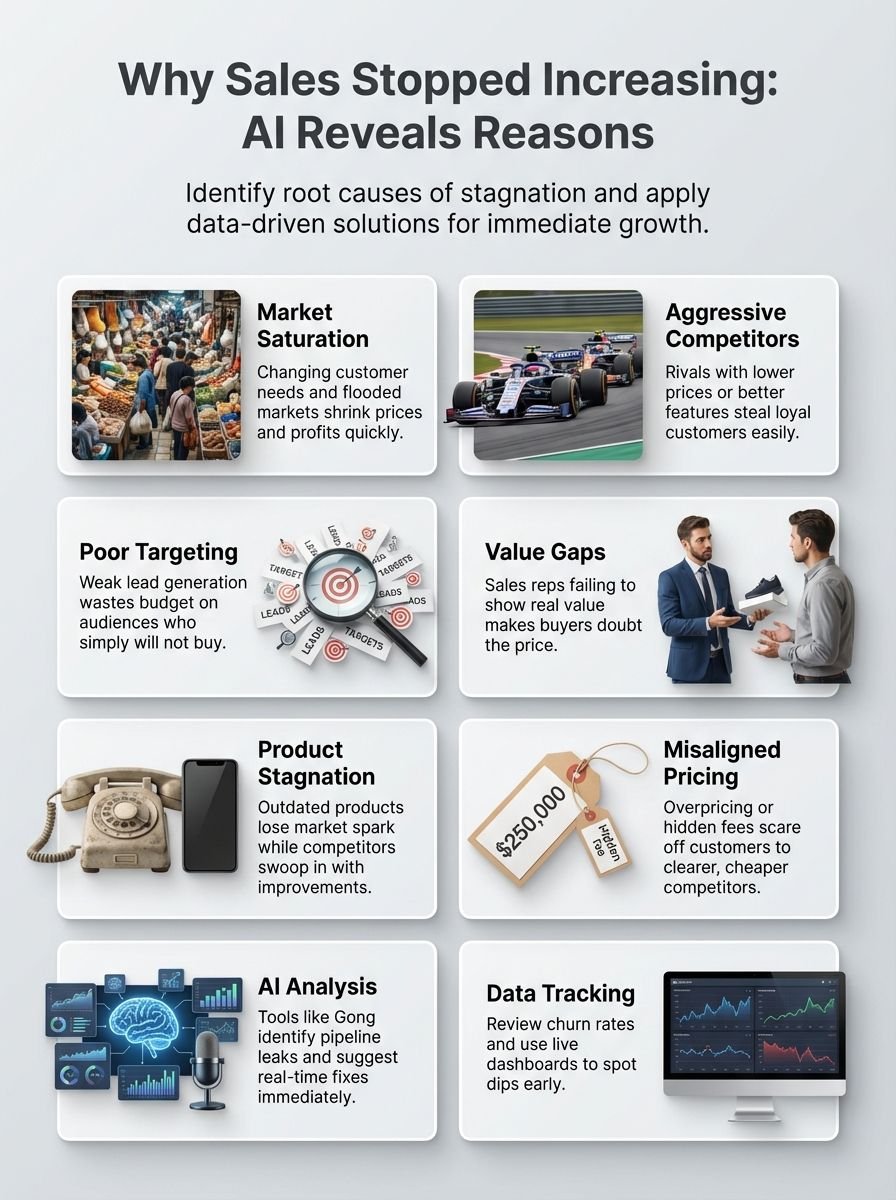
- Market changes and tough competition hurt sales. Evolving customer needs, seasonal trends, and market saturation reduce demand for outdated products.
- Competitors with better prices or features may steal buyers. Failing to track rivals’ moves can shrink your market share quickly.
- Poor strategies like weak lead generation or unclear pricing scare off customers. Sales teams must show value clearly and handle objections well to close deals.
- Internal problems like lack of innovation, high prices, or poor management slow growth. Outdated systems make businesses lose relevance in competitive markets.
- AI tools help find sales slumps fast by analyzing data patterns, fixing pipeline leaks, and improving targeting strategies for better outcomes over time.
Market Shifts and Increased Competition
The marketplace is buzzing with new players, all fighting for the same slice of pie. Customers are shopping around more, looking for better deals or exciting features.
How changing customer needs and market saturation impact sales.
Customer needs always evolve. A product popular last year might lose demand this year. Fashion trends shift fast, leaving unsold inventory behind. Seasonal items like Christmas decorations see sales drop after December.
Economic slowdowns tighten wallets, making buyers delay purchases or seek cheaper options. For businesses relying on B2B deals, summer months may bring slower activity as clients go on vacation.
Market saturation hits hard when competitors flood the space with similar products. If too many sellers fight for the same customers, prices and profits shrink quickly. Buyers shop around for better value or features instead of sticking to one brand out of loyalty.
Products tied to fleeting trends often face a sharp decline once interest fades away completely. Businesses that don’t innovate risk being left in the dust while others grab their market share by offering fresh solutions at appealing price points..
The role of competitors with better pricing and features.
Competitors with lower prices or better features can steal your customers. If they cut costs on bulk orders or offer premium add-ons for free, it’s hard to compete. For example, a SaaS company adjusting its pricing model may quickly attract frustrated users from another platform.
Brands failing to track changes in their competitor’s offerings risk losing loyal clients. A better sales pitch with stronger incentives could push buyers away during a slump. Without adjustments, businesses might see fewer deals closed and shrinking market share over consecutive quarters.
Ineffective Sales and Marketing Strategies
Sometimes, sales strategies miss the mark and fail to connect with buyers. Poor planning or guesswork in campaigns can drain budgets fast.
Weak lead generation and poor audience targeting.
Targeting the wrong audience sinks sales fast. Poor lead generation wastes time, money, and energy on people who won’t buy. Businesses often rely too much on paid ads due to low organic web traffic.
This drains budgets while delivering little return.
Using outdated or generic strategies misses key opportunities. Building scalable outbound tactics with precise B2B data boosts results. Convert marketing leads into Sales Qualified Leads (SQLs) for better outcomes.
A custom lead list can also help teams focus their efforts efficiently.
Sales teams failing to sell value or handle objections effectively.
Sales reps often struggle to show the real value of a product. This makes customers lose interest or doubt if it’s worth their money. Without clear messaging, buyers may see the price but not the benefits.
Poor training only worsens this problem, leaving salespeople unprepared for tough questions.
Handling objections is another weak spot. Customers raise concerns about price, timing, or features during the sales process. If reps can’t address these issues confidently and quickly, deals fall apart.
Regular coaching and better objection-handling tools can help boost sales performance.
Internal Business Challenges
Stuck in the same old ways? A slow sales cycle often signals outdated products or messy internal systems holding you back.
Lack of innovation and product stagnation.
Sales drop when products stop evolving. Customers expect fresh features, better quality, or smarter solutions. A product that doesn’t change loses its spark in the market. For example, tech giants release updates yearly to keep users hooked.
If businesses fail to do this, competitors swoop in with improved versions.
Stagnant growth also ties to outdated offerings. Failing to adapt to industry trends makes products feel irrelevant. Some companies skip testing new ideas due to budget cuts from low sales numbers, creating a cycle of decline.
To break free, listen closely to customer feedback and tweak your offerings before it’s too late!
Misaligned pricing strategies and internal mismanagement.
Overpricing or unclear pricing can scare off customers fast. Buyers might leave if they feel the cost is too high for the value provided. Confusing rates, hidden fees, or poor deals only worsen this problem.
A competitor offering a better price and clear terms easily wins these shoppers over.
Internal mismanagement adds to the chaos. Teams without proper goals lose focus on closing deals. Leaders who fail to set clear directions confuse their staff further. Frequent strategy changes frustrate employees and slow progress.
Without regular performance checks like tracking lead response times or churn rates, companies fall behind quickly in competitive markets.
Understanding Business Growth Stagnation
Sales plateaus are warning signs. They often show cracks in pricing, customer loyalty, or outdated products. A poor product-market fit can strangle growth and reduce revenue over time.
Competitors may swoop in with better features, stealing your market share overnight. If sales pipelines dry up, fewer deals close and cash flow shrinks, leaving little room for improvements or bonuses.
Stagnation shifts focus from growing to just staying afloat. Misaligned pricing strategies can scare off potential buyers while hurting margins at the same time. Team morale drops fast as marketers question campaigns and sales reps lose faith in execution.
Without fast action, this stall drags down supplier payments and hiring budgets too. Identifying these obstacles early makes all the difference between survival and collapse.
Leveraging AI to Uncover the Root Causes of Sales Slumps
AI tools analyze patterns in sales data fast. They help pinpoint where sales are dropping. For example, revenue intelligence platforms like Gong or Clari identify slow-moving deals.
These tools spot where your pipeline leaks and suggest fixes. Real-time insights allow teams to act quickly before losses grow further. AI also enriches customer relationship management (CRM) systems, giving better lead targeting and engagement strategies.
AI-driven solutions audit sales funnels to find weak spots. Tools such as SalesCaptain generate cold email templates or improve subject lines for outreach campaigns. These small tweaks can reduce long downtimes by boosting responses.
AI programs also track changes in competitor pricing and market trends, helping adjust strategies early on. With this insight, companies justify their value proposition more effectively during negotiations or upselling efforts with customers.
Data-Driven Solutions to Overcome Sales Declines
Sales slumps happen, but using data can help fix them fast. Numbers reveal patterns that show where your business struggles.
- Analyze customer retention. Review churn rates from the past few months to find why customers leave. Direct calls or surveys can uncover issues with service or delivery.
- Track every sale and lead. Set up live dashboards with tools like Salesforce to notice dips early. This creates real-time visibility into performance trends.
- Adjust pricing strategies often. Experiment with tiered models, discounts, or freemium options to boost turnover without diluting the brand’s value.
- Refresh product offerings. Add small updates like faster shipping, better packaging, or extra guarantees to attract new buyers and retain current ones.
- Optimize follow-up processes post-purchase. Connect with customers through calls or emails to ensure satisfaction and encourage repeat sales.
- Use analytics to forecast demand accurately. Rely on past data trends to predict high-sales periods and avoid oversupply during slow seasons.
- Train your sales team regularly. Offer workshops to improve their pitch skills and prepare them for handling tough objections during long sales cycles.
- Incentivize referrals strategically. Offer perks for customers who refer others; this breeds loyalty while cutting time-consuming marketing efforts.
- Evaluate all marketing campaigns closely for weak links in lead generation methods or audience targeting gaps, then implement sharper strategies quickly!
- Collaborate across teams seamlessly! Align goals between your marketing team and salesforce directly so both work toward closing deals faster together!
Conclusion
Finding out why sales stopped climbing can feel like solving a tough puzzle. AI offers the tools to crack it, turning guesses into clear answers. With data and insights, you can spot weak points fast, adapt your approach, and make smarter decisions.
Don’t wait for the slump to deepen; act now to boost performance and close more deals.
FAQs
1. Why are my sales slowing down?
Sales can slow due to poor customer experience, pricing issues, or stronger competition. It might also be tied to brand dilution or a lack of follow-up with leads.
2. How can AI help diagnose why my sales dropped?
AI analyzes data like forecasts, competitor listings, and customer feedback. It identifies patterns that may reduce sales and highlights areas needing improvement.
3. Should I adjust my pricing if sales are low?
Yes, adjusting your pricing could help stay competitive or attract wholesale buyers. But first, review market trends and pressure from competitors before making changes.
4. What role does marketing play in addressing a slump?
New marketing strategies can boost performance by improving how you deliver your message to customers. A fresh approach often helps close deals faster.
5. Do I need to hire more people when sales drop?
Not always! First, evaluate the hiring process and current team performance. Investing in training for your existing staff might maximize results without adding costs upfront.
