Struggling to afford costly equipment for your business? Equipment finance agreements (EFAs) might be the solution you need. They help businesses buy essential tools by spreading payments over time instead of upfront costs.
Stick around, and we’ll break down what is equipment finance agreement in simple terms!
Key Takeaways
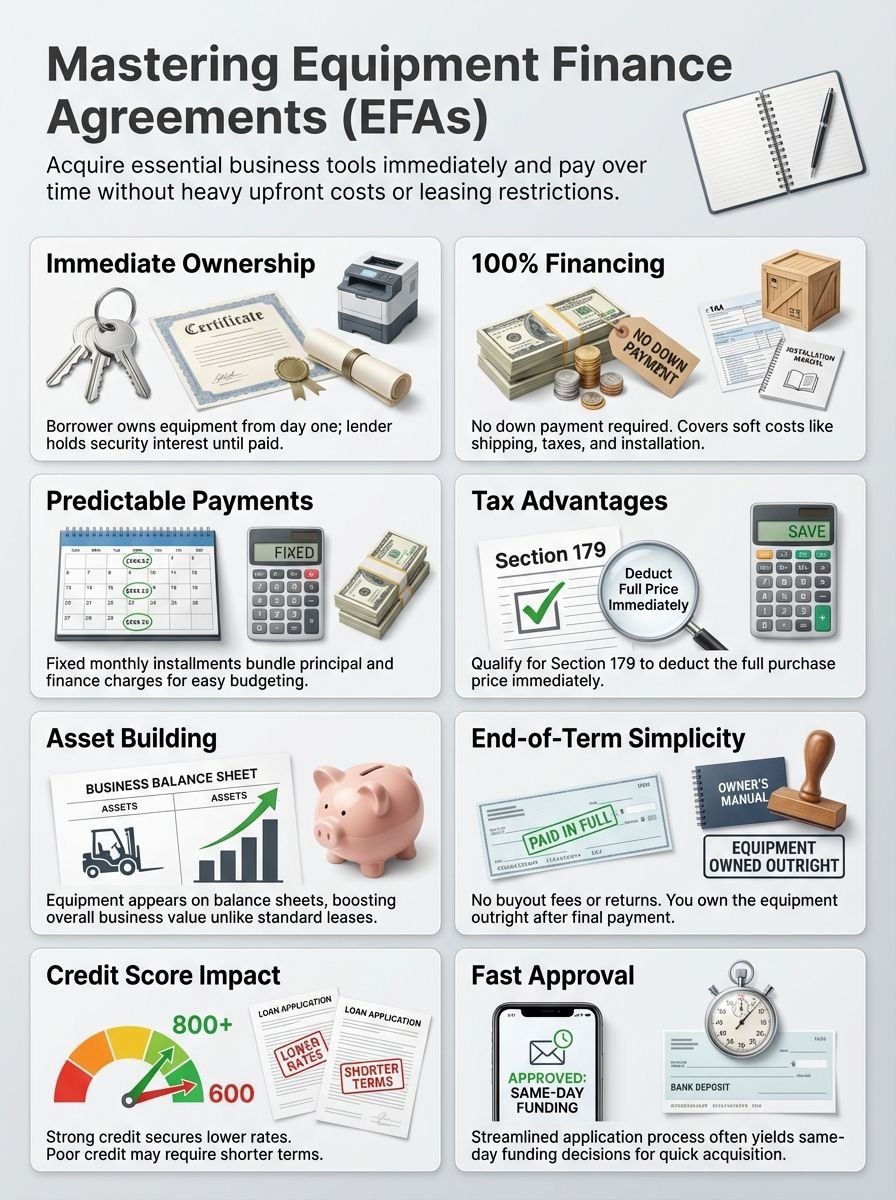
- An Equipment Finance Agreement (EFA) is a loan used to buy business equipment, giving ownership from day one while spreading payments over time.
- It often provides 100% financing, covering costs like shipping and installation with no down payment required.
- Unlike leases, EFAs offer fixed monthly payments and full ownership after the final payment, with the financed equipment serving as collateral.
- Section 179 tax deductions allow businesses to write off the total cost of qualifying equipment in one year, boosting cash flow.
- EFAs help businesses acquire essential tools quickly without upfront strain on resources or extra collateral needs.
What Is an Equipment Finance Agreement (EFA)?
An Equipment Finance Agreement (EFA) is a kind of loan used to buy business equipment. It blends features from loans and leases into one contract. With an EFA, the borrower owns the equipment from day one.
The lender holds a security interest in it until the debt is fully paid off.
EFAs often offer 100% financing with no down payment required. This means even extra costs, like shipping or installation, can be included in the total amount borrowed. The purchased equipment appears as an asset on your company’s balance sheet, boosting your business’s value.
Unlike leases where ownership stays with the lessor, EFAs transfer full ownership rights immediately to you once approved.
An EFA gives you control over essential tools while spreading out costs.
How Does an EFA Work?
An Equipment Finance Agreement (EFA) helps businesses buy equipment without paying the full cost upfront. The financing partner covers 100 percent of the price, and the borrower agrees to make fixed monthly payments over a set term.
These payments include both the principal and finance charges. Unlike traditional loans, EFAs don’t show an interest rate separately; everything is bundled into equal payments. For example, a 36-month EFA means you’ll pay the same amount every month for three years.
The financed equipment itself secures the agreement, so no extra collateral is usually required. Borrowers must complete all agreed payments, even if they decide to pay off early; there’s no discount on remaining finance charges.
A 60-month contract means all 60 payments will be due regardless of timing. Many businesses prefer this option because it’s simple and offers predictable expenses while acquiring necessary or new tools for their operations like construction equipment or vehicles.
Key Differences Between an EFA and a Lease Agreement
When business owners need equipment, they often weigh their options between an Equipment Finance Agreement (EFA) and a lease agreement. Both serve the purpose of acquiring equipment while spreading costs, but they operate very differently. Below is a breakdown of their differences.
| Feature | Equipment Finance Agreement (EFA) | Lease Agreement |
|---|---|---|
| Ownership | Ownership transfers to the borrower immediately. The equipment is yours after the last payment. | The lessor owns the equipment. Borrowers may purchase it at the end for a fee, return it, or lease new equipment. |
| Liability | The borrower assumes full responsibility for maintenance and insurance from day one. | The lessor handles liability for equipment unless limited by the Graves Amendment (49 U.S.C. 30106). |
| Payment Structure | Fixed payments over a set term. No surprises after the final installment. | Payments may continue if the lease is extended, or additional fees might arise at the end. |
| End of Term | No further action needed; you own the equipment outright after completing payments. | Options include returning the equipment, purchasing it for a residual value, or starting a new lease. |
| Tax Benefits | May qualify for Section 179 deductions, allowing accelerated depreciation. | Tax benefits depend on the lease type, with only specific leases offering depreciation deductions. |
This table highlights the key distinctions to help borrowers decide what works best for their business.https://www.youtube.com/watch?v=WstN-ax6Cnw
Benefits of Choosing an Equipment Finance Agreement
An Equipment Finance Agreement helps businesses avoid hefty upfront costs. Instead of paying the full cost of the equipment, you spread payments over time. This keeps cash flow steady and allows funds for other business needs.
Many lenders offer flexible terms, so companies can match payments with their budget.
EFA-financed equipment serves as collateral. This can help secure other loans if needed down the road. EFAs also let businesses upgrade to new equipment easily, reducing risks from outdated or broken tools.
It’s a smart way to invest in long-term growth without draining resources upfront.
Tax Advantages of Equipment Financing Agreements
An EFA can help lower your tax bill through special deductions. Smart use of these perks means keeping more money in your pocket.
Accelerated Deductions with Section 179
Section 179 allows businesses to deduct the full cost of qualifying equipment right away. The annual deduction limit is $1 million, with a $2.5 million cap on total equipment purchases.
This applies to new or used equipment, making it easier for small businesses to invest in what they need.
For example, if you buy machinery for $50,000, you can write off the entire amount that year instead of spreading it over several years. This boosts cash flow and reduces tax bills quickly.
Companies using forms of financing like EFAs may also benefit from this tax rule, as long as the purchased item qualifies under Section 179 guidelines.
Factors to Consider Before Signing an EFA
Check your credit score before signing the EFA. A healthy credit score can get you better terms and lower interest rates, making payments more manageable. Businesses with poor scores might face higher costs or stricter conditions.
Think about the type of equipment being financed. Durable items like trucks may make sense for long terms, while tech that quickly becomes outdated might not. Consider 100% financing if cash is tight, but if a down payment is possible, it could mean reduced payments later on.
Talk to a tax advisor about potential deductions under Section 179 for added savings during tax season.
Steps to Secure an Equipment Finance Agreement
Getting an Equipment Finance Agreement (EFA) doesn’t need to be complicated. Follow these steps to secure the financing solution you need.
- Identify the Equipment
Decide what essential equipment your business needs. Ensure it fits your goals and is worth the investment. - Find a Trusted Financing Partner
Look for independent financing experts who specialize in EFAs. Many lenders offer flexible equipment financing options, so choose one that understands your needs. - Check Your Credit Score and Financials
Lenders will review creditworthiness before approving an EFA. Gather financial documents, like accounts receivable and balance sheets, to show stability. - Submit Your Application
Visit the lender’s website or office to apply. Usually, this involves filling out forms with details on your business, equipment they need, and loan preferences. - Discuss Terms with Experts
Talk with their team about terms and interest rates for your specific situation. They’ll explain repayment plans, collateral requirements, and other key factors. - Get Approval Fast
Some companies approve EFAs quickly—Team Financial Group offers same-day approvals! This allows you to acquire necessary equipment faster. - Review the Security Agreement
Understand if there’s a security interest in the equipment or other collateral attached before signing anything binding. - Sign and Start Using Your Equipment
Once approved, finalize the agreement by signing it! Afterward, use the financed equipment to help grow your business effectively during the agreed lease term or loan period without delays!
Conclusion
An Equipment Finance Agreement can be a smart way to get the equipment your business needs. It helps you own important tools while spreading payments over time. EFAs offer flexible terms, tax perks like Section 179, and no extra collateral requirements.
They simplify the process of acquiring equipment without draining cash flow. With careful planning, an EFA could be your ticket to growth and long-term success.
FAQs
1. What is an Equipment Finance Agreement (EFA)?
An EFA is a form of financing used to acquire essential equipment for businesses. It allows companies to finance equipment without purchasing it outright, spreading the cost over time with principal and interest payments.
2. How does an EFA differ from leasing equipment?
With an EFA, you gain ownership of the equipment at the end of the financing term after completing all payments. In contrast, a lease often gives you the option to return or purchase the equipment at its residual value.
3. What are some benefits of using an EFA?
EFAs provide 100 percent financing for necessary business tools, offer potential tax deductions like Section 179 depreciation, and allow flexibility in acquiring or upgrading capital equipment.
4. Can outdated equipment be replaced through EFAs?
Yes, many lenders offer flexible financing options that help businesses upgrade outdated machinery while keeping operations smooth and efficient.
5. Is collateral required for an Equipment Finance Agreement?
Yes, typically the financed piece of equipment itself serves as collateral for the loan, reducing additional risks for creditors like banks.
6. Are there any tax advantages when using EFAs?
Yes! Businesses can benefit from tax deductions such as Section 179 depreciation deduction on qualifying assets during their use under this agreement type according to U.S. regulations on financial accounting liabilities related directly toward operational needs!
