
What is an Offer Subject to Finance Clause?
An offer subject to finance clause is a term in a real estate contract. It allows the buyer to back out if they cannot secure a home loan within a set time, like 14 or 21 days. This protects buyers from losing their deposit if financing falls through.
This type of clause isn’t standard and must be agreed upon by the seller before signing the contract. Homes sold at auctions in Australia usually don’t include this clause since contracts are typically unconditional.
For regular property sales, it gives homebuyers breathing room to confirm funding before committing fully.
How Does a Subject to Finance Clause Work?
This clause lets buyers make an offer on a home, but only complete the sale if their loan gets approved. It sets rules for timing and conditions while giving peace of mind to both buyer and seller.
Key terms and conditions specified in the clause.
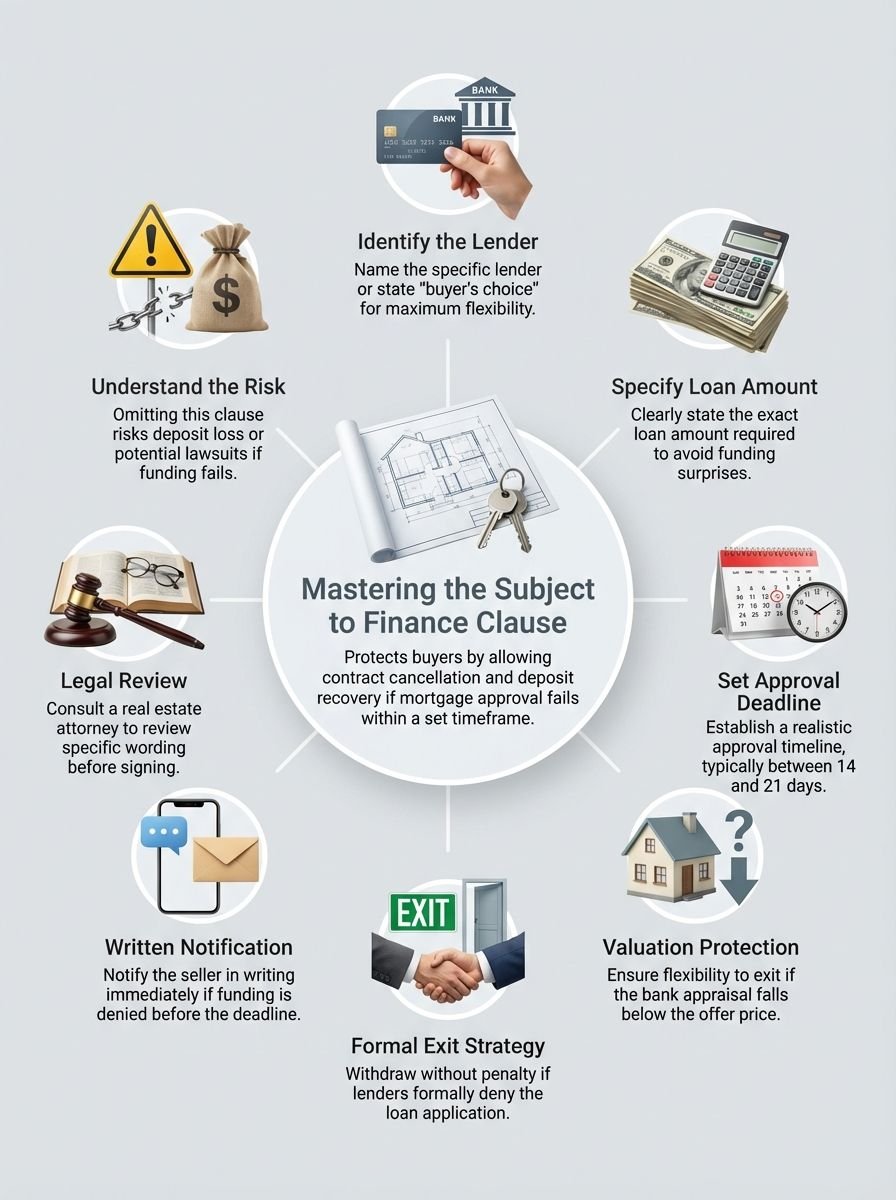
A subject to finance clause protects buyers during a property purchase. It outlines key details about the loan needed to complete the sale.
- Lender Name
The clause should name the lender providing the mortgage. If undecided, it can state “buyer’s choice.” - Loan Amount
The exact loan amount required must appear in the clause to ensure clarity. - Approval Deadline
The contract must specify how many days you have to secure finance approval, commonly 7, 14, or 21 days. - Interest Rate Terms
Desired interest rates and repayment terms may also be included to align with your financial situation. - Property Valuation Protection
A valuation condition ensures flexibility if the bank appraises the property lower than expected. - Exit Clause for Rejected Loan
It allows buyers to withdraw without penalty if lenders deny their loan application.
Every term must be clear and agreed upon by both buyer and seller before signing a binding contract of sale.
Timeframe for securing loan approval.
Buyers usually have 7, 14, or 21 days to secure loan approval. This timeframe must be clearly stated in the sale contract. Check if these are calendar or business days to avoid confusion and delays.
If you can’t get approval within the deadline, ask for an extension in writing right away. Failing to meet this timeline without notifying the agent can lead to losing your deposit or legal trouble.
Sellers also appreciate updates if there’s a delay, as it keeps negotiations smooth.
Why is a Subject to Finance Clause Important for Buyers?
This clause protects buyers from huge financial risks. If your loan isn’t approved, you won’t lose your deposit or face legal action for failing to proceed with the purchase. Without it, a buyer might end up sued for the difference between the agreed sale price and resale value if they can’t complete the deal.
It offers peace of mind during a major transaction like buying a home. Mortgage approvals can take 14 to 21 days, and this clause gives buyers enough time to secure financing before making the contract binding.
Real estate agents often push for unconditional contracts, but consulting a solicitor or conveyancer ensures you are fully protected.
What Happens if Finance Approval is Secured?
Finance approval locks in the deal. The contract moves forward and becomes unconditional. Buyers must fulfill all agreed steps in their finance application as stated in the contract.
Once approved, buyers are legally required to complete the property purchase. Sellers can expect settlement without delays since funding is secured for the home buying process. There’s no backing out unless both parties renegotiate terms or legal exceptions apply.
What Happens if Finance Approval is Denied?
The buyer must notify the seller in writing if their loan application is rejected. This notice has to be sent before the deadline mentioned in the contract. Missing this timeframe could lead to losing your deposit or being forced to proceed with the sale.
Proof of loan refusal might be required by the seller or real estate agent. A simple change of heart isn’t a valid reason for canceling under a “subject to finance” clause. Buyers often have two days after denial to inform all parties involved, ensuring they secure a clean exit from the agreement without financial penalties.
Risks of Not Including a Subject to Finance Clause.
Failing to include a finance clause puts buyers in dangerous territory. If the loan for the property is denied, they must still complete the purchase or face serious consequences. They could lose their deposit if unable to pay.
Worse, sellers might sue them for any difference between the agreed price and a lower resale price.
Banks may also refuse funding due to low valuations. Without this clause, buyers can’t back out without penalty. Many assume pre-approval means full approval; it doesn’t. Ignoring a finance condition leaves little room for errors or changes in financial situations.
Desperation leads some to find costly loans elsewhere just to avoid defaulting on contracts they cannot afford.
Understanding Equipment Financing Agreements in Relation to Subject to Finance Clauses
Equipment financing agreements often include conditional approval terms. These terms are similar to the “subject to finance” clauses in property contracts. For example, a business might need a loan to buy expensive machinery.
The agreement depends on getting lender approval first. If funding does not come through, the deal may collapse without penalties for the buyer. Lenders review financial details and borrower liabilities before approving loans, whether for equipment or property.
Approval can also be delayed due to regulation or policy changes. Government rules and bank policies often shape how lenders approve applications. A change in interest rates could impact both home buyers and businesses seeking equipment loans.
Mistakes or incomplete info in an application may cause further delays or denials too. Borrowers should carefully check their financial situation before signing any contract tied to conditional funding clauses like these.
Tips for Using a Subject to Finance Clause Effectively.
A subject to finance clause can protect you when buying a house. To make it work in your favor, follow these practical tips.
- Specify the lender’s name in the clause. This avoids confusion later and keeps things clear for both parties.
- State the exact loan amount and terms required. It ensures no surprises if approval falls short.
- Set a realistic deadline for loan approval. A common timeframe is 14-21 days, but discuss this with your lender.
- Include a condition for property valuation. If the bank values the home lower than expected, you’re protected.
- Always get legal advice before signing contracts. Consult a solicitor or conveyancer to check the clause’s wording.
- Communicate delays in writing if needed more time for approval arises. Sellers may allow an extension rather than canceling the deal.
- Avoid relying on advice from real estate agents alone; they work for sellers, not buyers.
- Review all financial details closely before making your offer subject to finance; this helps avoid any future liabilities.
- Check if auctions apply since auction sales are usually unconditional in Australia without finance clauses allowed.
- Speak with home loan experts and secure pre-approval beforehand; this shows sellers you are serious about funding plans while giving confidence during negotiations!
Conclusion.
An offer subject to finance clause is a safety net for buyers. It gives you time to secure a loan without risking your deposit. If the loan falls through, you can walk away from the deal.
This clause keeps your financial health in check when buying property. Always review contracts carefully and seek advice before signing.
FAQs
1. What does an offer subject to finance clause mean?
An offer subject to finance means the purchase depends on you securing a loan or mortgage within a set time. If your application for finance is denied, you can back out of the deal without legal penalties.
2. Why would buyers use an offer subject to finance?
Buyers use this clause when they need time to confirm their financial situation, secure pre-approval from creditors, or finalize underwriting with lenders before committing fully.
3. Is every real estate transaction in Australia sold with this clause?
No, properties sold at auction in Australia are usually unconditional and do not include this clause. It’s more common in private sales where buyers and sellers negotiate terms.
4. Does using this clause make my offer less appealing to sellers?
In competitive markets, offers without a finance condition may seem more attractive because they come with fewer risks for the seller. However, some sellers are happy to make the sale even if it includes this condition.
5. Can I simply change my mind after making an offer subject to finance?
No, you cannot walk away just because you changed your mind about buying the property. This clause only applies if your financing falls through within the specified period.
6. What should I consider before signing such a contract?
Review all terms carefully and speak to your solicitor or financial advisor first. Make sure it reflects your needs and financial situation so that you’re protected if things don’t go as planned during procurement of funds or refinancing efforts!
