
Buying equipment for your business can feel tricky, right? Equipment financing helps by offering loans or leases to get what you need. This guide explains what are typical terms for equipment financing and how they work.
Keep reading to make smarter choices!
Key Takeaways
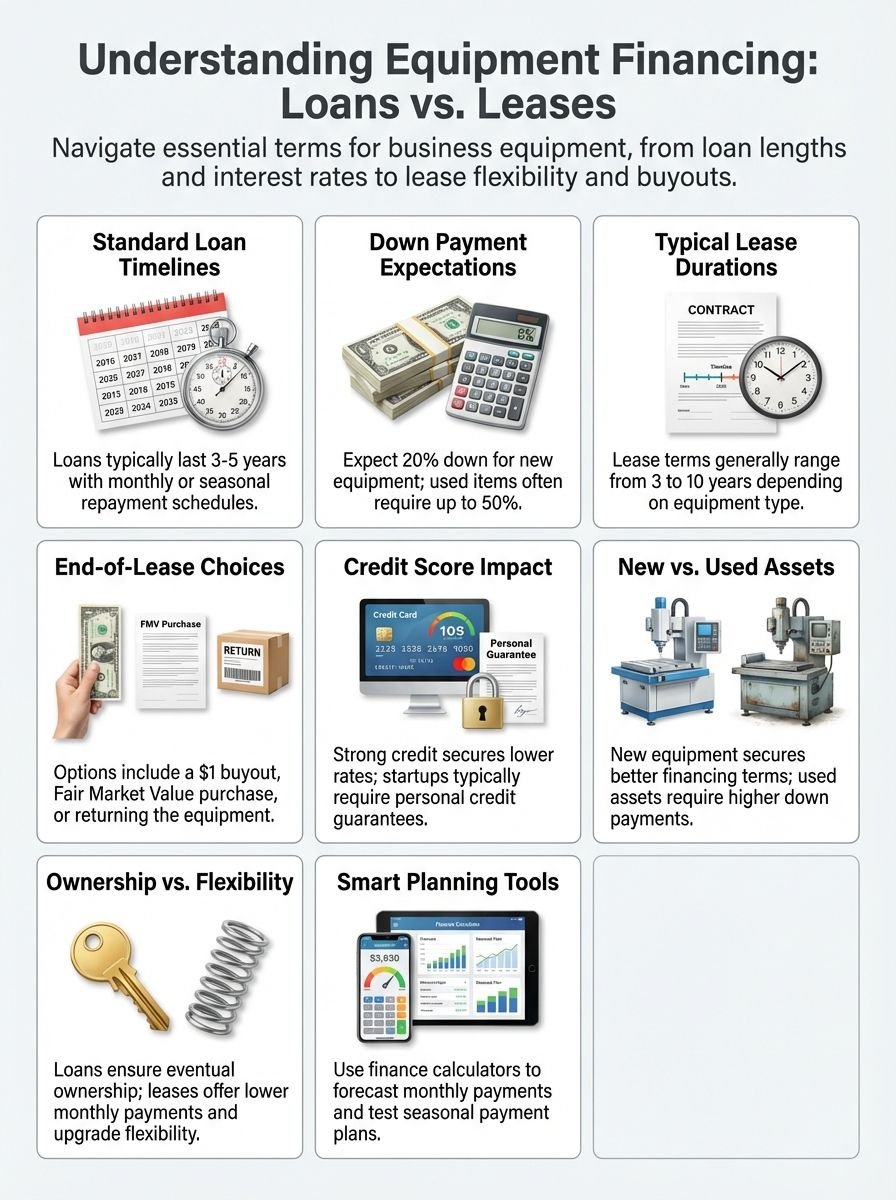
- Loan terms usually last 3-5 years with monthly payments. Down payments are about 20% for new equipment and 30%-50% for used items, depending on condition.
- Lease terms can range from 3 to 10 years. Options at lease end include buying, extending, or returning the equipment. Some leases allow seasonal payment adjustments.
- Interest rates can be fixed or variable and depend on market trends and credit scores. Higher credit scores often mean lower interest rates and better terms.
- New equipment gets better financing options than used items due to lower risks for lenders. Used equipment often has stricter requirements like higher upfront costs or more documentation.
- Finance calculators help plan costs by showing payment schedules, down payment needs, and total spending over time before choosing between loans or leases!
Typical Loan Terms for Equipment Financing
When financing equipment, loan terms can vary based on factors like repayment schedules and interest costs. The right plan keeps your cash flow steady while helping you secure necessary tools for business growth.
Loan lengths and repayment periods
Loan terms for equipment financing usually last from a few months to several years. Heavy equipment loans often run 3 to 5 years. Lenders structure repayment with monthly payments, like 48 payments over four years.
Some borrowers might get custom schedules, such as quarterly or semi-annual plans.
Repayment periods align with how long the equipment stays useful. For example, a loan on construction machinery reflects its working lifespan. Borrower credit and equipment type also impact term length approval.
Interest rates and down payment requirements
Interest rates for equipment loans are tied to market trends. Rates can be fixed or variable, depending on the agreement. Recently, these rates increased sharply due to market changes.
Down payment amounts depend on if the equipment is new or used. For new general-purpose equipment, down payments usually start at 20%. Lenders often finance up to 80% of either the cost or market value, whichever is less.
Used equipment requires more upfront money. Borrowers typically pay between 30% and 50% as a down payment. The financing covers around 70% of orderly liquidation value or about half of net book value for such items.
Some lenders also charge documentation fees when processing these loans. Payments must match a borrower’s ability to handle their monthly debt load comfortably without added stress to their finances.
Equipment Leasing Terms
Leasing often offers flexibility that loans can’t match. The terms can vary depending on the type of equipment and your needs.
Lease durations and buyout options
Lease terms usually last 3, 7, or 10 years. The length depends on the type of equipment and the borrower’s credit score. Some contracts allow seasonal businesses to skip payments during slower months.
Master lease agreements can bundle multiple items under one contract while offering separate schedules for each.
At lease end, businesses choose to buy, extend, or return the equipment. Buyout options include a $1 purchase deal, paying fair market value (FMV), or covering a set percentage like 10% of the equipment’s price.
Early purchase options (EPO) let companies buy before leases mature. Some leases cap FMV prices to prevent costly surprises. If returning equipment, fees might apply.
Lease structures give flexibility but require careful planning.
Factors Influencing Equipment Financing Terms
The terms for financing depend on many factors, like the type and condition of the equipment. Keep reading to learn what shapes these deals!
Equipment type, borrower credit, and lender policies
New equipment often gets better terms than used equipment. Lenders see used assets as riskier. This means higher down payments or stricter documentation for older pieces. For example, financing a new tractor may require less upfront cash compared to purchasing a ten-year-old one.
Credit score plays a big role too. Businesses with good credit can expect lower interest rates and friendlier terms. Small companies or startups might need the owner’s personal credit report if the business has no history yet.
Some lenders also request financial records for three years from businesses or two years from guarantors for loans over certain amounts.
Lender policies vary by company but often include cash flow checks and EBITDA reviews to assess payment ability. Financing large items like manufacturing machines could ask for extra collateral, guarantees, or approvals through corporate resolutions.
Many lenders even work with vendors directly to make processing faster and simpler.
Comparing Loan vs. Lease Terms for Equipment
Loans require a down payment, typically 20% for new equipment or up to 50% for used gear. Leases often skip this step. Loan payments may be higher monthly but grant full ownership after the last payment.
Lease payments are lower yet don’t transfer ownership unless you buy the equipment at the term’s end.
Leases allow upgrades during or after terms, avoiding outdated tools. On the flip side, loans provide fixed repayment schedules with predictable costs if using a fixed interest rate.
Some leases include options like fair market value purchases or set buyout prices at term-end, creating flexibility not seen in loans.
Tips for Securing Favorable Financing Terms
Work on your credit, compare options, and use tools like finance calculators to snag the best deal.
Using Equipment Finance Calculators for Better Planning
Equipment finance calculators help businesses forecast monthly payments. Enter the loan amount, interest rate, and term length to see costs. Adjust down payment options like 20% or 30% to find what fits your budget best.
For leases, compare total outlays with or without buyout options.
Plan for cash flow by testing seasonal payment structures such as step-up or skip-payment plans. Input equipment lifespan to pick the right financing term and avoid paying too long for outdated machinery.
Include soft costs like installation if covered in the deal to get a full picture of expenses before committing.
Conclusion
Understanding equipment financing terms can make a big difference for your business. Loans and leases each have their own pros and cons, depending on what you need. Whether you’re buying trucks or leasing software, the right option helps you manage cash flow and grow smartly.
Focus on what fits your goals, budget, and future plans. With good planning, getting the equipment you need won’t feel like pulling teeth!
FAQs
1. What is equipment financing, and how does it work?
Equipment financing allows businesses to borrow money or lease necessary equipment like trucks, software, or medical tools. You either repay a loan in installments or pay for the use of leased equipment over a set term.
2. What are common terms you can expect with equipment loans?
Terms vary based on the lender but often include repayment periods from 12 to 72 months, interest rates tied to your credit history, and collateral requirements based on the value of the equipment.
3. Can used equipment be financed?
Yes, both new and used equipment can be financed. However, lenders may assess the age and market value of the used piece before approving funding.
4. How do leasing and financing differ for business equipment?
Leasing lets you use the equipment without owning it during the lease term; at its end, you might purchase it outright or return it. Financing involves borrowing funds to buy and own the asset immediately while repaying over time.
5. What factors do lenders consider when approving an application?
Lenders look at your credit score, income stability, loan-to-value ratio of collateral provided (like vehicles), revenue trends in your business sector, and whether you’re purchasing industry-specific assets like technology or transport tools.
6. Are there tax benefits with commercial equipment financing?
Yes! Equipment purchases may qualify for tax deductions under certain conditions like depreciation expenses; consult an accountant about specific rules that apply to your situation.
