
Does it feel like your business is stuck, no matter how hard you work? Small business growth bottlenecks can slow progress and drain energy. These obstacles often come from inefficiencies or outdated processes.
Stick around, and we’ll show you how to fix them fast.
Key Takeaways
- Workflow inefficiencies and manual tasks cause 58% of bottlenecks. Automation tools like Zapier or Notion can save time and improve productivity.
- Poor delegation slows teams. Assigning clear roles, setting goals in meetings, and using leadership tools like KPIs improve accountability.
- Outdated systems create delays. Affordable modern tools like Databox integrate data from multiple platforms to enhance efficiency.
- Automating onboarding with systems like Tally boosts client retention while reducing wasted hours during growth stages.
- Free trial solutions, outsourcing, and cost-effective platforms help small businesses upgrade processes without big budgets.
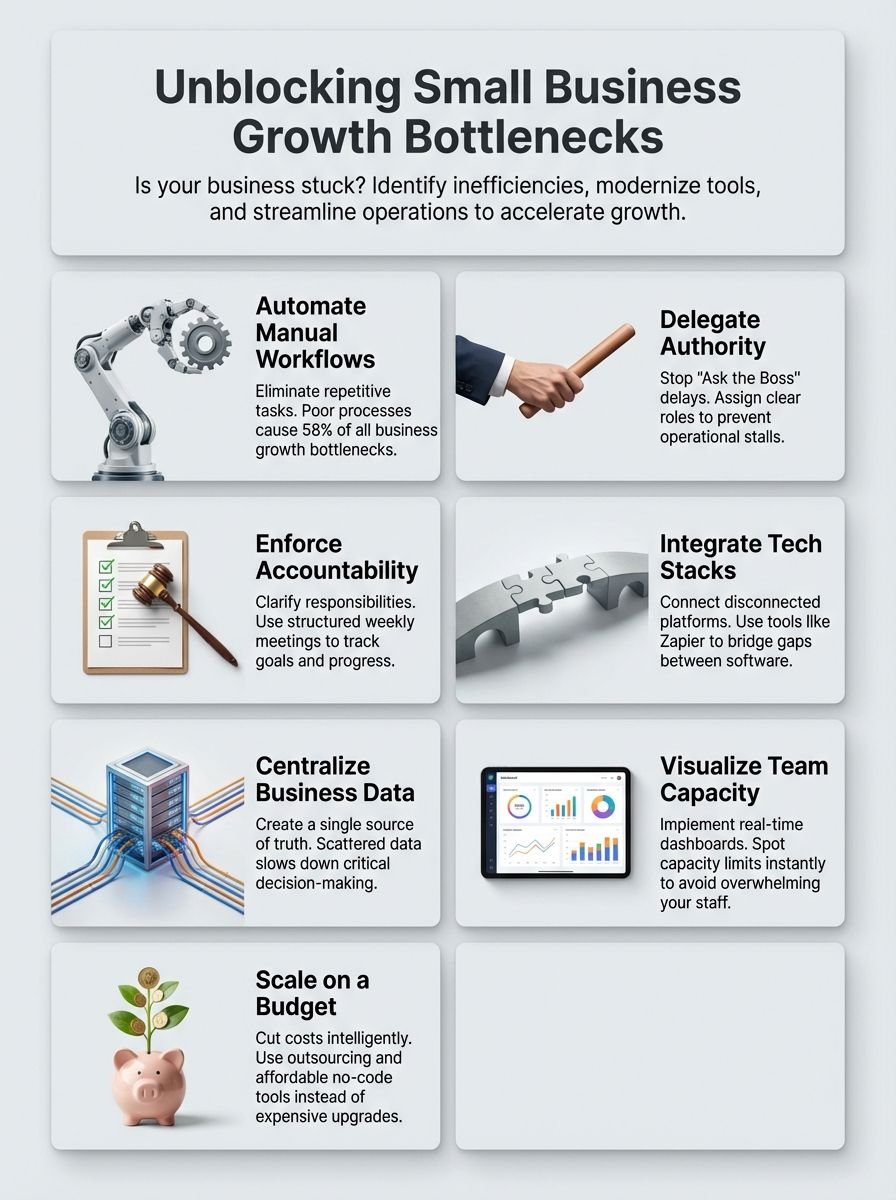
Identifying Common Business Growth Bottlenecks
Growth can hit a wall when businesses face unseen issues in their daily operations. Small problems, like slow workflows or unclear roles, can snowball into bigger obstacles.
Workflow inefficiencies and manual processes
Inefficiencies in workflows can stall business growth fast. About 58% of bottlenecks come from poor processes or manual tasks. Repetitive work, like manually updating spreadsheets, burns time and energy.
Scattered data, with no clear “source of truth,” slows decision-making too. Without standard operating procedures (SOPs), employees spend more time trying to figure out what to do next instead of being productive.
Manual onboarding processes also waste hours as a business grows. If it takes too long, new clients lose interest quickly, affecting revenue streams. Too much custom work creates chaos in your workflow pipeline and reduces scalability for small businesses looking to grow sales.
Dashboards showing real-time capacity can fix this issue by improving visibility and exposing areas holding you back.
“Without automation and clarity in process flows, inefficiency becomes the biggest obstacle small businesses face.”
Poor delegation and lack of clear accountability
Poor delegation slows down teams and forces owners to handle every little task. This “Ask the Boss” problem creates bottlenecks in daily operations. For example, a business owner might need to approve emails or minor decisions, which delays progress.
Delegating tasks with clear roles can fix this issue and help the team stay productive.
Lack of accountability causes confusion and missed targets. Without clear guidelines or follow-ups, no one knows who is responsible for what. Structured meetings with assigned weekly goals improve clarity, as noted by Kevin McGuire of Metro Precision Painting.
Ignoring employee feedback also worsens accountability gaps, said Krista Haws from Dripped Coffee. Leadership needs tools like dashboards or KPIs to track performance effectively while keeping everyone on track.
Outdated technology and tools
Outdated tools can slow everything down. Systems that don’t connect, like software without integrations, create chaos and inefficiency. Many small businesses rely on disconnected platforms, which leads to errors and wasted time.
Using tools like Zapier or n8n can fix these gaps fast by linking apps together.
A lack of modern solutions stalls productivity too. Not having a central hub for data, such as Airtable or Notion, causes confusion and delays decisions. Older systems also hurt hiring processes; the Australian Taxation System is one example that complicates recruitment efforts for businesses needing to grow.
Strategies to Overcome Bottlenecks
Fixing bottlenecks means tweaking how your business runs. Small changes, like upgrading tools or organizing tasks better, can make a big difference.
Streamlining processes with automation
Automation simplifies workflows and cuts out repetitive tasks. It saves time, reduces errors, and helps businesses scale faster.
- Automating manual tasks like data entry using tools such as Zapier or Make eliminates human error and speeds up the process.
- Onboarding new employees becomes quicker with automated systems like Tally or Notion. These tools guide new hires through each step, reducing delays.
- Automatic follow-ups and reminders ensure accountability. Platforms like Notion or CRM systems keep teams on track without constant nudging.
- Real-time dashboards, like Airtable or ClickUp, offer clear visibility into workloads. They prevent teams from being overwhelmed by showing capacity limits at a glance.
- Automated reporting tools such as Databox pull data from over 130 apps, saving hours of analysis work each week. This lets decision-makers act faster with confidence.
- Using asynchronous workflows allows team members to stay productive without needing immediate responses. Status tracking keeps all progress visible to everyone involved.
- Automation gives every team member access to up-to-date insights and eliminates bottlenecks tied to waiting for information sharing.
Small changes in automation can unlock big growth potential for small businesses while keeping operations smooth daily!
Developing leadership skills for effective delegation
Strong leadership makes delegation easier. It also helps small business owners improve efficiency and scale their operations.
- Assign clear roles to each team member. This prevents confusion and keeps the workflow smooth.
- Create structured meeting plans. Use those meetings to define goals and track progress weekly.
- Share specific tasks with capable employees instead of taking on everything yourself.
- Provide detailed training to your staff. A well-trained team is more confident and dependable.
- Set clear values and expectations during hiring. This ensures you bring in people who align with your business vision.
- Practice open communication through one-on-one check-ins or an open-door policy.
- Learn from leadership books or seek mentorship like Kevin McGuire from Metro Precision Painting did.
- Use tools like Notion or Loom for async decisions, making approvals quicker.
- Encourage feedback from your team to spot bottlenecks early.
- Stop trying to control every decision yourself; let others lead where possible!
Investing in modern tools to enhance efficiency
Outdated systems slow down day-to-day production and hold your business back. Modern tools like Databox can fix inefficiencies and speed up work pipelines that slow growing sales. It integrates with over 130 platforms, including Google Analytics, Salesforce, and Shopify.
This means you can manage everything from marketing to project management in one place.
Automation through tools like AI-powered reporting reduces manual tasks. Databox also helps structure data for better planning, letting many small business owners focus on scalable strategies instead of tedious processes.
With video tutorials and dashboard templates available, these solutions make it easier for businesses to adapt quickly without needing high-end tech skills or big budgets.
Considering affordable solutions when you can’t afford new equipment
Use affordable tools like Zapier or Tally to automate tasks without needing pricey upgrades. These platforms reduce manual work, saving time and money. Notion and Airtable can act as one central hub for your business process, cutting costs tied to scattered systems.
Outsourcing is another smart move. Companies like FishingBooker hired developers from Serbia to handle workload without breaking the bank. Test software using free trials, such as Databox’s no-credit-card-needed offer.
This helps you avoid wasting cash on bad fits while ensuring efficient operations within a tight budget.
Conclusion
Breaking growth barriers in business takes focus and action. Identify what slows you down, then fix it step by step. Upgrade your tools, sharpen delegation, and streamline workflows.
Small changes can spark big progress. Keep systems strong, and watch your business thrive!
FAQs
1. What are common bottlenecks that stop a business from growing?
Common bottlenecks include inefficient systems, failure to adapt to rapid growth, inability to scale operations, and friction in the sales process or work pipeline.
2. How do I identify the real bottleneck in my business?
Focus on where progress stalls. Use tools like a business dashboard or performance indicators to analyze areas with inefficiency or delays.
3. Why do bottlenecks occur during scaling?
Bottlenecks often happen because businesses don’t have the right systems in place, lack proper delegation of authority, or rely on outdated processes that hinder sustainable growth.
4. How can technology help avoid operational bottlenecks?
The right tech stack and business process automation can streamline workflows, reduce inefficiencies, and speed up pipelines that slow down day-to-day operations.
5. What’s the best way for entrepreneurs to overcome these challenges?
Delegate tasks effectively, invest in growth strategies like digital marketing and updated tools, and focus on fixing root causes instead of short-term fixes.
6. Can long-term bottlenecks hurt small startups more than big companies?
Yes! Startups often face bigger risks since they lack resources compared to larger businesses; unresolved obstacles can stall progress permanently if not addressed quickly.
