
Starting a trucking business is exciting, but finding the right funding can be tricky. Semi truck financing for new business owners makes it easier to get rolling without draining your savings.
This guide will break down the steps and show you options that fit your needs. Ready to hit the road?
Key Takeaways
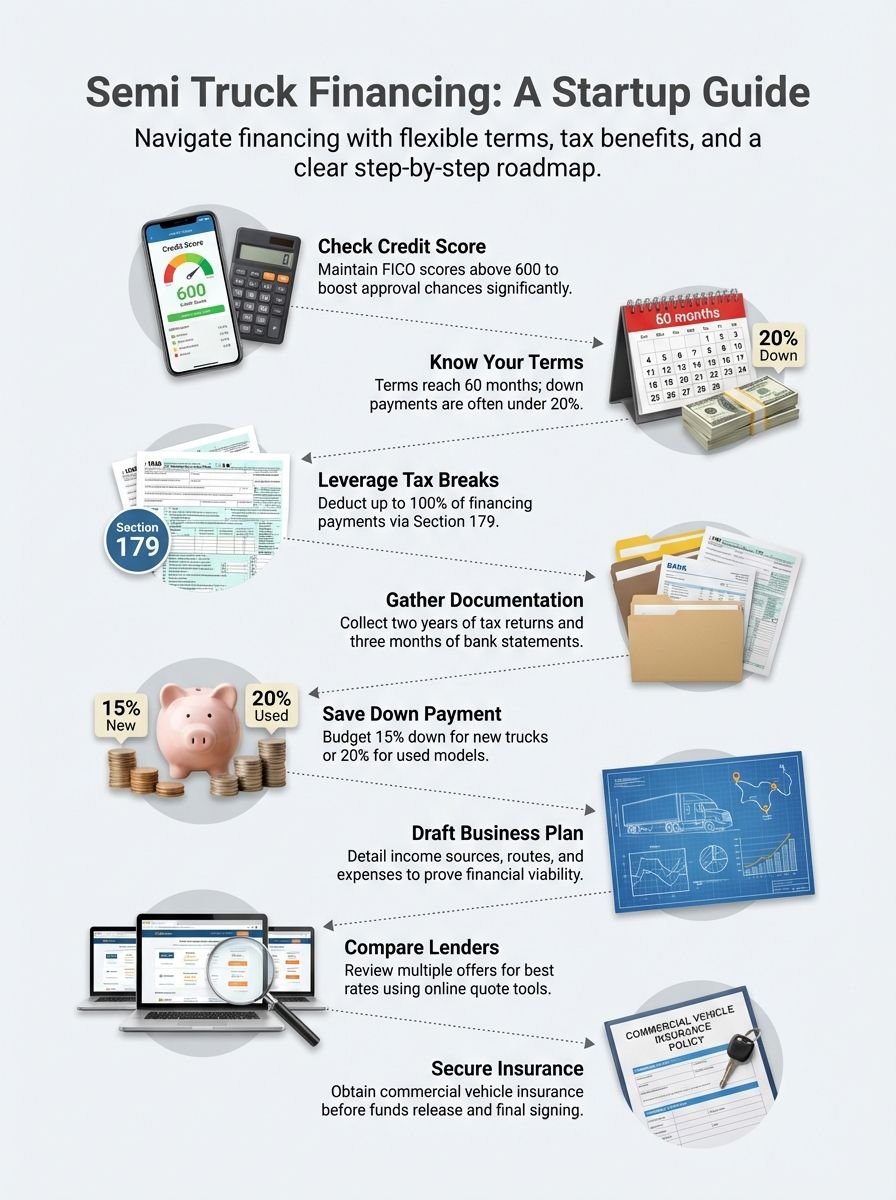
- Semi truck financing helps startups save money upfront by spreading costs through monthly payments. Some lenders, like Fleet Financial, offer 100% financing for equipment and taxes.
- A FICO score of at least 600 improves loan approval chances. Lenders may approve funding in as little as 12 days with strong credit.
- Section 179 deductions can reduce tax bills by covering up to 100% of truck and trailer financing payments.
- Most lenders require a down payment: typically 15% for new trucks or 20% for used ones. Saving early is key.
- Key steps include checking your credit, preparing financial documents, comparing rates from multiple lenders, and securing insurance before finalizing deals.
Understanding Semi Truck Financing for New Businesses
Getting a semi-truck can feel like climbing a mountain for small businesses. Many first-time buyers turn to commercial truck financing or leasing options to help manage costs. These plans often come with flexible terms and competitive interest rates that adjust based on your credit score.
Fleet Financial, for example, offers loan amounts with terms up to 60 months, making large purchases less stressful.
Upfront costs might not be as high as you fear. Lenders like Fleet Financial sometimes accept less than the typical 20% down payment required by traditional banks. Even startup owners can secure funding within just 12 days if approval is swift! A FICO score of at least 600 boosts your chances of getting loans approved quickly.
For newer ventures without years in business, focusing on keeping personal credit strong helps open more doors.
Key Benefits of Semi Truck Financing for Startups
Semi truck financing helps startups save money upfront. Instead of paying for a truck outright, you spread the cost over time through manageable monthly payments. Fleet Financial offers 100% financing that covers everything from equipment to taxes, making it easier to kickstart operations.
This boosts cash flow and lets businesses focus on growing.
Section 179 deductions can also lower your tax bill significantly. With these deductions, up to 100% of truck and trailer financing payments might qualify. Plus, companies like Selfreliance FCU allow refinancing up to $175,000 with no prepayment penalties.
Startups can keep their credit lines free for other needs while building assets in the trucking industry quickly and efficiently.
Steps to Secure Semi Truck Financing for Your Business
Getting financing for a semi-truck can feel challenging, but it’s doable with the right steps. Follow these simple steps to secure funding and hit the road.
- Check Your Credit History
Review your credit score first. Many lenders prefer scores above 600, but some accept lower scores. Clean up errors on your report to improve it. - Decide on New or Used Trucks
New trucks cost more but last longer. Used trucks are cheaper, but age and mileage will matter to lenders. - Gather Financial Documents
Collect tax returns from the past two years and three months of bank statements. Lenders may need both personal and business records. - Save for a Down Payment
Most lenders require 15% down for new trucks or 20% for used ones. Start saving early to cover this cost. - Create a Business Plan
Explain how your trucking company will earn income. Include details about loads, routes, and expenses like insurance and payroll. - Apply with Multiple Lenders
Use online tools like Fleet Financial’s quote tool to find offers that suit your needs best. Compare rates, terms, and conditions carefully. - Submit Chosen Application
Fill out forms online or in person depending on the lender you select, such as TLG Financial or Selfreliance FCU. Ensure all required details are accurate. - Wait for Approval
Approval times vary by lender; some take five business days if paperwork is complete, like at Selfreliance FCU. - Prepare Additional Collateral (If Needed)
Some lenders request extra assets within 30 days of approval, especially if borrowing over certain limits. - Sign Loan Agreement
Once approved, review terms carefully before signing any contract agreements involving loan-to-value ratios or payment guarantees. - Secure Insurance Coverage
Lenders typically require proof of commercial vehicle insurance before releasing funds or finalizing deals. - Receive Funds and Purchase Truck
After meeting all conditions set by creditors, use approved funds to purchase the truck with appropriate warranties included!
Conclusion
Starting your trucking business is a big step, but the right financing can make it easier. Semi-truck loans offer practical solutions to meet your needs. Whether you’re buying one truck or many, options are available for every goal.
Work with trusted lenders who understand owner-operators and fleets. With the right plan, success is just down the road!
FAQs
1. What is semi-truck financing, and how does it work?
Semi-truck financing helps businesses get loans or leases to buy new or used commercial trucks. Lenders evaluate your credit score, time in business, and collateral to approve the loan.
2. Can I qualify for truck financing with a lower credit score?
Yes, some lenders offer flexible financing options designed for those with lower credit scores. They may require a larger down payment or higher interest rates.
3. Should I choose leasing or buying when financing a semi-truck?
Leasing can lower your monthly payments but doesn’t give you ownership at the end of the term. Buying through a loan builds equity over time and might offer tax deductions.
4. Are there specific requirements to apply for equipment financing solutions?
You’ll typically need proof of income, a valid business bank account, solid credit profiles if possible, and sometimes personal guarantees depending on the lender’s terms.
5. How long do loan terms last for commercial vehicle financing?
Loan terms vary based on lenders and your financial needs but often range from 24 months up to 84 months depending on whether you’re purchasing new or used trucks.
6. What happens if I default on my truck loan?
If you fail to make payments, repossession of the truck could occur as it serves as collateral for many loans; this impacts your credit profile negatively too. Always budget carefully before applying!
