
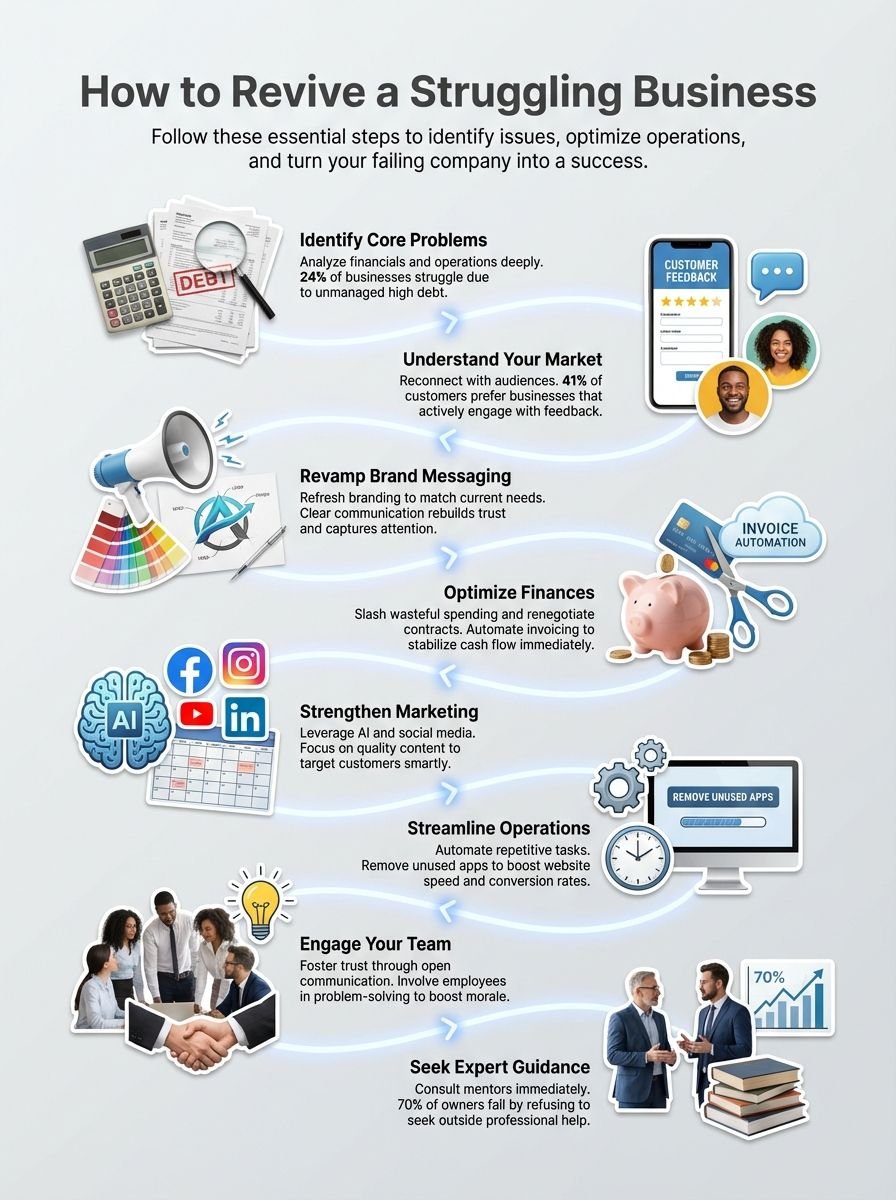
Identify the Core Problems
Spot the root issues holding your business back, and you might just find the key to turning things around.
Conduct a thorough analysis of financials, operations, and team dynamics.
Dig deep into your financials. Check cash flow, revenue trends, and debt levels. In 2024, 24% of small businesses couldn’t secure loans due to high debt; this is a red flag worth catching early.
Identify which expenses drain resources without adding value. Small changes like automating repetitive tasks or renegotiating supplier contracts can boost cash flow fast.
Look at how your team works together. Low morale increases employee turnover and lowers productivity. A struggling business needs unity, not division. Spot gaps in skills that hinder growth—50% of HR leaders admit they can’t quickly find employees with priority skills! Address operational inefficiencies by simplifying workflows or prioritizing essential processes only.
Failure often hides where no one thinks to look: small cracks in systems or silence within teams.
Understand Your Market and Customers
Know what your customers want, and why they choose you—or don’t. Study market trends to stay ahead of the curve.
Reevaluate market trends and reconnect with your target audience.
Study current market trends and shifts. Industry changes or economic factors might affect demand for your product or service. For example, SUGAR Cosmetics spent three years pinpointing their audience: urban Indian women aged 20–27.
This focus helped them expand from one online store to over 10,000 retail points.
Listen closely to your customers. Negative reviews and low e-commerce conversions (like rates below the average of 2.5%-3%) can highlight problems with market fit. Use tools like UserLoop or Fuzzy Surveys to collect direct feedback about their needs and pain points.
Respond quickly to reviews; 41% of people prefer businesses that engage this way, building trust and loyalty in tough times.
Revamp Your Brand and Messaging
Freshen up your brand to match what your customers want today. Clear, sharp messaging can grab attention and rebuild trust fast.
Refresh branding strategies to better align with customer needs.
Update your brand based on what customers value most. Use customer feedback and analyze competitors to find gaps you can fill. For example, Apple focused on clean design and user-friendly products during its 1980s comeback.
This shift helped them connect deeply with their audience.
Clear messaging is vital. Look at Starbucks’ turnaround in 2008; they improved ads and centered everything around the customer experience. A small business could try new logos, colors, or taglines that better reflect customer emotions or priorities.
Small changes often create big loyalty gains!
Optimize Your Finances
Cut wasteful spending, explore new funding options, and find ways to improve cash flow—small steps can have a big impact.
Cut unnecessary expenses and explore funding or loan options.
Trim costs by focusing on what’s truly needed. Slash spending on extras like travel or excessive utilities. Renegotiate rent or lease agreements to lower monthly overheads. Before cutting staff, reduce work hours or adjust salaries temporarily to maintain morale and teamwork.
Keep cash flow steady by automating invoicing with tools like Keap payments. Look into loan options from banks, local programs, or small business grants for a boost. Protect long-term health while addressing short-term financial challenges smartly!
Strengthen Your Marketing Strategy
Get creative with your marketing to grab attention and spark interest. Use tools like social media and email campaigns to connect with more people, faster than ever.
Leverage digital marketing, social media, and AI tools for growth.
Use AI tools, like Keap’s marketing automation, to target customers smartly. Automate email campaigns with templates that save you time while boosting engagement. Create landing pages and forms for lead generation quickly.
Small businesses can streamline their marketing efforts by integrating these tools with other apps used daily.
Social media offers direct connections to your audience. Post educational content related to your market trends or industry stats. Stick to platforms where your customers are most active; focus on quality over quantity when sharing updates.
Use insights from AI analytics to refine strategies based on performance data in real-time.
Work smarter, not harder, by letting technology handle repetitive tasks.
Streamline Operations and Processes
Cut out waste and focus on what works. Small changes in daily tasks can save time and boost profits fast.
Implement cost-saving strategies and improve efficiency.
Automate repetitive tasks to save time and money. Tools like Shopify Marketplace Connect can help streamline workflows, reducing errors and overhead costs. Use sales automation tools to simplify inventory management or appointment scheduling.
These small changes free up resources for bigger priorities.
Limit the number of third-party apps on your website. Unused apps slow down site speed, leading to fewer sales and higher bounce rates. Optimize fonts, themes, and images for faster load times; this improves user experience while cutting costs.
Such strategies keep operations lean yet effective, improving cash flow over time.
Engage Your Team and Build Morale
Lift your team’s spirits by showing gratitude, encouraging their ideas, and creating a culture where every voice counts.
Foster trust and collaboration among employees during tough times.
Clear communication builds trust fast. Share updates on the business openly, even bad news. Employees value honesty and feel more secure knowing the truth. Set clear roles for each team member to avoid confusion or overlap.
Organize group problem-solving sessions. Invite ideas from all levels, not just managers. This shows that every voice matters and sparks teamwork. Reward small wins often; it keeps morale high in tough moments.
Trust grows when everyone pulls together to solve issues side by side.
Seek Expert Guidance
Talk to a business mentor or consultant. They can offer fresh ideas and spot problems you might miss.
Consult experienced professionals or industry mentors for advice.
Experienced mentors can spot weak areas you may overlook. 70% of business owners fail because they don’t seek help. A second pair of eyes can make all the difference. Experts offer targeted strategies and solutions to revive a failing business.
Use their guidance to adjust pricing, streamline your operations, or improve customer loyalty.
Building relationships with mentors or professionals also opens doors for growth. Partner networks like Keap’s connect you with advisors, influencers, and developers who understand your struggles.
These experts provide resources like onboarding help, migration assistance, and training programs that strengthen your position in tough markets.
Take Immediate Action and Monitor Results
Act quickly to turn things around. Track your progress like a hawk, and tweak where needed.
Execute your plan decisively and track progress to ensure success.
Take action fast. Use tools like cash flow calculators and strategic planning kits to stay on top of your goals. Schedule social media promotions weekly, such as Tuesdays or Thursdays, to keep momentum steady.
Track sales, expenses, and customer feedback daily for clear insights.
Adjust plans based on results. If a strategy isn’t working, pivot quickly before losing more time or money. Customer lifecycle assessments can highlight weak points. Regularly involve employees in reviewing progress; their input keeps operations grounded and practical while boosting morale.
FAQs
1. Why do businesses fail, and how can I identify the root cause of my struggling small business?
Businesses fail for many reasons, like cash flow problems, poor market research, or ineffective leadership. To find the root cause of your struggles, step back and analyze key areas such as your pricing structure, target market fit, and operational efficiency.
2. What are some strategies to boost a struggling business and get it back on track?
Focus on cutting unnecessary costs while identifying new revenue opportunities. Conduct thorough market research to understand industry trends and adjust your marketing campaigns or touchpoints to reach new audiences.
3. How can I create a plan to turn my failing company around?
Start with a SWOT analysis to identify strengths and weaknesses in your business model. Use this information to build a clear roadmap that addresses declining sales, improves cash flow management, and aligns with current market conditions.
4. When should I ask for help if my business is on the verge of bankruptcy?
Don’t wait too long; seek guidance when you notice consistent setbacks like falling profits or mounting debts. Small business owners can contact financial advisors or mentors who specialize in helping businesses turn around before it’s too late.
5. How do external factors impact struggling businesses?
External factors like economic shifts, regulatory compliance demands, or environmental laws can strain resources further. Stay informed about these changes through regular research so you can adapt quickly without losing competitive edge.
6. Can digital transformation help save a struggling small business?
Yes! Digital tools improve operational efficiency by automating processes like audits or customer behavior tracking while reducing costs over time. They also open doors for better online marketing strategies that attract more customers in today’s tech-driven world.
