
Struggling to figure out how to rebuild small construction firm after setbacks? Many small construction businesses face challenges like tight budgets, unsteady cash flow, or finding reliable workers.
This guide will share practical tips to grow your construction business while boosting profits and efficiency. Ready to turn things around? Keep reading!
Key Takeaways
- Focus on strong financial management by tracking daily expenses, creating cash flow forecasts, and automating invoicing to avoid surprises.
- Invest in technology like construction management software to save time, reduce errors, and improve efficiency across projects.
- Train your team with safety programs and skill-building initiatives to boost productivity while meeting OSHA standards.
- Use digital marketing tools such as Google Ads or social media, alongside networking at trade events, to attract new clients and build industry connections.
- Prioritize high-value niches like medical facilities or sustainable building practices for better profit margins and steady work opportunities.
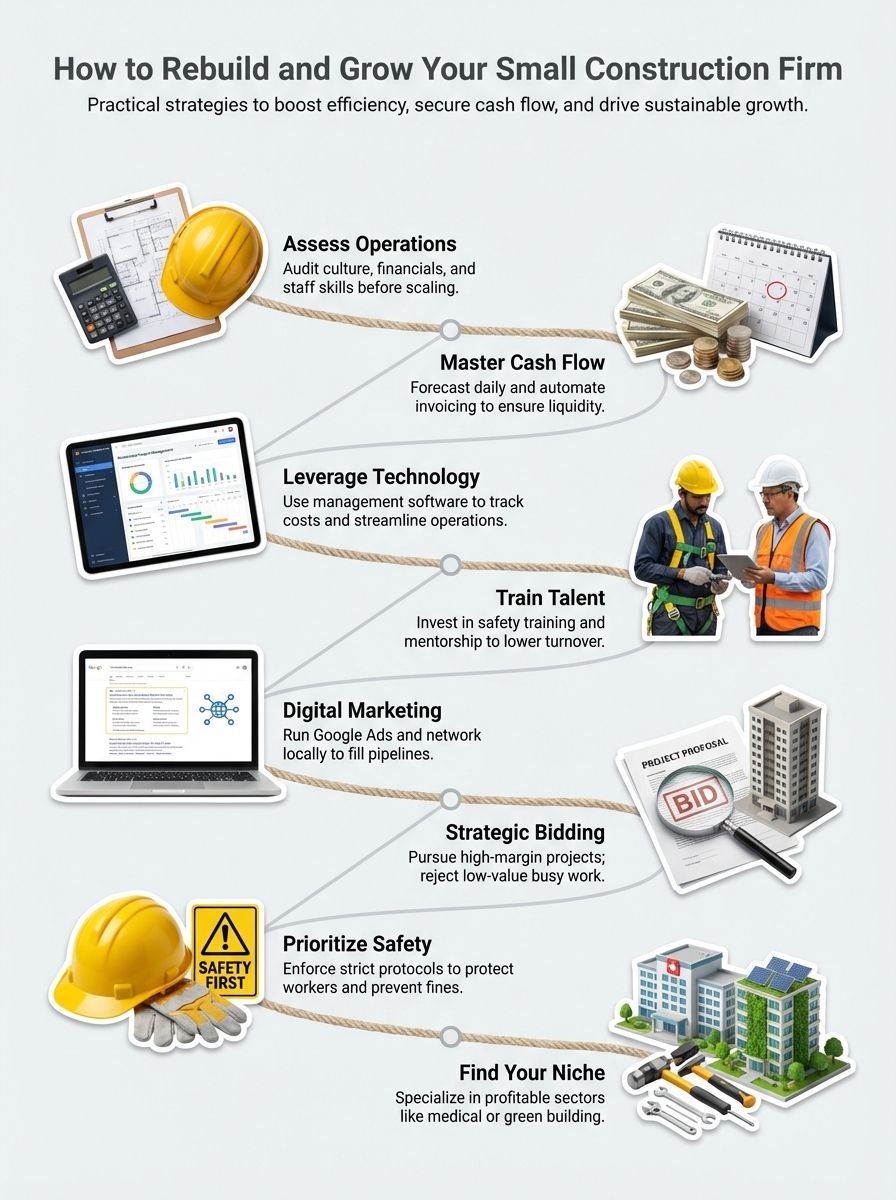
Assessing the Current State of Your Construction Firm
Review your company’s culture and employee satisfaction first. A happy team works harder and stays longer. Conduct surveys or have one-on-one chats to learn what’s working, and what isn’t.
Look into staff capabilities too. Are they trained well enough for the jobs you’re taking on? If not, invest in development now before issues grow.
Check your numbers closely. Are accounting practices up to snuff? Poor bookkeeping can sink a business fast. Take time to examine expenses, payroll, and cash flow trends over the past year.
“Cash flow is king,” as any general contractor knows; without it, even big projects crumble.
Fixing small problems now saves big bucks later.
Finally, evaluate how you get new clients. Word-of-mouth referrals are great but may not be enough anymore—explore digital marketing tools like Google Ads or social media campaigns to expand reach quickly!
Strengthening Financial Management
Keep your money in check to avoid headaches. Smart budgeting and tracking can boost profits quickly.
Create a cash flow forecast and manage expenses effectively
Cash flow keeps your construction business alive. Without it, you can’t pay bills or grow a construction company.
- Track all income and expenses daily to avoid surprises. Use accounting software like Deltek ComputerEase for accurate job costing and payroll tracking.
- Build a cash flow forecast for at least 6 months ahead. Estimate project costs, revenue, and payment schedules for better planning.
- Open a separate business credit account for better money management. Timely payments to vendors and lenders improve creditworthiness.
- Pay suppliers early when possible to get discounts. Strong supplier relationships reduce delays in your construction projects.
- Automate invoicing with tools like Costpoint ERP to streamline cash collection. The faster you bill clients, the quicker the money comes in.
- Set aside funds each month for unexpected costs like equipment repairs or delayed payments from customers.
- Review profit margins on every project using cost analysis tools. Low-margin jobs hurt long-term profitability and sustainability.
- Regularly check your time and materials costs against budget estimates. Make immediate adjustments if costs rise above plan.
- Avoid common mistakes like overpaying subcontractors or buying unnecessary equipment too soon.
- Hold weekly meetings with your bookkeeper or accountant to review reports on revenue, expenses, and profitability trends in real-time.
Effective cash flow management supports sustainable growth while reducing financial risks in the construction industry.
Leveraging Technology for Operational Efficiency
Smart tools can save time and cut costs. Using software improves project tracking, payments, and communication with your team.
Adopt construction management and accounting software
Construction management software can make operations smoother. Tools like Deltek ComputerEase handle job costing, payroll, and financial tracking. They help business owners see where money goes in real-time.
Cloud document storage cuts down paperwork and saves time.
Using project management tools keeps tasks organized. These platforms help with scheduling, budgets, communication, and tracking progress. Mobile time-tracking apps reduce admin hours for small businesses.
One contractor said,.
Switching to software saved us 10 hours a week on invoicing.
Adding these tools means fewer errors and faster results for construction companies looking to grow sustainably!
Building a Skilled and Reliable Workforce
Hire people who care about their craft, train them well, and watch your business grow.
Invest in staff training and development
Training helps employees work smarter and safer. Providing safety training protects your business and meets OSHA standards. New hires need clear instructions to get up to speed quickly.
Use onboarding programs that teach them how to complete projects independently.
Partner with trade schools for ongoing skill-building. Mentorship programs also boost growth and lower turnover rates. Tools like structured software can track progress with scorecards or checklists.
By doing this, you create a strong team that stands out in the construction industry while increasing profitability long-term.
Enhancing Marketing and Networking Strategies
Spread the word about your business online to boost visibility and attract clients. Build strong industry connections, as they can open doors to bigger projects and trusted partnerships.
Focus on digital marketing and building industry connections
Digital marketing and networking can help your construction business thrive. Use these strategies to increase visibility and land more projects:
- Share updates, photos, and client reviews on social media platforms weekly. This builds trust and attracts new clients.
- Attend trade shows, industry events, and join local trade associations. These connections bring more opportunities for contracts.
- Target potential clients with paid ads on Google or Facebook. This fills your project pipeline faster.
- Develop a strong website that highlights your past work, services, and contact details. Keep it mobile-friendly.
- Use CRM software to track leads and manage relationships effortlessly. It simplifies follow-ups too.
- Post testimonials from happy customers online or in brochures. Positive feedback boosts your reputation.
- Send monthly email updates about your projects or deals to past clients and partners. Keep communication alive.
- Offer free estimates or consultations on digital platforms like Thumbtack or Houzz to attract homeowners or businesses.
- Partner with other contractors or related businesses for referrals and joint promotions that help both parties grow.
- Create educational content like blogs or videos about construction methods or energy-efficient solutions to position yourself as an expert in the field.
- Stay active in local community events, sponsoring initiatives whenever possible. This strengthens local ties while promoting your brand.
- Ask satisfied clients for word-of-mouth referrals; it’s still one of the strongest marketing tools in this sector!
Winning More Bids with Strategic Planning
Improve your proposals to stand out from the crowd. Focus on projects that bring real profit, not just busy work.
Improve bid proposals and focus on high-value projects
Strong bids can help win great projects. Focus on quality and strategy to stand out from the crowd.
- Research clients thoroughly before bidding. Understand their needs, budgets, and project goals to craft targeted proposals.
- Use estimating software to create accurate cost breakdowns. Well-documented bids look professional and build trust with clients.
- Highlight success stories in your bid proposals. Include client testimonials or examples of similar work you’ve completed to boost confidence.
- Aim for high-value projects like medical or educational construction jobs. These often offer better profit margins compared to smaller tasks.
- Obtain certifications like SBE, MBE, or WBE if applicable. These open doors to lucrative government contracts and public sector opportunities.
- Diversify your bid portfolio to avoid relying on just one type of construction job. This reduces risks and keeps your business steady during market changes.
- Submit clean, clear documents by meeting deadlines and requirements precisely. Attention to detail can make all the difference between winning or losing a bid.
- Utilize tools like GovWin IQ for smarter bidding strategies on government projects. This tool provides insights into market trends and upcoming opportunities.
- Tailor each proposal specifically for the project instead of using generic templates repeatedly, which can feel impersonal.
- Focus on building long-term relationships through excellent service post-bid wins because happy clients lead to repeat business or referrals later!
Prioritizing Safety and Compliance Standards
Strong safety rules and staying within legal boundaries protect your workers, save you money, and keep your business thriving—read on to learn how!
Implement robust safety protocols and meet regulatory requirements
Safety is the backbone of any successful construction business. Following rules and protecting workers can save lives, money, and your company’s reputation.
- Provide OSHA-compliant training for all employees. These sessions teach workers how to handle tools, equipment, and emergencies safely.
- Conduct regular toolbox talks before shifts. Short safety discussions keep workers alert and aware of daily risks.
- Use wearable technology like smart helmets or vests to monitor worker safety in real-time on-site.
- Track safety compliance with software tools. They help organize incident reports, inspections, and corrective actions efficiently.
- Keep all safety records current and detailed. This includes tracking incidents, actions taken to fix them, and lessons learned.
- Set up a reward system for safe behavior at work. Workers stay motivated when their efforts are recognized with bonuses or small perks.
- Follow local, state, and federal regulations closely on every project you manage. Non-compliance can lead to fines or shutdowns.
- Add safety protocols into new hire onboarding plans right away so employees understand expectations from day one.
- Inspect job sites thoroughly before starting work each day to identify potential hazards early on.
- Hold monthly safety meetings for feedback from teams about improving practices in the field or office settings.
Proper care today builds a stronger foundation for long-term stability in your construction business activities!
Focusing on Customer Experience and Retention
Happy clients keep a business alive, and your goal should be to wow them every time. Offer top-notch service, exceed expectations, and watch loyal customers spread the word for you.
Deliver exceptional service to secure repeat business
Great customer service keeps clients coming back. Open and clear communication during every project stage builds trust. Finish projects on time with high-quality work to impress your customers.
Surprise them by going beyond expectations; small gestures, like updates or quick fixes, stick in their minds.
Gather feedback after each job to spot areas for improvement. Offer a warranty or maintenance service to add value they won’t forget. Tools like client tracking software help measure satisfaction levels.
Reward loyalty through discounts or referral programs that keep your business growing strong. A happy client brings repeat jobs and spreads the word about your services!
Developing Strong Supplier Relationships
Pay suppliers on time to build trust and credibility. Negotiate good terms that benefit both parties. Reliable suppliers help keep your projects moving without delays. Offer consistent work and honest feedback to deepen partnerships.
Work with multiple vendors to avoid relying too much on one source. A diverse supplier base can reduce risks in the supply chain. Use performance metrics to track efficiency, quality, and delivery times.
Reward top performers with more business or recognition, so they stay motivated to bring their best efforts. Strong relationships here can unlock better pricing and quicker material access when demand spikes!
Finding and Focusing on a Profitable Niche
Target projects with high margins like medical facilities or schools. These often bring better profits and steady work. Focus on areas where demand is strong but competition is low.
For example, sustainable building practices or smart tech installations are rising in popularity. Public works projects like roads or government buildings can also be lucrative, especially when paired with the right certifications to win bids.
Use data analytics to study market trends and spot gaps others miss. Look at your current clients too; their needs may point you toward untapped opportunities in residential or commercial construction.
Stick to niches where input costs stay low compared to revenue gained. This gap increases profitability while keeping risks manageable for small contractors aiming for long-term growth.
Monitoring Industry Trends and Market Demands
Stay sharp about market changes. Construction firms invested over twice as much in 2025 compared to 2024. This shows how fast the industry moves. Technology like BIM and project management tools is now essential for staying competitive.
Tracking trends like green building practices can also help small construction companies stand out while earning government incentives.
Focus on shifts in regulations at every level—local, state, or federal—to avoid unexpected fines or delays. Keep an eye on economic indicators that impact demand, such as housing starts or interest rates.
Use forecasting to see where the business is going; this helps you make smarter equipment purchases or take on more work when profits align with market demands.
How to Bounce Back After Business Failure
Failure hurts, but it can also teach. Start with a clear SWOT analysis to identify what went wrong and what still works in your business. This step gives you clarity on weaknesses, opportunities, threats, and strengths.
Break long-term recovery plans into smaller steps to track progress easily. These small wins build confidence fast.
Focus on solving existing problems before scaling again. For example, use digital tools like construction management software to stay organized while fixing financial leaks or project delays.
Seek advice from mentors or coaches who understand the construction industry well. Their experience helps avoid mistakes that could cost you more as your company grows back stronger over time!
Planning for Long-Term Growth and Sustainability
Set short- and long-term goals to grow your business. Break big plans into smaller steps, like 10-year visions into monthly actions. For example, if aiming for $5 million in revenue within a decade, define yearly progress benchmarks.
Consistency is key; schedule tasks and stick to them.
Invest in technology and tools that streamline operations. Use construction management software or purchase modern equipment to handle scaling demands. Regularly review performance metrics, then make adjustments when something lags behind the plan.
Diversifying services can also increase profitability while keeping you ahead of market trends.
Conclusion
Rebuilding a small construction business takes time, effort, and smart strategies. Focus on boosting profits, building strong systems, and using tech to stay efficient. Train your team well and stand out by offering top-notch service.
Stay safe, follow the rules, and build lasting client relationships. With clear goals and steady action, your firm can grow stronger than ever!
FAQs
1. How can I grow my small construction business?
Focus on creating a solid business plan, hire skilled employees, and leverage word of mouth to build trust. Use practical strategies like marketing your business effectively and managing multiple projects efficiently.
2. What tools can help me manage my construction firm better?
You can use software to manage tasks like invoicing, change orders, and tracking sub-contractors. These tools save time and keep your operations organized as your business grows.
3. How do I make my construction company stand out in the industry?
Set your business apart by focusing on occupational safety and health, efficient energy use, sustainable development practices, and delivering quality remodeling work that clients will recommend.
4. Should I invest in insurance for my construction company?
Yes! Insurance is crucial for protecting your firm from risks tied to employment or accidents at job sites. It’s a necessary step for long-term success in the construction sector.
5. Can artificial intelligence help with running a successful construction company?
Absolutely! AI can assist with analyzing data, improving project efficiency, and streamlining processes like bid list management or estimating costs accurately.
6. What leadership tips are important when scaling a small construction firm?
Good leadership means clear communication with employees and sub-contractors while staying adaptable as challenges arise. Remember what “The Art of War” teaches: strategy wins battles; planning builds profitable businesses!
