
A bad reputation can hurt your contracting business faster than you think. One negative review or missed deadline often leaves a lasting impression. This post will show you how to rebuild reputation as contractor by focusing on trust, transparency, and quality work.
Ready to take back control? Keep reading!
Key Takeaways
- Take responsibility for mistakes, like delays or unclear pricing, and offer genuine solutions. Admit errors honestly to rebuild trust faster.
- Respond to negative feedback calmly and professionally. Offer refunds, discounts, or free services when needed to resolve issues.
- Keep communication clear and consistent with clients through updates on timelines, costs, or setbacks using tools like apps.
- Build trust by following safety rules, local codes, licensing laws, and sticking to deadlines in written contracts.
- Strengthen your online presence with positive reviews from happy clients while addressing bad ones politely to show professionalism.
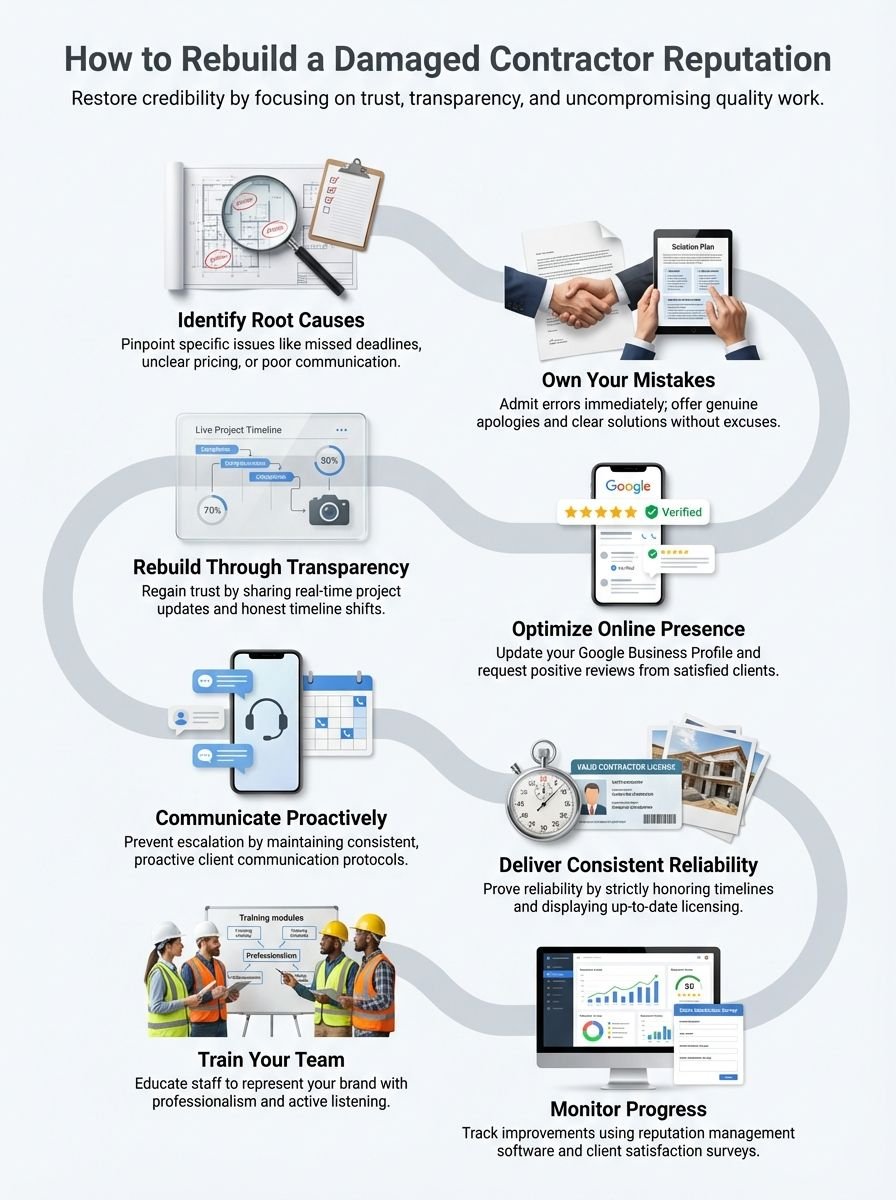
Identify the Root Cause of Reputation Damage
Missed deadlines, unclear pricing, and poor communication often spark dissatisfaction. Many clients see sudden cost changes or skipped permits as dishonesty. These missteps damage trust quickly.
Patterns of negative feedback reveal deeper issues like disorganization or untrained staff. For example, failing to honor written contracts signals unreliability. A homeowner once said, “It’s not just the delay; it’s the silence that feels dishonest.
Respond to Negative Feedback Professionally
Mistakes happen, but how you handle them speaks volumes. Show clients you’re listening by addressing concerns calmly and with genuine solutions.
Acknowledge mistakes and take responsibility
Admit errors without sugarcoating them. Say, “We made a mistake,” and mean it. Customers can spot fake apologies from a mile away. Take ownership of the problem instead of shifting blame to others, even if criticism feels unfair.
Show empathy toward dissatisfied clients. Apologize sincerely, like Starbucks CEO Kevin Johnson did during a controversy in 2018. This honesty often helps repair trust faster than excuses do.
Lay out clear steps to fix issues and prevent future trouble, proving your commitment to better service.
Offer solutions to dissatisfied clients
Start by apologizing sincerely. Acknowledge the mistake and take responsibility without excuses. Ask customers what resolution would make them happy, then deliver on that promise. Offer refunds, discounts, or complimentary services if necessary.
For example, refund double-charged clients and provide a free service as a goodwill gesture.
Provide clear explanations of what went wrong and outline steps to prevent it from happening again. Set realistic timelines for resolving issues promptly. Keep communication open throughout the process to rebuild trust with upset clients.
As they say, “Actions speak louder than words.
Rebuild Trust Through Transparency
Admit where things went wrong, and show you’re working to fix them. People respect honesty—it’s like showing your cards in a poker game when you’ve got nothing to hide.
Communicate openly about changes and improvements
Talk to clients about updates, even small ones. Share details like material delays, weather impacts, or inspection results as they happen. Clients value knowing what’s going on with their projects.
Explain shifts in timelines or costs right away to avoid surprises.
Use tools like project management apps for real-time sharing of progress. Show them the steps you’ve taken to fix past mistakes. Clear communication builds trust and shows your commitment to positive changes.
Share a clear plan to prevent future issues
Lay out a solid project schedule in every contract. Include clear deadlines, tasks, and any risks that may arise. This reduces confusion and sets client expectations early. Stick to the timeline as much as possible to prove reliability.
Show proof of updated licensing and insurance before starting work. Explain how general liability insurance protects both you and homeowners during projects. Highlight your compliance with local laws, safety codes, and standards for added trust.
Set up strict quality control checks at each stage of the project. Thoroughly review materials, workmanship, and processes to prevent repeat errors. Avoid cutting corners or rushing jobs since this leads to more complaints down the line.
Outline all steps you’ll take if issues occur again in written agreements with clients. For example: double-check permits upfront or hire an independent inspector for high-value jobs like roofing or foundation repairs.
Strengthen Online Presence
A strong online presence makes your company easier to find and trust. Positive reviews and active profiles can turn curious visitors into paying clients.
Optimize your Google Business Profile and other platforms
Keep your Google Business Profile updated. Add accurate contact details, business hours, and services. Upload high-quality photos of projects to attract potential clients. Use before-and-after images to showcase your skills.
Highlight your safety record on completed jobs.
Ask satisfied customers for reviews. Positive online reviews help boost trust and credibility. Respond politely to all feedback, even bad ones, to show professionalism. Stay active on social media platforms by sharing project updates and engaging with followers regularly.
Encourage satisfied clients to leave positive reviews
Happy clients can help restore a damaged reputation. Ask them to leave reviews on platforms like Google, Yelp, or your website after completing their projects. These testimonials attract new clients and help move negative reviews lower in search results.
Share positive feedback on social media or marketing materials. Highlight success stories to increase confidence in your services. High review counts improve search rankings and help you stand out against competitors.
More good reviews can qualify you for premium listings or partnerships as well.
Implement a Proactive Communication Strategy
Clear communication can stop small issues from turning into major problems. Keep clients informed at every step to build trust and avoid misunderstandings.
Maintain consistent and clear communication with clients
Update clients regularly about project details. Share news on material deliveries, weather delays, and inspections. Use tools like apps or shared calendars to keep them informed in real-time.
If problems arise, address them quickly. Lack of communication can make clients feel neglected.
Respond to calls and messages quickly. Establish clear guidelines for communication frequency at the beginning of a project. Regular updates build confidence and minimize complaints.
Hiring a 24/7 virtual receptionist can also help enhance responsiveness and improve your reputation as a contractor.
Address issues before they escalate
Act fast when issues arise. Small problems can snowball into major crises if left unchecked. For example, 56.7% of consumers won’t call back if their concerns go unanswered. Timely responses to complaints show clients you care and take responsibility.
Frequent check-ins with clients can catch problems early. Monitor project progress closely to spot delays or quality concerns before they become bigger headaches. Be upfront about potential setbacks, like delivery delays or unexpected costs; honesty helps retain trust.
Quick actions build confidence in your commitment to client satisfaction and improve your company’s reputation over time.
Deliver Consistent Quality and Reliability
Clients value actions over promises, so finish projects on time and as agreed. A steady track record of reliability can turn skeptics into loyal supporters.
Honor commitments and stick to timelines
Set clear deadlines and stick to them like glue. Delivering on time builds a strong reputation for reliability. Create detailed project schedules in contracts so everyone knows the plan.
This reduces confusion and avoids finger-pointing later.
Unexpected delays happen, but don’t stay silent about them. Inform clients right away with reasons and updated timelines. A mix of honesty and quick action can save trust from falling apart.
Miss deadlines too often, though, and you’ll risk losing business or facing penalties. Reliable contractors attract repeat customers who share referrals freely!
Prioritize compliance with licensing and insurance requirements
Display your license number on all contracts, invoices, and ads to show legitimacy. Keep licenses up-to-date, especially in specialized fields like electrical or plumbing work. Offer clients proof of licensing before projects begin.
This builds trust and sets you apart from unlicensed contractors.
Share current insurance documents with homeowners upfront. General liability insurance protects against accidental property damage, while workers’ compensation covers on-site injuries.
Lack of coverage could expose clients to lawsuits or repair costs if things go wrong. Adhering to local codes and safety standards also reflects professionalism and reliability in every project.
Train Team Members to Align with Reputation Goals
Your team represents your brand. Teach them how to handle clients with care and professionalism at all times.
Educate staff on customer service and professionalism
Train employees to speak clearly and listen actively. Teach them to respond quickly and respectfully, even during tough conversations. Staff should understand how poor communication can lead to unhappy clients or frequent disputes.
Focus on professionalism in appearance and behavior. A clean look and polite tone build trust with prospective clients. Stress the importance of meeting deadlines and offering helpful solutions when issues arise.
Well-trained teams protect your brand and improve public perception over time.
Monitor and Measure Progress
Tracking progress helps you see how far you’ve come and what still needs work. Use tools to gather accurate data, spotting trends or gaps early.
Use reputation management tools to track improvements
Reputation management tools can help you see how your efforts are working. Use ReviewTrackers or similar software to monitor changes in ratings and feedback. For instance, automated alerts notify you of new reviews online, so nothing slips through the cracks.
Social media analytics track customer sentiment and engagement with your business. Tools like Google Business Profile break down review performance, offering clear insights on progress.
Client satisfaction surveys also gather measurable data to refine your strategy further.
Long-Term Strategies for Sustaining Reputation
Building trust takes grit, and staying consistent in quality keeps your reputation rock-solid over the years—small steps go a long way.
Continuously gather feedback and refine processes
Seek feedback after every project. Ask clients what went well and what didn’t. Use simple surveys or direct conversations to gather insights. Dissatisfied customers often highlight patterns, like delayed timelines or communication breakdowns.
Adjust strategies based on recurring issues. Update communication protocols if miscommunication is a common concern. Invest in new tools to boost quality and reliability for future projects.
Track satisfaction metrics regularly to measure success. This helps keep your process strong while improving client trust over time.
Stay committed to high-quality service and transparency
Deliver quality work every time. Use good materials and skilled labor for every project. Stick to deadlines and keep clients informed about progress. If unexpected delays or costs happen, be honest right away.
Break down pricing clearly, so there’s no room for confusion.
Follow all safety rules and licensing laws without fail. Show integrity by keeping promises on timelines and project milestones. Share updates with clients often to build trust over time.
Train your team regularly, ensuring they meet top service standards consistently.
Conclusion
Rebuilding a contractor’s reputation takes time, effort, and honesty. Owning mistakes and showing real change can restore trust. Strong communication, quality work, and great customer experiences create lasting improvements.
Small steps each day build a stronger brand. Stick with it because every action counts toward earning back confidence.
For more tips on navigating the challenges of contractor work, including financial advice, check out how to get an excavator with bad credit.
FAQs
1. How can a contractor repair a damaged reputation?
A contractor can repair a poor reputation by taking responsibility for mistakes, addressing what caused the problem, and committing to excellence in future work. Strong communication and making things right with customers are key steps.
2. What role does customer experience play in rebuilding a contractor’s reputation?
Customer experience is critical when trying to rebuild trust. Providing high-quality service, meeting deadlines, and maintaining strong communication during project completion helps leave a lasting positive impression.
3. Should construction companies consider rebranding after reputational damage?
Yes, rebranding may help if the damage is severe or tied to unsatisfactory quality or misleading practices. A fresh start with new marketing strategies and personal branding can show commitment to improvement.
4. Can online reviews impact a general contractor’s reputation management efforts?
Absolutely! One bad review can harm years of hard work building trust with clients. Encourage satisfied customers to leave reviews while addressing negative feedback promptly and professionally.
5. Why should senior management be involved in repairing company reputation?
It’s wise for senior management to get directly involved because their leadership sets the tone for recovery plans and actionable steps like improving advertising efforts or instituting damage control measures.
6. How long does it take for construction companies to rebuild damaged reputations?
Rebuilding takes time; it could take years depending on how major clients perceive your brand now versus before the issue arose. Consistently delivering excellent results will help build credibility again over time.
