
Offer Flexible Work Arrangements
Give workers more freedom with their schedules, and they’ll stick around longer—read on to see how this works wonders.
Remote work options and adaptable schedules to improve work-life balance.
Offering remote work lets employees skip long commutes and save money. Flexible hours give them time to juggle personal tasks without stress. A services firm saw higher satisfaction and better productivity by combining flexible hours with project ownership.
Condensed workweeks or unpaid PTO also keep workers happy without adding costs. Setting clear limits on work schedules helps prevent burnout, too. Millennials and Gen Z workers value these options more than pay raises, making flexibility a key retention strategy for tough times.
Recognize and Reward Efforts
A thank-you can go a long way, even without cash. Show crew members they matter with simple gestures that boost morale and loyalty.
Develop non-monetary recognition programs like “Employee of the Month” or shoutouts in team meetings.
Shoutouts in team meetings can recharge morale fast. Praising crew members during 1:1s or group sessions builds loyalty and confidence. Employee-driven programs like “Employee of the Month” create healthy competition while boosting workforce satisfaction.
Simple steps, such as written thank-you notes or public recognition, show appreciation without needing extra cash from your payroll.
Creative rewards inspire long-term value. Title upgrades, added responsibilities, or conference speaking opportunities make employees feel valued. Peer recognition systems also get everyone involved, encouraging camaraderie across teams.
These small gestures improve workplace culture and reduce turnover rates over time, saving business owners money on hiring costs later down the road!
Expand Training and Development Opportunities
Boosting skills keeps employees sharp and engaged. Offer chances to grow, and they’ll stick around longer.
Provide skill-building workshops, mentorship programs, and internal knowledge-sharing sessions.
Investing in employee development keeps teams motivated and reduces turnover. Skill-building workshops, mentoring, and knowledge-sharing foster a sense of worth and purpose.
- Conduct workshops to teach new skills. Focus on high-demand areas like software tools or project management. A small business reported improved retention by allocating 10% of their budget for learning initiatives.
- Implement mentorship programs to connect employees with experienced team members. Mentorship encourages trust, improves skills, and supports career growth. Shadowing opportunities can also allow employees to gain practical experience.
- Organize internal knowledge-sharing sessions where workers share their expertise with others. It’s an affordable yet impactful method for spreading knowledge across the team.
- Offer personal development budgets for resources such as certifications or online courses. Employees can select what aligns with their aspirations, enhancing job satisfaction.
- Develop clear career paths outlining promotion opportunities, required skills, and timelines. Employees feel more driven when progress is tangible and attainable.
- Conduct stay interviews with top performers to identify their developmental needs. Insights from these discussions can guide thoughtful training investments.
- Support employees’ involvement in industry events or significant projects for skill improvement. This improves expertise and strengthens loyalty as well!
Foster a Positive Workplace Culture
Create a space where employees feel heard, valued, and part of something bigger.
Encourage open communication, team bonding activities, and a supportive work environment.
Strong communication builds trust and keeps teams more stable. Share company goals, strategies, and updates clearly. Let employees voice thoughts openly without fear. This creates psychological safety and lowers employee turnover risk.
Encourage managers to listen actively during team meetings or one-on-ones. Transparent policies on promotions, layoffs, and raises also make workplaces feel fairer.
Bonding activities bring teams together like glue holding the workplace fabric tight. Plan fun events such as potlucks, game nights, or outdoor team exercises with small costs but big impact.
Employees who connect personally work better together long term. A supportive culture boosts morale even when budgets are tight. Empowering leaders to coach workers improves teamwork too!
A happy workplace is a productive one.
Empower Employees with Decision-Making
Let your team have a say in the choices that affect them. It boosts confidence and makes work feel meaningful.
Involve team members in decision-making processes to enhance ownership and job satisfaction.
Give employees a voice in decisions. Assign projects where they can lead and take ownership. This builds trust, boosts pride, and keeps them engaged. High-performing workers value autonomy, so letting them shape their workday or tasks increases job satisfaction.
Reduce red tape for senior team members to make quick approvals easier. Create resource groups to gather input from all levels of the team. Employees who feel heard stay longer because they see their ideas matter.
It’s not just about tasks; it’s about feeling part of the bigger picture too!
Introduce Wellness Initiatives
Keeping your team motivated without extra cash can feel like solving a puzzle with missing pieces. In fact, nearly half of employees are looking for new jobs, often due to factors beyond just paychecks. This blog will show you how to keep crews working without cash by focusing on strategies like flexible work options, wellness programs, and empowerment tools. Stick around — the solutions might surprise you!
Key Takeaways
- Flexible work options, like remote work and adaptable schedules, improve job satisfaction and reduce burnout. These are especially valued by Millennials and Gen Z workers over pay raises.
- Non-monetary rewards, such as “Employee of the Month” or public praise, build loyalty and morale without extra costs. Title upgrades or added responsibilities also boost retention.
- Training programs keep employees engaged. Workshops, mentoring, personal learning budgets, and clear career paths make teams feel valued while improving skills.
- A positive workplace culture with open communication, team bonding activities, and fairness reduces turnover risk. Fun events like potlucks strengthen team connections.
- Wellness initiatives such as mental health resources or wellness days show care for employee well-being at little cost while preventing burnout.
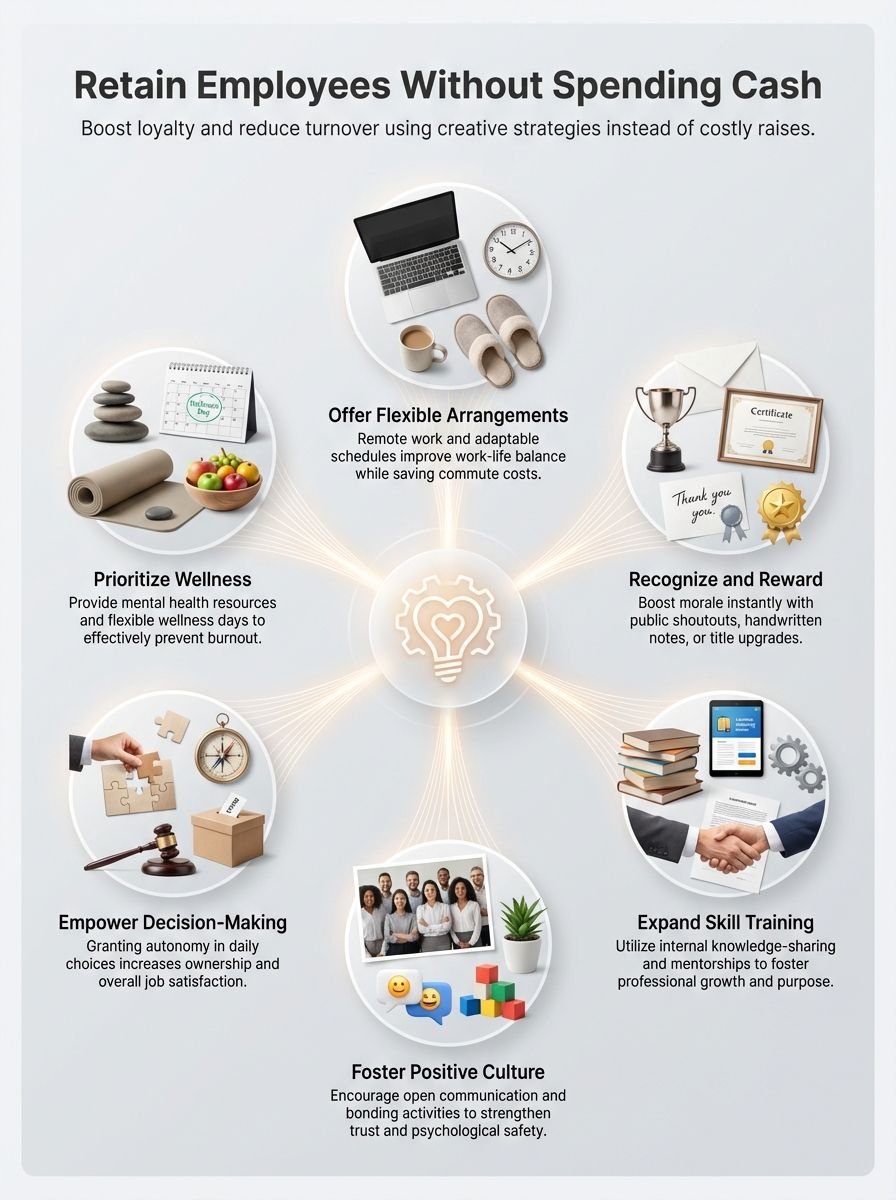
Offer mental health resources, wellness days, or optional team exercise sessions.
Supporting employee wellness doesn’t have to break the bank. Simple efforts can boost morale and improve retention without dipping into cash flow.
- Provide mental health resources. Offer free access to therapy apps, stress management tools, or local resource guides. Encourage employees to share feedback and suggest helpful options.
- Rebrand sick days as wellness days. Let team members use them for any health-related need, physical or mental. This change reduces stigma while showing you value their well-being.
- Introduce optional team exercise sessions. These can include yoga, walking groups, or virtual workouts. It costs little but fosters connection and promotes healthy habits.
- Set predictable work boundaries. Limit after-hours emails and encourage full breaks during workdays to help prevent burnout.
- Add unpaid flexible PTO options. Allow staff to recharge on their terms when they truly need it without financial strain on your company.
Focusing on wellness creates loyalty and keeps employees happy long-term!
Conclusion
Keeping your team happy and loyal doesn’t always mean spending big—smart strategies can do the trick!
Highlight the importance of creative approaches to retaining employees without cash and fostering loyalty.
Retaining employees without cash requires creativity and smart planning. Offering flexible options like remote work or unique perks can make a big difference. Polling your team helps identify what they value most, whether it’s better schedules, recognition programs, or growth opportunities.
Fostering strong workplace culture also leads to loyalty and long-term commitment.
Creative strategies bring higher ROI than blanket raises while saving on expenses. They boost satisfaction and decrease turnover in the long run. Stability within teams supports recurring revenue streams and organizational success.
Simple changes like wellness days or decision-making involvement go far with little cost yet high impact for both employees and employers alike.
For additional insights on optimizing resources, check out our guide on how small builders can afford machinery.
FAQs
1. How can businesses retain employees during cash flow challenges?
Businesses can offer incentives like flex time, health insurance coverage, or stock options instead of immediate pay raises. Providing consistent communication and addressing employee concerns also helps with retention.
2. What are some non-cash ways to incentivize workers?
You can offer benefits like COBRA health insurance continuation, flexible schedules, or professional development opportunities. Other options include trade discounts or contributions toward savings plans.
3. Can payment terms help improve employee retention?
Yes, adjusting payment terms for contractors and offering upfront deposits where possible shows goodwill and builds trust in times of inconsistent cash flow.
4. How does automating finances support better employee retention?
Automating accounts receivable and recurring payments ensures smooth operations while reducing delays in pay day processing, which keeps employees satisfied.
5. Should employers address labor shortages differently from regular staffing issues?
Yes, during a labor shortage you may need strategic approaches like offering short-term contracts with added perks or consulting employees about their preferred work conditions to keep them engaged.
6. What role does clear communication play in retaining crews without extra cash?
Clear communication builds loyalty by keeping workers informed about policies on income timing, margins for bonuses, or any upcoming changes to employment agreements like deadlines for invoices or subscriptions tied to their roles.
