
Buying tools without taking a loan can feel tricky, right? Many people don’t realize there are smart ways to finance equipment without borrowing money. This guide shares tips and options like leasing, trade-ins, and flexible payment plans to help you out.
Keep reading to get the tools you need stress-free!
Key Takeaways
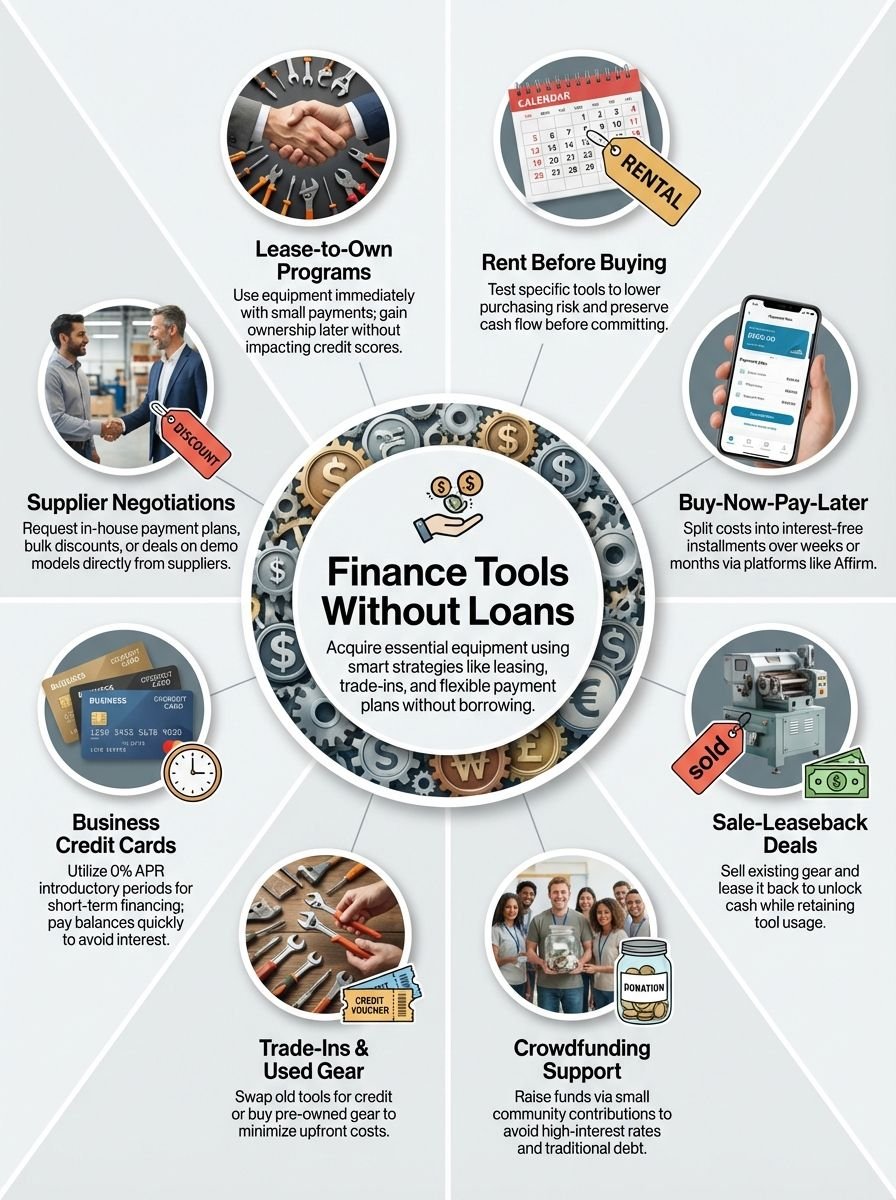
- Lease-to-own programs, like Acima, let you pay for tools over time without upfront costs or credit checks. Monthly or weekly payments help small businesses manage expenses.
- BNPL platforms like Affirm and Afterpay offer interest-free payment plans for tools, spreading costs into smaller parts over weeks or months. Abunda provides flexible financing with no credit checks on brands like DEWALT and Milwaukee.
- Trade-ins allow upgrading old tools to newer models while saving money. Selling used equipment on sites like Craigslist can help fund future purchases gradually.
- Crowdfunding through Kickstarter or family support offers loan-free ways to raise cash quickly, reducing financial risks while owning your gear outright.
- Negotiating deals directly with tool suppliers can lead to discounts, bulk pricing, or extended payment terms for refurbished or demo tools at lower prices.
Equipment Leasing Options
Leasing tools can be a smart way to get what you need without paying upfront. It offers flexibility and keeps more cash in your pocket for other expenses.
Understanding lease-to-own programs
Lease-to-own programs allow you to use equipment while making small payments. Acima provides options up to $5,000 without impacting your credit score. These plans don’t require a down payment, which is helpful for those with limited cash upfront.
Payments can be made monthly or weekly, offering flexibility for business owners. Over time, you take full ownership of the tools, making it a valuable choice for long-term needs.
This option suits individuals with bad or limited credit. Heavy equipment and major brand power tools are often part of these programs through platforms like Abunda. Some agreements include repairs and maintenance, helping save on additional costs later.
Be aware, lease-to-own may result in higher costs compared to purchasing used gear outright!
Benefits of renting tools before purchase
Renting tools lets you test them for specific jobs before committing money. It lowers the risk of buying something that doesn’t fit your needs. For example, if you’re starting a small business or working on short-term projects, renting offers flexibility without tying up your cash flow.
It also saves you from dealing with depreciation, which happens quickly with new equipment. Rental fees can often be written off as tax-deductible business expenses too. Trying out different rented tools helps figure out what works best for your work style or company needs.
As finances improve, this approach can lead to smarter purchases later on rather than rushing into loans or credit plans.
Rent first; own later when it feels right.
Specialized Buy-Now-Pay-Later (BNPL) Platforms
BNPL platforms like Affirm, Afterpay, and Klarna make tool financing simple. With these options, skip loans and stagger payments instead. For instance, Affirm offers up to 36 months with rates as low as 0% APR.
Afterpay splits payments into four interest-free parts over six weeks. Tools get shipped once you’re approved at checkout.
Abunda stands out for flexibility with no credit check plans. You can finance tools like the DEWALT 20V MAX Combo Kit for $31/month or a Milwaukee Fuel Combo Kit for $34/month. Over 216,000 customers trust Abunda’s method of spreading costs while avoiding hefty upfront payments.
Platforms also let you request products using Amazon links to tailor your needs further!
Sale-Leaseback Arrangements
Sell your equipment and lease it back to free up money quickly. This option keeps tools in your hands while boosting cash for other needs. Sale-leaseback deals often need no down payment, making them a good choice if funds are tight.
It works best with high-value items like trucks, machines, or furniture. Terms depend on the condition and age of your gear. Businesses use this method to improve cash flow without halting operations.
It’s a smart way to get financing without loans or losing access to vital tools.
Crowdfunding and Community Support
Crowdfunding platforms like Kickstarter or GoFundMe can help you raise money for equipment without loans. Many small contributions from supporters add up quickly, letting you finance used equipment or new tools.
It’s a smart way to avoid high-interest rates tied to traditional financing options.
Family and friends can also pitch in with no-interest loans or gifts. This approach reduces financial risks while keeping ownership control of your business. Community fundraising builds loyalty among locals, making them more likely to support your shop later on.
Trade-Ins and Upgrading Used Tools Gradually
Starting small with used tools can save money. Gradual upgrades allow growth without taking on big debts.
- Start by buying pre-owned equipment from places like Craigslist, Sears, or pawnshops. These tools cost less and still get the job done.
- Sell older tools that you no longer need to fund new purchases. Trading in equipment offsets costs and keeps your toolbox efficient.
- Focus on essential tools first, avoiding unnecessary spending on gear you rarely use. This helps control cash flow while meeting job demands.
- Upgrade to newer models as business income grows over time. This approach spreads out expenses and avoids rapid depreciation losses often found in brand-new machinery.
- Compare prices at tool trucks or big-box stores for deals on upgraded models or trade-in opportunities. Many suppliers offer discounts for trading old equipment.
- Farmers, mechanics, and contractors often opt for used because it performs well without breaking the bank upfront. Used tractors or power tools hold steady value for practical tasks.
- Buying in phases reduces financial stress compared to lump-sum purchases of brand-new items right away; smaller monthly payments are easier to manage.
- Larger retailers like Snap-on may have flexible financing terms for pre-owned tools or trade-ins, helping businesses upgrade piece by piece over time.
- Selling older gear directly through online platforms brings market liquidity quickly while prepping for an upgrade without loans or high-interest term options attached!
Utilizing Business Credit Cards Without Overextending
Business credit cards can ease equipment purchases. Many offer 0% APR for initial months, making short-term expenses easier to manage. For instance, an American Express card might help spread costs without immediate interest.
Keep spending within limits to avoid trouble. Only charge what you can pay off quickly. Late payments hurt your credit profile and lead to high-interest fees. Use cards to buy smaller tools or cover surprise repairs instead of big-ticket items like auto lifts or machinery.
Track balances often so they don’t exceed the credit limit. Rewards like cash back or points add perks but should not tempt overspending. With care, these cards build business credit while keeping finances steady and secure in unpredictable times!
Negotiating Deals Directly with Tool Suppliers
Tool suppliers often offer in-house payment plans, like weekly financing through tool trucks. Ask about discounts on bundled items or bulk purchases. Suppliers may also provide deals on demo models or refurbished tools at lower prices.
These can save you money without needing an equipment loan.
Building a long-term relationship with a supplier can pay off. They might extend better pricing, longer payment terms, or even throw in free maintenance packages. Some are open to matching competitor offers too.
For hard-to-find tools, request priority access directly from your supplier for an edge over others.
How to Upgrade Equipment Without Cash
Upgrading equipment without cash might sound tough, but it’s possible with smart strategies. These methods can help you get the tools you need without breaking the bank.
- Trade-In Old Tools
Swap your old tools for newer ones. Many suppliers offer trade-in programs, letting you use your current gear as credit toward better equipment. This benefits auto mechanics and other professionals needing upgrades. - Use Sale-Leaseback Deals
Sell your existing equipment to a financing company, then lease it back. You get quick cash to invest in new or used equipment while still using the sold gear until fully replaced. - Leverage Crowdfunding
Reach out to friends, clients, or community supporters through crowdfunding platforms. Small donations from many people can add up fast to fund vital equipment needs. - Partner with Angel Investors
Investors might fund your upgrades in exchange for future profits or equity in your business. This type of financing works well if you prove solid growth potential. - Try Specialized BNPL Platforms
Buy-now-pay-later plans let you spread costs over time without needing a loan upfront. Matco Tools and other providers often offer such options with manageable payments. - Negotiate Payment Terms
Speak directly with tool suppliers about installment plans or discounts on bulk purchases. Businesses may extend credit terms depending on relationships and purchase history. - Repair Instead of Replace
Upgrade parts instead of replacing entire machines if possible, reducing spending significantly while keeping tools functional for longer periods. - Join Equipment Pools
Share costly equipment with nearby businesses or co-ops instead of buying outright alone; this lowers ownership costs across everyone involved. - Use Business Credit Cards Wisely
Charge upgrades to a card with low annual percentage rates (APR). Pay off balances quickly before higher interest rates accumulate debt over time!
Conclusion
Financing tools without loans doesn’t have to be a headache. Use smart options like leasing, BNPL plans, or trading in old equipment. Stretch your dollar by saving on used tools and negotiating with suppliers.
Every method helps you grow your business without drowning in debt. Start small, think big, and make your tools work for you!
For more in-depth strategies on upgrading your equipment without upfront cash, check out our detailed guide here.
FAQs
1. What is equipment financing, and how does it work?
Equipment financing allows businesses to acquire the tools or machinery they need without paying a large upfront cost. Instead, you enter into a financing agreement with a lender who covers the purchase price, and you pay them back over time.
2. Can I get equipment financed if I have bad credit?
Yes, some lenders offer options for business owners with less-than-perfect credit. Online lenders or alternative financing methods may provide funding depending on your personal credit score and collateral.
3. Are there alternatives to traditional loans for purchasing equipment?
Absolutely! Alternative equipment financing options include leasing agreements, working with online lenders, using unsecured debt like lines of credit, or even exploring SBA 504 Loans through the Small Business Administration.
4. Do I need collateral when applying for equipment financing?
In many cases, yes. Lenders often require collateral to secure the loan; however, some forms of unsecured debt may not demand this but could come with stricter terms based on your credit history.
5. How can small business owners finance tools without loans?
Small business owners can explore creative paths such as vendor payment plans or seeking help from specialized equipment financing companies that focus on flexible solutions tailored to their needs.
6. What are the advantages of choosing equipment financing over buying outright?
Financing offers several benefits: it preserves cash flow by spreading payments out over time; it helps businesses get essential assets immediately; and in some cases, favorable terms might let you own the asset at the end of the agreement while keeping funds available for other expenses like inflation-related costs or mergers and acquisitions planning!
