
Struggling to get equipment financing for bad credit? You’re not alone, and many business owners face this challenge. The good news is that there are options to help you secure the tools you need without breaking the bank.
Keep reading to learn how you can grow your business, even with a low credit score!
Key Takeaways
- Businesses with bad credit can still qualify for equipment financing; some lenders accept credit scores as low as 500.
- Loans often cover up to 100% of equipment costs, including taxes and delivery, with repayment terms ranging from 24 to 72 months.
- Leasing offers flexible payment options, like deferred or seasonal schedules, and avoids ownership of outdated tools.
- Offering a larger down payment, additional collateral, or using a cosigner improves approval chances and may lower interest rates.
- Alternative lenders like Crestmont Capital provide quick funding (3–5 days) and more lenient terms compared to traditional banks.
What is Equipment Financing for Bad Credit?
Equipment financing for bad credit helps businesses get tools or machines they need without a perfect credit score. The equipment itself serves as collateral, making it easier to qualify.
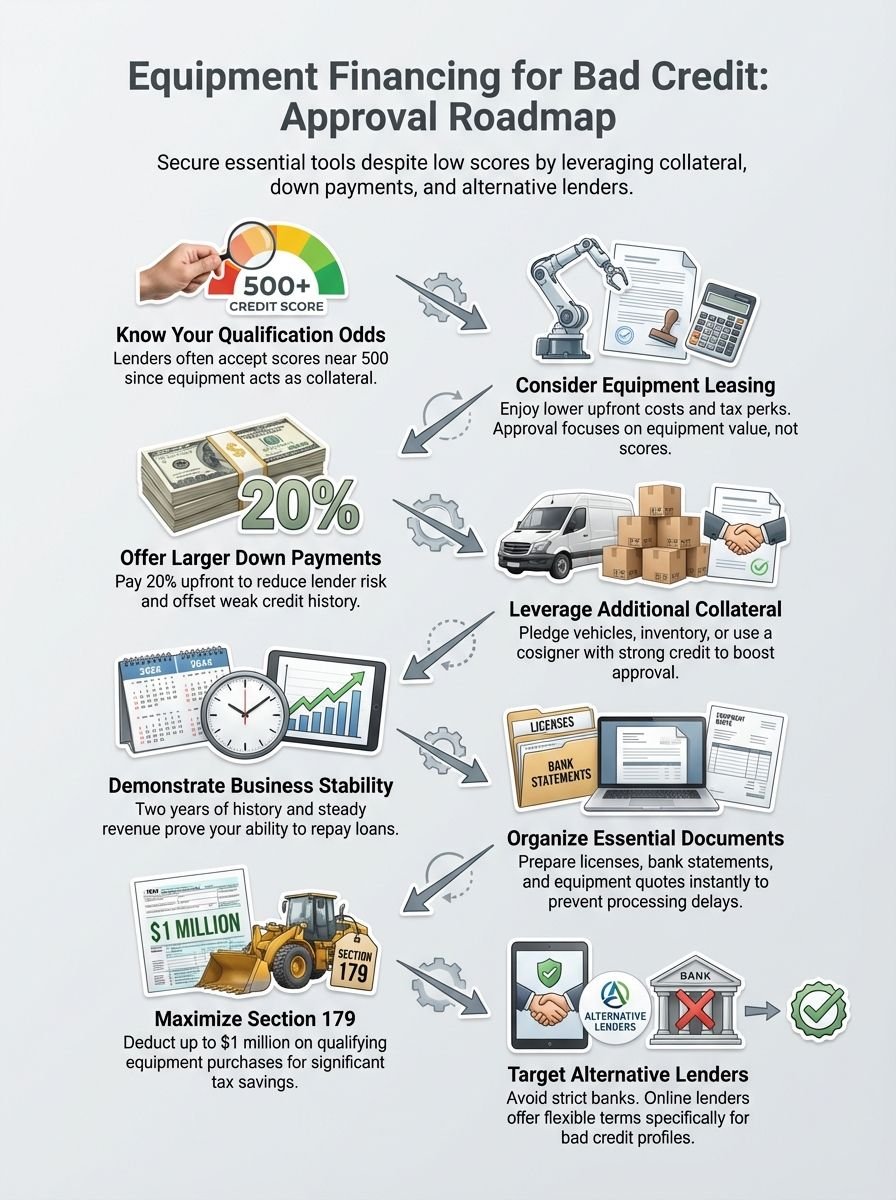
Lenders may approve loans with scores as low as 500, though higher interest rates and extra guarantees might apply.
Loans often stretch over 24 to 72 months and can cover up to 100%, including delivery or taxes. Some lenders offer rates starting at 5.99%, but your business’s finances and equipment type influence the final terms.
Flexible repayment schedules, like monthly or seasonal payments, help manage costs while keeping cash flow steady.
Who Qualifies for Equipment Financing with Bad Credit?
Businesses with credit challenges may still qualify for equipment financing. Lenders often focus on the type and value of the equipment you want to purchase. Stronger chances exist if the equipment can act as collateral.
Having a business track record of at least two years or a solid borrowing history also helps.
Borrowers offering larger down payments or additional collateral improve approval odds, too. Some lenders require basics like a driver’s license, voided business check, application form, and an equipment quote.
Startups may face tougher terms but remain eligible in many cases. Credit scores below 720 won’t always mean rejection; it just depends on the lender’s flexibility and guidelines.
Best Loan Options for Bad Credit Equipment Financing
Finding the right loan for bad credit can feel tricky, but there are solid options out there to help you get the gear your business needs.
Equipment Leasing for Bad Credit
Equipment leasing offers a simple way for those with bad credit to get the tools they need. Many leases don’t require a down payment, which helps businesses with tight budgets. Lease amounts can range from $10,000 to as high as $2 million.
Payments are flexible and often come with options like 90-day deferrals. For bad credit applicants, fixed pricing and tax advantages make leases more appealing.
Leasing also allows companies to avoid owning outdated equipment. Businesses can upgrade at the end of their lease term instead of being stuck with old technology. Approval depends on the type and value of the equipment rather than solely focusing on your credit score.
This makes leasing an accessible option if cash reserves or personal credit aren’t strong enough for traditional loans.
Alternative Lenders Offering Flexible Terms
Some online lenders help small businesses with lower credit scores. Companies like Crestmont Capital, National Business Capital, and Clicklease approve loans for scores as low as 500.
Their flexible terms include step payments or seasonal schedules that match your cash flow.
1st Commercial Credit can fund up to $500,000 with just an application or up to $10 million if you provide financial records. They offer repayment periods of 2 to 7 years. Fast approval is also common; funding may take only 3–5 days in many cases.
Equipment Financing Options for Startup Businesses
Startup businesses can access equipment financing, but terms may be stricter. Loans often start at $10,000 and are based on creditworthiness. Lenders may ask for detailed business plans, equipment quotes, and financial statements before approval.
Offering additional collateral or using a cosigner can increase your chances.
Alternative lenders like Crestmont Capital provide flexible solutions for startups. These companies may cover up to 100% of costs for new or used equipment. Financing is available for items ranging from heavy machinery to computers.
The value of the equipment itself often serves as collateral, reducing risk for the lender.
Tips to Improve Your Chances of Approval
Lenders want to see you’re serious, even if your credit score isn’t strong. Show them proof of steady income or offer assets like vehicles or equipment as backup.
Offer a Larger Down Payment
A 20% or higher down payment can make a big difference. It reduces the lender’s risk and shows you are serious about the loan. This can lead to better terms, even with bad credit.
Paying more upfront might lower interest rates or offset a weak credit history. Lenders may also approve loans faster when cash is offered upfront. If your business is new, showing this commitment could improve your chances of success.
Use a Cosigner or Additional Collateral
A cosigner with strong credit can increase approval chances. Their solid credit score shows lenders less risk. This often leads to better loan terms, like lower interest rates or longer repayment periods.
For example, a trusted partner or family member may help secure your equipment financing.
Offering additional collateral also lowers lender risk. You could pledge assets such as vehicles or inventory you own. Sometimes, the equipment itself acts as collateral for the loan.
The value and condition of these assets directly affect your approval odds and loan size. Strong collateral may even unlock higher limits on an equipment loan for bad credit businesses!
Common Mistakes to Avoid When Applying
Applying for equipment financing with bad credit can feel tricky. Avoid these mistakes to improve your chances of approval and save time.
- Submitting incomplete applications
Missing documents like a driver’s license, equipment quote, or bank statements often leads to denials. Lenders need full information to decide fast. - Ignoring your credit report
Errors on your credit report can hurt your chances. Check for mistakes or unpaid debts before applying for business equipment financing. - Not meeting lender requirements
Every lender sets rules like minimum credit scores or time in business. Research their policies first to avoid wasting effort. - Asking for too much money
Overestimating loan amounts without matching them to cash flow can cause financial strain later. Only borrow what fits your revenue and needs. - Failing to organize paperwork
Unorganized legal or financial documents slow down underwriting decisions. Prepare tax returns, company details, and contracts beforehand. - Overusing credit cards
Relying heavily on personal or business credit cards impacts future borrowing power negatively by raising debts and lowering limits. - Forgetting Section 179 tax benefits
Buying instead of leasing may offer small businesses tax savings under Section 179 depreciation deduction rules for new equipment purchases. - Applying blindly without alternatives
Sticking only to banks may lead to rejection due to strict terms for bad credit borrowers; consider alternative lenders who work with startups or poor credit profiles. - Missing upfront costs preparation
Not saving enough for down payments reduces the chance of approval since higher upfront payments show commitment and lower risk for creditors. - Skipping collateral options
Lenders prefer borrowers offering heavy equipment or assets as collateral; it increases approval odds while reducing interest rates significantly!
Comparing Leasing vs. Financing for Bad Credit
Sometimes, deciding between leasing or financing equipment with bad credit can feel like a tightrope walk. Both options have perks, but they serve different needs. Here’s a no-nonsense comparison to help you weigh your choices.
| Feature | Leasing | Financing |
|---|---|---|
| Ownership | No ownership during the lease. Option to purchase at the end. | Full ownership once the loan is paid off. |
| Upfront Costs | Lower upfront payments, often no down payment required. | May require a down payment, typically 10-20% of the equipment’s cost. |
| Monthly Payments | Usually lower, can include flexible structures like deferred or seasonal payments. | Fixed monthly payments, usually higher than leasing. |
| Credit Requirements | Often more lenient for bad credit applicants. | Tighter credit checks, but collateral (equipment) can help your case. |
| Tax Benefits | Lease payments may qualify as tax-deductible business expenses. | Depreciation of equipment can provide tax benefits. |
| Equipment Obsolescence | Allows upgrades at the end of the lease. Avoid being stuck with outdated tools. | Ownership means any upgrades come out of your pocket. |
| Balance Sheet Impact | No direct impact on your assets or liabilities. | Adds the equipment as an asset and the loan as a liability. |
| Flexibility | More flexibility, especially for startups or businesses with cash flow challenges. | Less flexibility, but offers long-term benefits like ownership. |
Leasing may feel like borrowing a car for a road trip, while financing feels more like buying the car outright. Both help businesses grow, but the choice depends on your goals.
Key Factors That Impact Approval and Loan Amount
Your credit history plays a big role in approval. Many lenders look for a good credit score, with some requiring at least 720. If your score is lower, expect stricter terms or the need to provide collateral.
The equipment you’re purchasing also matters. Lenders check its value and condition. Newer items usually get better loans than old ones.
Business age can impact decisions too. Companies operating for over two years often have higher approval chances. Strong cash flow projections make a difference as well. Show that your business can handle payments easily to secure better offers.
Some lenders may ask for larger down payments to offset risks tied to bad credit applicants too!
Pros and Cons of Equipment Financing with Bad Credit
Equipment financing with bad credit has ups and downs. It can help your business grow, but it comes with challenges.
Pros:
- You can get modern equipment without paying a big upfront cost. This helps keep cash flow steady for other needs.
- Some lenders offer up to 100% financing, including soft costs like taxes and installation fees.
- Using equipment as collateral makes it simpler to qualify even with a low credit score.
- Businesses may benefit from tax advantages under Section 179 deductions, which allow up to $1 million in write-offs on equipment.
- Affordable monthly payments make budgeting more manageable compared to buying the equipment outright.
Cons:
- Interest rates are often higher for borrowers with bad credit, which increases total loan costs.
- Loans might require a larger down payment, extra collateral, or a cosigner to secure approval.
- Missing payments can result in losing the financed equipment since it serves as collateral.
- Loan terms might be shorter, providing less time for repayment flexibility.
- Reduced flexibility in negotiating terms means fewer options compared to those with good credit scores.
How to Apply for Equipment Financing Today
Getting equipment financing today is easier than you think. Follow these simple steps to apply and secure the funds you need.
- Check your credit score. Some lenders run soft credit checks, which won’t affect your score, while others may require a hard pull.
- Gather necessary documents. You’ll usually need a driver’s license, voided business check, application form, and an equipment quote to get started.
- Choose the right lender. Research financing companies like Crestmont Capital or 1st Commercial Credit that offer fast approvals and flexible terms for businesses with bad credit.
- Complete your application online. Applications can often be finished in 3–5 minutes using electronic forms provided by most lenders.
- Negotiate loan terms if needed. Discuss payment schedules or rates that work best for your business goals with customer service representatives.
- Submit additional collateral or use a cosigner if possible. Adding security can help improve approval chances or lower interest rates.
- Wait for approval decisions quickly! Funding is often processed in as little as 24 hours or within 1–2 business days after approval.
- Review the contract carefully before signing it to ensure you’re clear about repayment terms and any hidden fees included.
- Decide how to receive funds, whether directly deposited into your account or used for immediate equipment purchases through your supplier.
- Start using the loan immediately once approved to purchase the equipment that fits your needs!
- Contact support teams for questions throughout this process; they can guide you step by step without delays!
Frequently Asked Questions on Equipment Loans for Bad Credit
Equipment loans can help businesses get the tools they need. Even with bad credit, many options are available.
- Can I get equipment financing with a low credit score?
Yes, lenders may approve scores as low as 500. You might face higher interest rates. - Is a down payment required for bad credit financing?
Most lenders ask for at least 20%. A larger down payment improves your chances. - What types of equipment can I finance?
You can finance both new and used items, like machinery or vehicles. - Are there no-credit-check options?
Yes, some lenders offer this, but expect higher costs and fees. - How does leasing differ from financing?
Leasing lets you rent; financing helps you own it outright after payments. - Can startups qualify for equipment loans?
Many startup businesses do qualify if they offer collateral or a cosigner. - Does my personal credit affect the loan?
Personal scores matter for approval and interest rates in most cases. - What documents do I need to apply?
You usually need proof of income, business details, and possibly tax returns. - Are there tax benefits tied to equipment loans?
Yes, Section 179 lets you deduct up to $1 million on qualifying purchases. - Do I need collateral for these loans?
Often, the equipment itself acts as collateral in secured loans. - How long is the repayment term typically?
Terms range from one to seven years based on the lender and agreement. - Can I use multiple lenders for comparison?
Yes, comparing offers helps find better interest rates or terms that fit best.
Don’t Let Bad Credit Hold Back Your Business Growth
Bad credit doesn’t mean your business has to stop growing. Financing options like equipment loans or leasing can help you secure the tools your business needs. Even with poor credit, many equipment financing companies offer flexible terms to keep businesses moving forward.
Upgrading machinery or vehicles boosts productivity and service quality. This leads to higher sales and happier customers. Offering a larger down payment or using collateral can also improve chances of approval.
Don’t let bad credit block success; the right financing solutions are available for almost every industry.
Conclusion
Getting equipment financing with bad credit isn’t impossible. Many lenders focus on your business potential, not just your score. Explore options like leasing or working with flexible lenders to find the right fit.
Don’t let poor credit stop you from growing your business. With effort and smart choices, you can secure the tools you need to thrive!
FAQs
1. Can I get equipment financing with bad credit?
Yes, you can still finance equipment with bad credit. Many lenders offer options like asset-based lending or merchant cash advances to help businesses secure the equipment they need.
2. What are my options for equipment financing and leasing?
You can choose between purchasing new or used equipment, leasing it, or applying for an equipment loan. Leasing is great if you want lower upfront costs, while loans give you ownership of the equipment.
3. How does bad credit impact my ability to finance the right equipment?
Bad credit may limit your options or lead to higher interest rates. However, lenders often consider factors like collateral, business revenue, and working capital when approving applications.
4. Are there benefits to using heavy equipment financing for a business with bad credit?
Yes! Heavy equipment financing helps businesses access essential tools without large upfront payments. It also lets startups and small companies scale operations while preserving their working capital.
5. Do banks and financial institutions require a hard credit pull for an application?
Some do perform a hard credit check that impacts your personal credit score temporarily; others may use soft pulls instead depending on their policies.
6. Can I improve my chances of getting approved for an equipment loan?
Absolutely! Providing collateral like real estate or other assets strengthens your application. Keeping up-to-date financial data ready also shows you’re serious about securing funding responsibly.
