Finding the right equipment financing can feel like a maze. Equipment loans help businesses buy everything from trucks to computers without draining their cash flow. This guide breaks down top equipment finance reviews, so you can spot the best options for 2025.
Keep reading to find the perfect fit for your business needs!
Key Takeaways
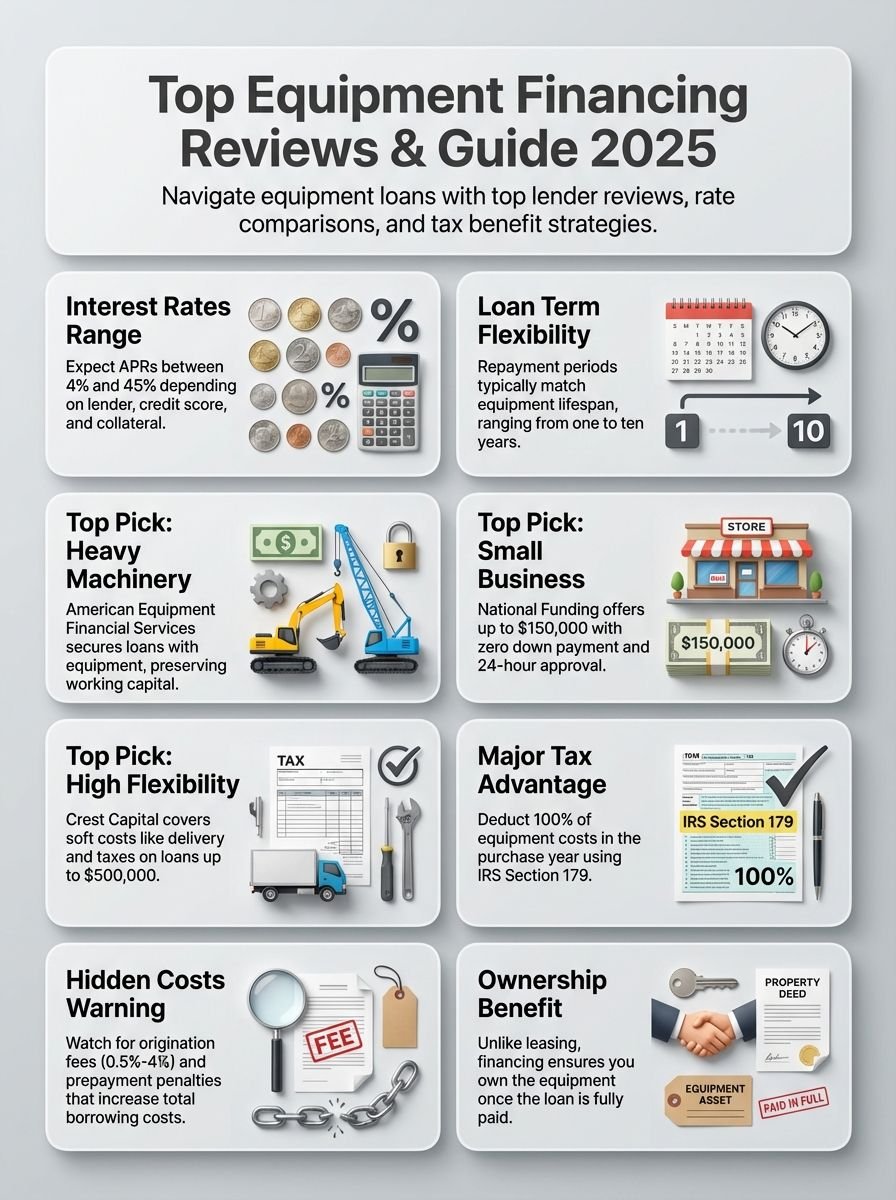
- Interest rates for equipment loans range from 4% to 45% APR. SBA-backed loans, like the SBA 7(a), offer up to $5 million with terms of up to 10 years.
- National Funding provides fast approvals in as little as 24 hours and funds up to $150,000 without a down payment. A credit score of at least 600 is required.
- Crest Capital offers flexible financing options ranging from $5,000 to $500,000. Their A+ BBB rating reflects strong customer trust since starting in 1989.
- Section 179 lets businesses deduct up to 100% of equipment costs on taxes in the purchase year, including used items and soft costs like shipping or installation fees.
- Borrowers with bad credit can still qualify through lenders like National Funding (scores as low as 550) or Cardiff (no hard credit checks).
Key Factors in Choosing the Best Equipment Financing Company
Choosing the right lender can make or break your purchase. Focus on what works best for your business needs and budget.
Interest rates and terms
Interest rates for equipment financing often range from 4% to 45% APR. Loans backed by SBA, like the SBA 7(a), offer up to $5 million with terms of up to 10 years. Banks, such as Bank of America, might offer fixed rates starting at 7%, with repayment periods lasting up to five years.
Shorter-term loans are also available. OnDeck provides funding of up to $400,000 and terms extending only two years. Many lenders align loan lengths with the lifespan of the equipment itself, which could be anywhere between one and ten years.
Be mindful; fees like origination costs (0.5%-4%) or prepayment penalties might apply when securing business equipment loans too!
Loan amounts and flexibility
Some equipment financing companies offer impressive loan amounts. JR Capital provides up to $10,000,000 for heavy equipment needs. U.S. Bank finances as much as $1,000,000 and even covers 125% of the equipment’s cost to include soft expenses like installation or delivery.
National Funding offers loans up to $150,000 for small businesses needing quick access.
Flexibility also varies between lenders. Kapitus has no maximum limit but starts at either $15,000 or $25,000 based on the type of machinery financed. Crest Capital caters to both minimal and large purchases with loans ranging from $5,000 to $500,000.
Triton Capital adds flexible repayment plans alongside its cap of $250,000 per loan option. Options like these give business owners room to buy new or used equipment without feeling boxed in by limits or rigid terms.
Customer service and reputation
Good customer service builds trust. Companies like Crest Capital and National Funding hold an A+ rating from the Better Business Bureau (BBB). This shows strong reputations and satisfied customers.
OnDeck, with $15 billion funded, also earns an A+ BBB rating for its easy process.
Ascentium, however, has faced some billing complaints from customers. Choosing companies with a track record of reliability helps avoid issues down the road. Transparency matters too; lenders rated by NerdWallet prioritize clear terms and responsible practices without hidden surprises.
Top Equipment Financing Companies for 2025
Finding the right lender can feel like fishing in a sea of options. These top companies stand out for their solid offerings and reliability.
American Equipment Financial Services
American Equipment Financial Services specializes in financing heavy equipment and machinery for businesses. They focus on helping companies secure loans for both new and used equipment purchases.
Flexible loan terms allow businesses to pick repayment options that fit their budgets.
Their customer service stands out, aiming to make the process simple and quick. Loans are often secured by the equipment itself, reducing risks for applicants with less-than-perfect credit scores.
Customers can use these loans for commercial vehicles, construction gear, or other essential tools needed to run a business efficiently.
Use your equipment as collateral and keep your working capital intact.
SLS Financial Services
SLS Financial Services stands out for businesses needing equipment financing. They offer flexible options created to help companies of all sizes. Whether you’re looking to finance heavy equipment or smaller machinery, they provide solutions customized to meet specific needs.
Their reputation for clear terms and reliable customer service sets them apart. SLS Financial makes the loan process smooth and easy for business owners. Borrowers can use financed equipment as collateral, which helps secure funding faster without high upfront costs.
They serve businesses in various industries, making them a dependable choice for diverse equipment needs.
Crest Capital
Crest Capital has supported small and mid-sized businesses since 1989. They offer equipment, vehicle, and software financing from $5,000 to $500,000. Businesses with at least two years of profitability qualify if they have no history of bankruptcy.
Approval is quick, often within hours.
This lender covers “soft costs” like taxes or delivery along with the price of equipment. Their A+ rating on BBB reflects customer trust and satisfaction. Crest Capital is a top choice for companies needing flexible terms for heavy machinery or other business tools.
Trucking Finance Group
Trucking Finance Group helps businesses secure equipment financing for commercial vehicles and heavy machinery. They focus on helping trucking companies get the funding they need to buy trailers, trucks, or other essential tools.
Their loan options are flexible, with terms designed to suit different budgets.
This company offers competitive equipment financing rates and works with businesses of various sizes. Whether you’re starting fresh or expanding your fleet, they can help simplify the process.
Collateral like vehicles is often used to back these loans, making approval easier for many borrowers.
Best Equipment Financing Companies for Small Businesses
Small businesses often face challenges when buying equipment. These companies can provide loans to help you get the tools you need without breaking the bank upfront.
National Funding
National Funding has funded over $4.5 billion and holds an A+ BBB rating. They offer equipment loans of up to $150,000 with no down payment required. Approval can take as little as 24 hours, and funds may be available the next day.
Businesses with a credit score of at least 600, six months in operation, and $250,000 annual revenue qualify.
They provide prepayment discounts and work with startups or firms with poor credit history. While their application process is fast, they do charge an origination fee. Higher annual revenue requirements might make them less flexible for some small businesses compared to competitors offering lower thresholds.
OnDeck
OnDeck has funded over $15 billion to businesses, making it a powerhouse in equipment financing. It offers loans up to $400,000 for equipment purchases. Businesses with at least one year of operation, a 625 credit score, and annual revenue of $100,000 can qualify.
Same-day funding is available for amounts up to $100,000 but excludes California and Vermont.
The terms are short and straightforward. Borrowers can repay within 24 months using competitive rates starting as low as 1.10. Payments might be weekly or daily based on loan type.
While OnDeck helps build business credit and requires minimal paperwork, fees may apply for early payments or origination costs. It’s unavailable in North Dakota, Nevada, and South Dakota but remains flexible elsewhere for small business owners looking to buy equipment fast!
Pros and Cons of Equipment Financing
Equipment financing can be a lifesaver when cash is tight, letting you buy what your business needs without draining your wallet. But like any loan, it comes with strings attached that you should weigh carefully.
Benefits of financing over leasing
Financing lets you own the equipment after paying off the loan. Leasing does not offer this benefit. Ownership means no future payments once the loan is complete, saving money in the long term.
This works best if you plan to keep and use the equipment for more than 36 months. Financing often has competitive rates, starting as low as 4% APR. Loan terms can also match the life of your machinery, making payments predictable.
Using financing provides tax perks too. Under Section 179 of U.S. tax law, you could deduct up to 100% of your equipment’s cost in its purchase year. The item itself usually serves as collateral for a loan, so personal credit may not factor heavily into approval decisions.
Some lenders even cover soft costs like installation or shipping fees within one payment plan, avoiding extra loans or hidden expenses later on.
Potential drawbacks to consider
Some loans may force you to pay a high down payment, sometimes up to 20% of the equipment’s cost. This can strain your budget if working capital is tight. Equipment financed with loans becomes your responsibility after purchase.
Maintenance, repairs, or upgrades could pile on costs as the machines age.
The equipment might become outdated before you finish paying for it. Unlike leasing, there’s no trial period to switch gears if tools don’t meet your needs. Some lenders include prepayment penalties or charge origination fees that can be as high as 4%.
If payments are missed and default occurs, creditors can repossess the equipment used as collateral.
How to Compare Equipment Financing Offers
Look closely at the costs tied to each loan offer. Focus on what fits your business needs, not just the lowest rate.
Evaluating interest rates
Interest rates for equipment loans vary between 4% and 45% APR. Most fall in the range of 7% to 20%. A lower rate can save you thousands, depending on the size of your loan. SBA loans often provide lower, capped rates compared to online lenders, making them attractive options for small businesses.
Factor rates are another method some companies use. Lenders like National Funding or OnDeck offer competitive factor rates starting at 1.10. Be cautious about origination fees or prepayment penalties; these can add up quickly, increasing your total borrowing cost by an extra 0.5% to 4%.
Always match interest terms with how long you plan to use the equipment as collateral.
Understanding repayment terms
Repayment terms for equipment financing vary widely. They can range from 1 to 10 years, based on the lifespan of the equipment and lender policies. For example, Cardiff offers repayment options up to 72 months (6 years).
Payments may be scheduled monthly, weekly, or even daily.
Some loans cover up to 125% of equipment value, including soft costs like taxes or delivery fees. Others might need a down payment ranging from zero to 20%. Be cautious with early payments; some lenders charge penalties, while others provide discounts for prepaying.
Loan amounts between $5,000 and $10 million can affect how long you repay as well as your installments.
Frequently Asked Questions About Equipment Loans
Got questions about equipment loans? We’ve got straight answers to help you choose smart options for your business.
Can you qualify with bad credit?
Bad credit doesn’t always prevent you from obtaining equipment financing. Some lenders, such as National Funding and eLease, accept credit scores as low as 550 or even 470. They also support startups and businesses with poor financial histories.
Cardiff bypasses hard credit checks, making approval simpler for certain borrowers.
You might face higher rates or a larger down payment if your credit score is low. Banks like Bank of America require at least a 700-credit score, so they tend to have stricter requirements.
OnDeck asks for a 625-credit score but also requires one year in business. Higher scores still translate to lower costs and improved terms!
Is equipment financing tax-deductible?
Equipment financing can offer valuable tax benefits for businesses. Under Section 179 of the IRS code, companies may write off up to 100% of equipment costs in the year they buy it.
Even used equipment qualifies for this deduction. Loan interest paid on financed equipment is often deductible too, as a business expense.
Depreciation also lowers taxable income over time. For example, if you finance heavy machinery or tools for your business, their declining value can be deducted annually. Some lenders even cover soft costs like warranties or installation, which might qualify as deductions too.
Always check with a tax advisor to confirm eligibility and avoid mistakes!
Conclusion
Choosing the right equipment financing company can make or break your business goals. The best lender will offer fair rates, flexible terms, and quick approvals. Take time to compare options and weigh the pros and cons carefully.
Owning the equipment you need could push your business forward in 2025. Make a smart move now, so you’re ready for success later!
For more information on securing an equipment loan with less-than-perfect credit, visit our detailed guide Can You Get an Equipment Loan With Bad Credit?.
FAQs
1. What is equipment financing, and how does it work?
Equipment financing is a type of loan or lease used to purchase business equipment like machinery, vehicles, or tools. You borrow money to buy the equipment you need, and then repay it in installments over time.
2. What are the best equipment financing options for small businesses?
Small businesses can explore loans from lenders specializing in business financing, such as OnDeck Capital or Small Business Administration-backed programs. These offer competitive rates tailored for smaller operations.
3. Does heavy equipment financing require collateral?
Yes, many heavy equipment loans use the purchased item itself as collateral. This means if you don’t make payments on time, the lender could take back the financed machinery.
4. Should I lease or buy my business equipment?
Leasing works well if you plan to replace your equipment often or want lower upfront costs. Buying might be better if you plan to keep the machine long-term and benefit from tax deductions.
5. How do I choose the best lender for an equipment loan?
Look at factors like interest rates, repayment terms, and whether they finance new or used gear. Compare offers from multiple lenders before deciding which one fits your needs best.
6. Do all loans require a down payment when purchasing business equipment?
Not always; some lenders offer no-down-payment options depending on your credit score and time in business. However, putting money down can reduce monthly payments and total costs over time!
