
Struggling with late payments to suppliers? You’re not alone. Many small businesses face this issue, often due to cash flow problems or unexpected costs. In this guide, you’ll find practical tips to pay suppliers on time and avoid damaging your business relationships.
Keep reading for solutions that work!
Key Takeaways
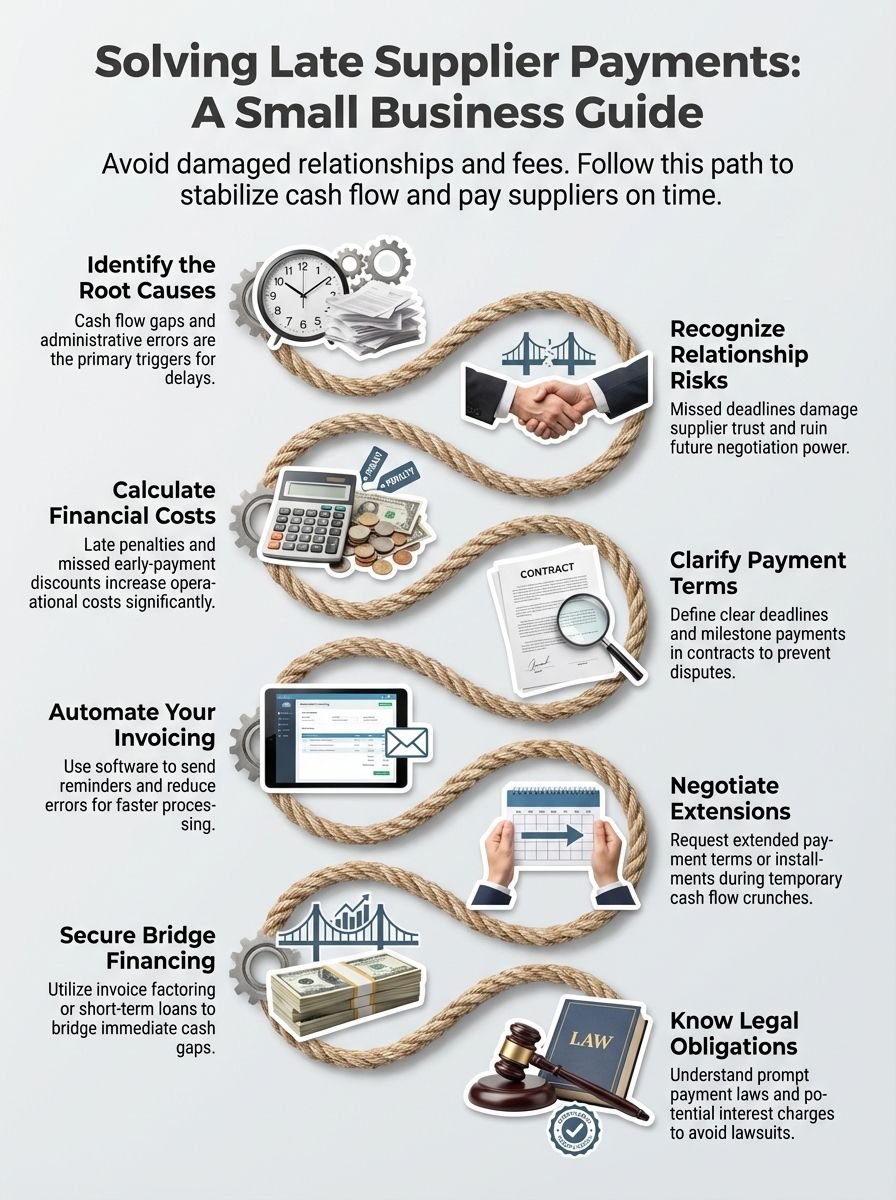
- Late payments harm supplier trust, disrupt cash flow, and add costs like fees or missed discounts. For example, a 5% late fee on a $1,000 invoice adds $50.
- Clear terms like “payment due in 30 days” on invoices prevent disputes and ensure timely payments. Milestone-based payment plans help manage larger projects effectively.
- Automated tools like QuickBooks send reminders before deadlines and cut invoicing errors, speeding up collections without extra work.
- Small business loans or grants can cover gaps during delays but may come with interest or strict conditions. Building three to six months of reserves helps long-term stability.
- Open communication with suppliers is key during tough times. Negotiating installments or extended terms can protect relationships while managing cash flow challenges better.
Common Reasons for Late Supplier Payments
Late payments often stem from tight cash flow or simple mistakes in paperwork. These issues can snowball, making it harder to keep your business running smoothly.
Insufficient cash flow or unexpected expenses
Unexpected expenses, like repairs or sudden bills, can hit your business hard. Strained cash flow often pushes important payments, like supplier invoices or payroll, to the back burner.
For small businesses with tight budgets and limited reserves, even a short delay in customer payments disrupts operations.
Holding three to six months of expenses as cash reserves helps provide stability but may restrict funds for growth. Some companies use delayed supplier payments as free credit to manage shortages; however, this risks damaging relationships and incurring late payment fees.
Short-term financing options such as invoice factoring can offer a quick fix but may come at a high cost in interest or collateral.
Cash flow is king—and without it, nothing moves forward.
Poor invoicing practices or administrative errors
Incorrect invoices cause major payment delays. Missing details, like wrong amounts or incomplete addresses, confuse clients. Lost paperwork slows down the process even further. Sending an invoice to the wrong email can leave it sitting unread for weeks.
Holidays and bank delays also create issues with accounts payable. Manual approvals add extra time before funds transfer to your supplier’s account. Ignored reminders turn a simple mistake into a bigger problem, signaling poor management habits on your part.
Overdue payments affect supplier trust and disrupt cash flow badly.
The Impact of Late Payments on Your Business
Late payments can hit your business like a storm, disrupting cash flow and causing chaos. They make it harder to keep operations running smoothly, leaving you scrambling for solutions.
Damage to supplier relationships
Missed payments can harm trust with suppliers. Vendors may refuse discounts, better payment terms, or even future business. They might delay shipments or services until accounts are settled.
This disrupts your supply chain and affects operations.
“Trust is hard to build but easy to lose,” especially in business dealings. Late payments hurt reputations and strain partnerships. Suppliers could prioritize prompt-paying clients instead of you, leaving your small business at a disadvantage in the long run.
Increased costs due to late fees or loss of discounts
Late payments pile on costs quickly. Suppliers may charge late fees, which eat into your cash flow. For example, a $1,000 invoice overdue by 30 days might add a $50 penalty based on 5% fees.
These penalties can stack up if delays continue.
Missing early payment discounts hurts even more. Many suppliers offer deals like 1% off for paying within 10 days instead of the full amount in 30 days. Skipping this could cost your business hundreds or thousands over time.
Staying prompt helps avoid these extra charges and keeps money in your pocket.
Proactive Solutions to Avoid Late Payments
Clear communication and smart tools can stop payment delays cold. A few small changes now can save headaches later.
Implementing clear payment terms and schedules
Set payment terms at the start of every deal. Include due dates and late fees in contracts to avoid confusion. For example, state “payment due within 30 days” clearly on invoices.
This prevents disputes and keeps payments timely.
Break payments into smaller steps if needed. Use milestones for large projects, like requiring half upfront and the rest upon delivery. Add reminders before deadlines to stay top-of-mind for clients or suppliers.
These simple actions help maintain smooth cash flow and protect business growth.
Using automated invoicing and payment reminders
Invoicing software like QuickBooks or FreshBooks simplifies payment processes. Automated reminders go out before and after due dates, encouraging clients to pay promptly. This reduces overdue invoices and boosts timely payments without extra effort from your team.
ERP systems ensure accurate data, cutting down on invoice errors that slow collections. Tools like Ramp also add multiple payment options to speed things up. Using professional reminder templates can help keep the tone polite but firm.
Automation saves time, prevents delays, and keeps cash flow healthy for small businesses.
Strategies to Manage Cash Flow During Payment Delays
Late payments don’t need to wreck your cash flow. Smart planning and small changes can help keep your business moving forward.
Negotiating extended payment terms with suppliers
Talk openly with your suppliers about payment challenges. Many suppliers allow extended terms during tough times to maintain good relationships. Propose paying in smaller amounts over time, like through installments or direct debits.
This shows effort and helps manage cash flow.
Suppliers may also agree to short-term extensions if the problem seems temporary. Be upfront about constraints but focus on solutions that benefit both sides. Some may require milestones or partial payments before continuing services or deliveries, which reduces risks for everyone involved.
Clear agreements build trust and keep business running smoothly without disrupting operations too much.
Exploring small business loans or grants
Small business loans or grants can help fill cash flow gaps. A short-term loan can give you quick funds, though interest costs may follow. Grants are another option, offering money without repayment but often require meeting strict conditions.
Programs like the Small Business Administration in the United States support businesses with low-cost loans.
Invoice factoring is also available for faster liquidity by selling receivables for a fee. Diversifying income streams reduces reliance on one revenue source and protects against payment delays.
Building a reserve equal to three to six months of expenses ensures better financial stability during tough times.
How to Rebuild Cash Flow After a Loss
Cut unnecessary costs first. Review expenses like subscriptions, vendor contracts, or slow-moving inventory. Trim what no longer serves the business.
Focus on faster payments from customers. Offer small discounts for early payment or use accounts receivable systems to track overdue invoices. Automated tools can reduce collection delays and improve cash flow quickly.
Legal and Regulatory Considerations for Payment Delays
Understand the laws that protect both you and your suppliers. Ignoring these can lead to fines or even lawsuits.
Understanding your rights and obligations as a business
Companies have the right to charge interest and claim costs on overdue invoices under UK law. If a payment is late, businesses may reissue an invoice with interest added. Clear terms must be in your agreements for these charges to hold up legally.
The Prompt Payment Code encourages large companies to pay small businesses within 30 days, offering extra protection.
Legal action can address unpaid bills but comes with high costs and time demands. Small claims court or collection agencies are often last resorts for slow-paying customers. Make sure your payment schedules follow local laws and regulations; these rules vary by region.
Consulting legal experts ensures you act within the law while protecting your rights as a small business owner.
Conclusion
Late payments don’t have to sink your business. With clear terms, smart tools, and better cash flow planning, you can stay ahead. Be proactive with reminders and open talks with vendors.
Every step builds stronger relationships and smoother operations. Tackle late payments now to keep your business thriving!
For detailed strategies on revitalizing your finances, read our guide on how to rebuild cash flow after a loss.
FAQs
1. Why do businesses often struggle to pay suppliers on time?
Late payments happen for many reasons, including temporary cash flow issues, market liquidity problems, or delays in collecting payments from customers. Smaller businesses may face more challenges due to limited resources.
2. How can late payments impact your business operations?
Paying suppliers late can disrupt your cash flow and hurt relationships with vendors. It might also lead to fees for late payment, damage your payment history, and reduce trust in your ability to pay on time.
3. What steps can you take to deal with delayed payment situations?
You can improve cash flow management by offering early payments discounts to clients or using invoice discounting services. Keeping track of accounting records and prioritizing full payment within agreed terms helps too.
4. Is there a way smaller businesses can prevent paying suppliers late?
Yes! Maintain healthy financial practices like budgeting carefully and monitoring expenses closely. Using flexible payment methods or credit options may also help during tight times.
5. Can larger companies’ actions affect smaller businesses’ ability to pay vendors?
Absolutely! When larger businesses delay their own payments, it creates a ripple effect that impacts mid-sized and smaller companies relying on timely funds for goods or services they provide.
6. What’s the best way to avoid future issues with paying suppliers late?
Focus on improving communication with vendors about timelines while streamlining procurement processes efficiently; this saves both time and resources while keeping everything running smoothly without disrupting operations further down the line!
