
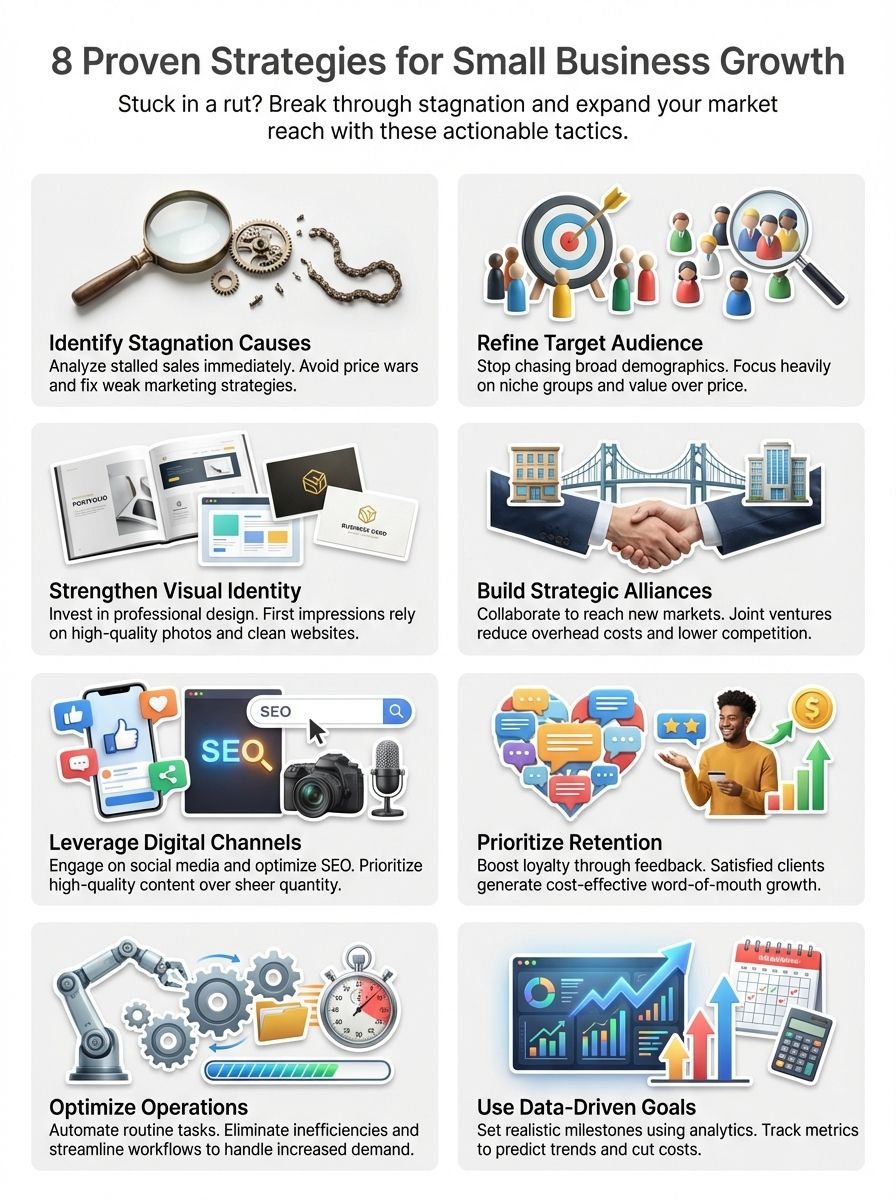
Identify the Root Cause of Stagnation
If your small business feels stuck, start by asking, “Why aren’t sales growing?”
Why Sales Stopped Increasing
Competing on price keeps profits low and attracts clients who only chase deals. This “race to the bottom” hurts small business growth. Businesses offering similar services at similar prices fail to stand out, making it harder to grab attention.
Weak marketing is another reason sales stall. Even great products lose against average ones if promotions lack effort. Customers won’t pick your business if they don’t notice you first.
Lack of referrals also sends a red flag, pointing to possible service or process issues that block customer satisfaction and repeat orders.
Reevaluate Your Target Audience
Small business owners often aim for too broad an audience. This approach can leave your brand lost in the crowd. Focus on engaging with influential groups who align with your offerings.
Building relationships with marketplace influencers helps you grow your business without wasting resources.
Avoid chasing price-sensitive customers alone. Position your business to offer more value, which attracts clients willing to pay what you’re worth. Research customer needs and adjust your strategy based on data-driven insights.
Realigning like this opens doors to sustainable growth and long-term success.
Strengthen Your Branding
A weak logo or sloppy website can scare off clients fast. Customers pick businesses based on looks as much as services. A poor digital look makes your business feel untrustworthy, leading to stalled growth.
Invest in professional branding and high-quality photos. Sharp designs and a clean site set you apart from competitors offering similar prices. “First impressions only come once,” as they say, so don’t let bad branding ruin yours.
Build Strategic Partnerships
Team up with others to grow faster. Strategic alliances open doors to untapped markets, fresh audiences, and shared resources. For example, joint ventures can help small businesses access hard-to-reach customers while cutting costs and reducing risks.
Mergers or acquisitions might seem big but can drive quick expansion. Disney did this smartly by acquiring companies like Pixar and Marvel, which boosted its reach globally. Partnering with like-minded businesses also lowers competition while combining strengths for a steady business expansion journey.
Leverage Digital Marketing
Use online platforms to grow your audience and boost sales. Focus on strategies that make your business more visible and appealing.
Utilize social media platforms effectively
Social media is a powerful tool for small business growth. It can help you attract new customers and build stronger connections.
- Start by focusing on quality over quantity. Thousands of LinkedIn connections mean little if they don’t generate leads. Build meaningful relationships with marketplace influencers instead.
- Post consistently to stay visible. Regular updates keep your brand fresh in people’s minds.
- Engage with followers, not just with content but through genuine replies and comments. This builds trust and loyalty.
- Use platforms where your target audience spends time. For instance, younger crowds often use TikTok or Instagram, while professionals stick to LinkedIn.
- Run targeted ads that speak directly to customer needs. Platforms like Facebook and Instagram allow you to narrow down who sees your ads based on location, interests, or behaviors.
- Track performance metrics such as clicks, shares, and new followers. Analytics tools like Google Analytics can give you insights into what works best.
- Partner with other businesses for cross-promotions on social channels. This expands reach without breaking the bank.
Social media done right drives sustained growth while saving time and money along the way!
Invest in search engine optimization (SEO)
Search engine optimization (SEO) is a game-changer for small businesses. It helps your website rank higher and attracts the right audience.
- Focus on keywords customers use. Use tools like Google Keyword Planner to find popular search terms in your industry. Incorporate these words into your site content and blog posts.
- Create quality content. Share helpful tips or answers to common questions in your blogs or videos. This keeps visitors engaged and improves ranking over time.
- Optimize page speed. A slow-loading website can hurt rankings and lose visitors fast. Compress images, update plugins, and check server performance regularly.
- Use local SEO if you have a physical store. Add your business to Google My Business and include accurate details like address, hours, and services offered.
- Build backlinks from trusted sites. Reach out to bloggers or news outlets to link back to your site content or products.
- Update meta descriptions on all pages of your site. These short summaries help users understand what each page offers before they click.
- Invest in professional help if needed. Hiring an SEO expert can save time by fine-tuning strategies that boost visibility quickly.
- Keep track of progress with analytics tools like Google Analytics or SEMrush. Regularly analyze traffic sources, bounce rates, and conversion rates for better decisions ahead.
Diversify Your Product or Service Offerings
Offer products or services that solve different problems for your customers. A small business can stand out by doing this. For example, if you run a coffee shop, add baked goods or teas to your menu.
This brings in more customers and increases revenue.
Try creating packages or bundles at special prices. It makes buying easier for clients and boosts sales. Expanding into new markets is another smart move. Selling online is one way to do this through e-commerce platforms like Shopify or Amazon.
Diversification helps your business grow without compromising quality or customer satisfaction while preparing it for sustainable development in the long run.
Focus on Customer Retention and Referrals
Satisfied customers are your best marketing tool. Athena Captain proved this by using referrals to grow her construction business. Happy clients often bring in new ones through word-of-mouth, saving you money on ads while building trust fast.
Ask for honest feedback regularly. Use surveys or direct conversations to learn where you can improve. Strong customer relationships lead to loyalty and repeat sales, which create steady growth over time.
Build smooth systems that keep service consistent as your business grows bigger.
Invest in Employee Development
Strong teams drive sustainable business growth. Developing leadership within your staff helps manage increased workloads without causing burnout. Overwhelmed employees or broken processes can harm quality and efficiency, which hurts profitability.
Athena Captain highlights how building internal leaders ensures smoother scaling in businesses.
Offer training programs that teach valuable skills or improve existing ones. Cross-train team members for flexibility during busy times. Providing growth opportunities boosts morale, reduces turnover, and creates a culture of innovation.
Investing in employees today builds the foundation your company needs to grow tomorrow.
Optimize Operational Efficiency
Cutting inefficiencies can save time and money. Outdated systems slow growth and hurt productivity. Focus on areas of your business that feel clunky or overworked. Automate routine tasks like inventory checks, email responses, or stock updates.
Tools like customer relationship management (CRM) software help with smoother sales processes and better customer service.
Streamline workflows to handle more work without chaos. Clear roles, better communication tools, and smarter scheduling prevent burnout among staff. Predictable systems reduce errors as the business grows.
If operations feel stretched thin, outsourcing certain jobs might help too. A leaner process means you’re ready to expand without being overwhelmed by extra demand!
Use Data-Driven Decision Making
Data analytics can transform how you grow your small business. It helps predict trends, cut costs, and boost efficiency. By studying customer insights and key performance metrics, businesses can align services with what people actually want.
This strategy gives clear answers instead of relying on gut feelings.
Digital transformation tools like automation or artificial intelligence make it easier to analyze patterns. For example, tracking online sales data shows which products perform well during certain seasons.
With these valuable insights, you can plan better marketing campaigns or adjust inventory needs without risking resources unnecessarily.
Explore New Markets
Expand your business by tapping into untapped markets. Global market penetration helps you reach new clients without creating new products. For instance, small e-commerce startups can target international customers instead of sticking to local sales.
This simple shift could boost revenue and brand presence.
Team up with local partners in foreign regions to reduce risks and costs. These partnerships improve market exposure and help overcome cultural or legal barriers faster. Opening a second location or using digital platforms like online marketplaces allows businesses to explore areas beyond their home turf efficiently.
Set Clear, Achievable Goals for Growth
Growth doesn’t happen by chance. Setting clear and realistic goals gives your business a steady path to follow.
- Define what success means for your business. Is it higher sales, more customers, or expanding services? Be specific.
- Break big goals into smaller steps. This makes them easier to tackle and less overwhelming.
- Keep your timeline realistic. Rushing progress can lead to burnout or poor decisions.
- Use tools like financial projections to guide your plans. Knowing your limits helps avoid over-promising.
- Focus on areas for improvement first. Strengthening weak spots can pave the way for sustainable expansion.
- Challenge the comfort zone you’re in. Big steps often require bold changes in strategy or mindset.
- Set goals that excite you and your team. Motivation drives action, which is key for growth strategy success.
- Track progress regularly with data-driven decision making. Analytics show whether you’re on track or need adjustments.
- Communicate plans clearly with employees. Everyone should know their role in reaching the next stage of growth.
- Avoid common pitfalls like vague objectives or trying too much at once. Clarity prevents missteps in execution.
- Always plan for predictability while staying open to unexpected changes. Flexibility alongside structure creates balance.
- Celebrate small wins along the way. Achievements, no matter how small, build momentum and lift morale!
Conclusion: Take Action to Break Through Barriers
Breaking past business limits takes effort, strategy, and courage. Start small but think big. Tackle problems, refine your methods, and focus on growth step by step. Success is possible if you stay focused and committed to improving each day!
FAQs
1. Why can’t my business grow even though I’m working hard?
Sometimes, businesses don’t grow because they lack a clear strategy or resources. It could also be due to burnout, poor time management, or not adapting to market needs.
2. How do I know if my business is ready to expand?
You’re ready when your current operations are stable and your business can handle more demand without compromising quality. Look for consistent sales growth and strong customer loyalty.
3. What strategies help startups and small businesses grow?
Focus on strategic management, running ads effectively, outsourcing tasks you can’t handle alone, and hiring new staff when needed. These steps will take your business to the next level.
4. Should I consider mergers or acquisitions as part of expansion?
Yes, mergers and acquisitions are great ways to expand a business beyond its current reach if done strategically based on expert advice.
5. How does technology like the Internet of Things help small businesses grow?
The Internet of Things allows better data collection through tools like HTTP cookies that track customer behavior; this helps improve decision-making in sales and marketing efforts.
6. When should I outsource work in my growing business?
Outsource tasks when you’re stretched thin or lack expertise in certain areas like database management or specialized services that support your whole business’s success!
