
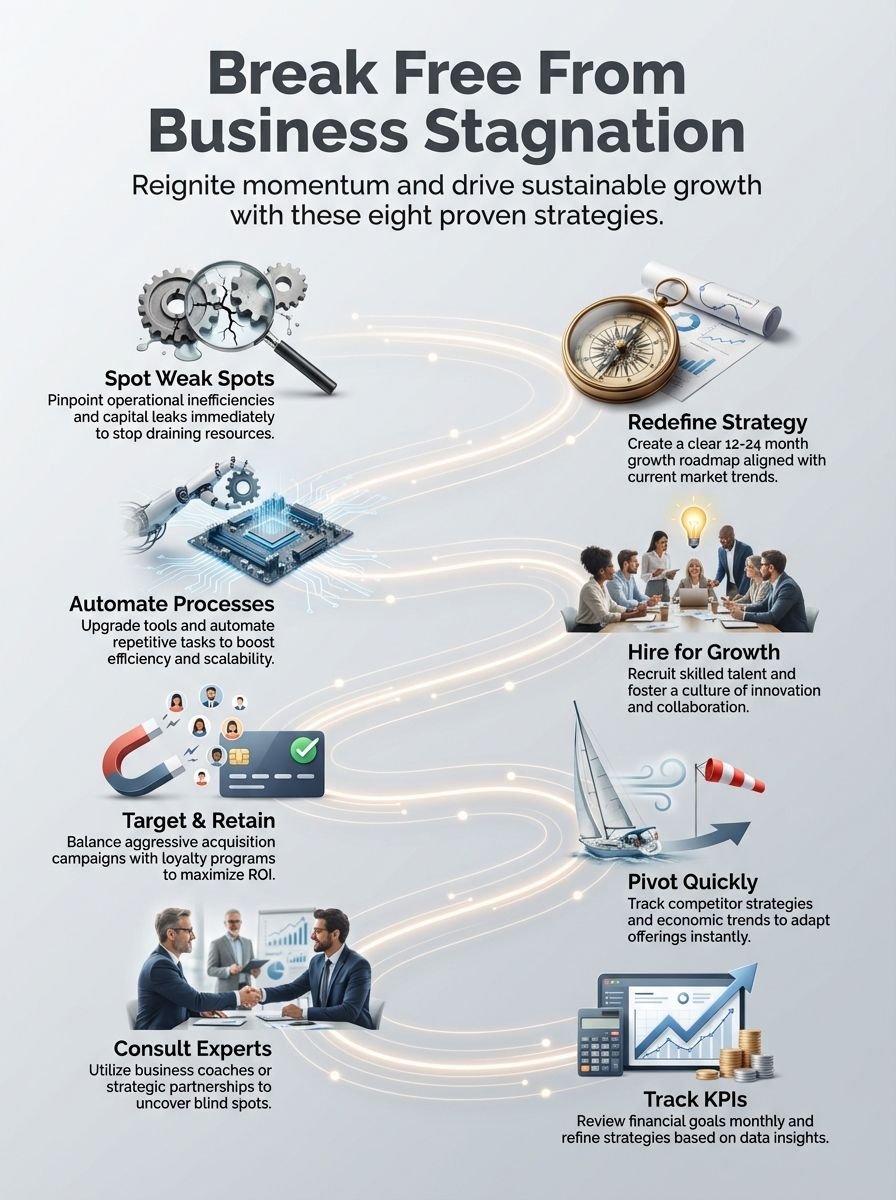
Identify and Address Key Causes of Stagnation
Stuck growth often starts with missed signs—pinpoint weak spots, fix them fast, and keep the wheels turning.
Operational inefficiencies and lack of scalable systems
Bottlenecks in processes drain time and money. Over-reliance on a founder delays decisions, slowing growth. Poor workflows often waste resources, stopping businesses from scaling effectively.
Mapping tasks can uncover gaps ripe for automation. Upgrading tools boosts efficiency and keeps systems scalable. As Tim Cook says,.
Efficiency is doing better what is already being done.
Spot inefficient suppliers or processes to plug financial leaks fast!
Insufficient capital for growth investments
A small business making £10,000 monthly with only £2,000 profit can hit a wall quickly. Limited cash flow stops you from investing in sales, marketing, or hiring skilled staff. Growth slows without enough funds to seize opportunities.
Using credit lines or cards can unlock higher investments. Spending $100,000-$150,000 on strategic areas like marketing could boost momentum and revenue. Monitoring cash conversion cycles helps spot gaps early so your growth does not stall unexpectedly.
Poor strategic direction and outdated business models
A poor growth plan can leave businesses stuck in neutral. Many companies fail to adjust after their early success phase, relying on outdated business models that no longer fit market demands.
Flat or declining revenue often signals these issues, along with losing customers to competitors.
Businesses must adapt or risk falling behind. Sticking to old practices while markets shift reduces profitability and relevance. For instance, failure to modernize products or services makes it harder to attract new customers.
Increased competition only worsens the problem if strategies aren’t updated regularly.
Reevaluate and Redefine Your Business Strategy
Shake off outdated methods, and craft a fresh map for growth. Focus on what sets your business apart to win in today’s market.
Develop a clear and actionable long-term growth plan
A clear growth plan is like a roadmap for your business. It keeps everyone focused and moving in the right direction.
- Set 12–24 month growth goals with specific revenue targets. This creates clarity and purpose for your team.
- Break these goals into smaller quarterly milestones to track progress easily. Smaller steps feel doable and keep employees motivated.
- Address resource needs, such as cash flow, staff, or tech tools, early in the process to avoid roadblocks later on.
- Use a 12-month profit and loss (P&L) forecast tied directly to your plan for financial guidance and decision-making.
- Align key performance indicators (KPIs) with growth objectives so each team member knows how they contribute to success.
- Test different scenarios: best case, worst case, and likely outcomes help you prepare for surprises along the way.
- Review goals monthly using management accounts to spot trends and fix issues before they grow too large.
- Seek outside advice from coaches, experts, or peers to uncover blind spots or fresh opportunities you may miss.
Planning isn’t just paperwork; it’s about building stability while aiming higher!
Align goals with current market trends and customer needs
Success comes from adapting to what customers want and need. Businesses must stay tuned to the market while keeping goals relevant.
- Study customer data often. Find out which clients bring in the most revenue and how their needs are changing.
- Refresh your customer personas. Update them to match current trends and adjust your messaging accordingly.
- Track competitors closely. Compare pricing, products, or services to see where you stand in the market.
- Use proven tools like SWOT analysis or PESTLE evaluations. These help identify strengths, weaknesses, opportunities, and threats tied to shifting trends.
- Ask customers directly for feedback. Learn what they love about your brand and what could be improved to meet new demands.
- Monitor sales data regularly for insights on product performance and popular items among loyal customers.
- Pay attention to economic factors like inflation or unemployment rates that might impact spending habits.
- Adapt marketing campaigns based on research findings, making sure content resonates with both new and repeat buyers.
- Address any gaps within your offerings by introducing updated products or services that fit modern consumer expectations.
Leverage Innovation and Technology
Technology can be your secret weapon for breaking through stagnation. Fresh tools and ideas often spark new momentum for businesses stuck in a rut.
Invest in tools and processes to improve efficiency and scalability
Improving efficiency and growing your business often starts with the right tools. Small changes can save time, cut costs, and drive long-term growth.
- Map existing workflows to spot bottlenecks. Streamline tasks by automating repetitive processes like payroll or scheduling.
- Upgrade outdated systems to match your business needs. For example, switching from manual inventory checks to digital tracking saves hours each week.
- Use financial modeling tools to forecast growth trends and plan better investments for 2024-2025. These forecasts help in budgeting more effectively during uncertain markets like recessions.
- Switch to scalable software as revenue grows, such as a CRM that manages more customers without slowing down operations. This avoids hitting new hurdles at higher revenue stages like $1 million or beyond.
- Run cost analyses on suppliers and operations tools every quarter. Reducing unnecessary spending increases available capital for growth-focused moves.
- Leverage tools that track customer behaviors online to adjust marketing strategies faster while enhancing customer experience.
- Automate administrative work, freeing up employees for creative or strategic tasks instead of routine duties like data entry.
- Embrace technology that streamlines communication across teams; cloud-based collaboration tools make teamwork smoother even with remote workers.
- Test newer systems on small projects first before applying them across the company, reducing risks of disruption if early snags arise.
Investments in these areas prepare businesses for sustainable expansion without excessive stress or financial strain!
Update products or services to meet evolving market demands
Market demands change like the wind, fast and often unpredictable. Staying ahead means regularly adapting what you offer to meet new needs.
- Study sales data to find top-performing products or services. Focus your efforts where demand is strongest.
- Stop wasting time on offerings that underperform. Streamline or cut them to free up resources for high-value areas.
- Get customer feedback often. Ask about unmet needs or improvements they’d like to see, then act on it quickly.
- Compare your products with competitors’. Benchmarking helps spot gaps and make sure you’re market-relevant.
- Launch fresh promotions, discounts, or bundles to draw in both loyal and new customers.
- Put money into SEO-friendly content marketing to boost visibility online and attract modern buyers.
- Perform audits of your product line every quarter or year. Align everything with current trends and hot demands in the market today.
Strengthen Team Dynamics and Leadership
Great teams drive great results, period. Hire smart, lead with care, and watch your business spark growth again.
Hire and retain skilled talent for growth-focused roles
Smart hiring and retention drive business growth. You need the right people in the right roles to break free from stagnation.
- Hire professionals with fresh skills to handle growth challenges. Long-term staff might lack the updated expertise needed for new goals.
- Focus on adding talent in sales or growth positions, as they can boost revenue directly. Recruiting just two experienced salespeople can increase profits significantly.
- Clearly define each role before hiring to avoid confusion later. This clarity keeps work smooth and reduces unnecessary overlap.
- Set clear expectations for decision-making and accountability upfront in their job descriptions. Clear rules help avoid bottlenecks during critical projects.
- Offer competitive salaries to attract top-tier candidates who can make a real difference in your business performance.
- Retain skilled employees by creating a positive work environment that fosters collaboration and innovation.
- Avoid delegating all strategic tasks; assign operational duties to senior staff instead, freeing leadership for big-picture planning.
- Invest in ongoing training programs, helping your team grow with your business demands over time.
- Regularly review team performance using well-measured goals, ensuring continued alignment toward achieving business success.
Hiring strategically ensures you stay ahead of market changes and competition while setting a strong foundation for long-term growth!
Foster a culture of innovation and collaboration
Innovation and teamwork ignite business growth. A strong culture can turn stagnant businesses into thriving ones.
- Share your company vision openly with the team. People work better when they feel connected to the mission.
- Encourage employees to offer fresh ideas during meetings or through suggestion boxes. Good ideas often come from unexpected places.
- Create small, diverse groups for cross-functional projects. Different perspectives foster creative problem-solving.
- Celebrate small wins together as a team. Recognition boosts morale and keeps momentum going.
- Reward employees for innovative efforts, whether they succeed or not. This builds trust and encourages risk-taking.
- Invest in training programs that sharpen skills and promote creative thinking. Learning sparks new possibilities.
- Set regular feedback sessions to address internal challenges quickly. Open communication strengthens team trust.
- Recognize effort and commitment during tough times to reduce burnout risks. A well-rested team performs better.
- Build a workspace that encourages collaboration, like open areas or brainstorming zones. Comfortable setups enhance productivity limits.
- Hire people who challenge traditional methods without fear of failure, even if that means looking beyond standard qualifications for roles adjusted to address long-term solutions amid intensifying competitive pressures.
Optimize Marketing and Customer Acquisition Efforts
Freshen your marketing game with focused strategies that hit the bullseye. Winning loyal customers is not just about reaching them, but keeping them hooked for the long haul.
Implement targeted marketing campaigns for maximum ROI
Targeted marketing can help you grow your business and improve profitability. Focus on strategies that deliver the best returns in both the short and long term.
- Use data analysis to identify customer preferences and buying habits. Tools like Google Analytics or Excel can assist with tracking performance.
- Create special offers aimed at re-engaging current customers. Special promotions or discounts can boost interest and drive sales.
- Run campaigns that fit your audience’s needs. For example, focus on email marketing for startups or social media ads for younger audiences.
- Invest in content marketing to attract potential leads online. Blogs, videos, and SEO will help expand your reach without heavy costs.
- Test different approaches to see what works best for your business goals. Spend less on channels that do not perform well.
- Assign follow-up actions to team members for better accountability with prospects or clients. This speeds up conversions while reducing missed opportunities.
- Regularly audit all campaigns to review their ROI performance over time. Adjust strategies quickly if they stop delivering results effectively.
Focus on customer retention to balance acquisition and attrition
A loyal customer base can keep your business stable, even in tough times. Retention balances growth by reducing churn and increasing repeat sales.
- List all current customers and assign follow-up actions to maintain relationships. Regular check-ins demonstrate that you value their business.
- Offer loyalty programs or discounts to reward repeat purchases. Customers appreciate feeling valued, and it encourages them to stay loyal.
- Send surveys to gather feedback on your products or services. Use this data to address any issues or enhance experiences.
- Tackle common reasons for customer attrition, such as poor service or outdated offerings. A proactive approach helps prevent losses before they occur.
- Balance marketing efforts between retention and new customer acquisition strategies; loyal customers spend 67% more than first-time buyers.
- Improve the overall customer experience through better communication methods, like email updates or live chats that resolve issues quickly.
- Monitor key retention metrics, such as churn rates and repeat purchase rates, on a monthly basis to identify performance gaps.
- Deliver outstanding post-sale support that reassures clients they made the right choice staying with you.
Monitor and Adapt to Market Changes
Markets shift fast, so stay sharp. Keep an eye on trends and tweak your strategy to stay ahead of the game.
Regularly analyze market trends and competitor strategies
Staying ahead in business requires keeping a close eye on the market. Watching competitors and trends can reveal opportunities to grow or threats to avoid.
- Study customer demands by analyzing purchasing patterns and feedback. This helps spot shifts in market preferences early.
- Pay attention to macroeconomic factors like inflation, unemployment rates, or changes in demographics. These can influence spending habits.
- Use frameworks like SWOT or PESTLE to identify internal strengths and external risks. These tools help guide smart decisions.
- Compare your pricing and services with competitors to find gaps. For instance, if rivals offer better deals, adjust your strategy to stay competitive.
- Follow competitor advertising campaigns closely. Study their messaging, platforms, and offers to understand their tactics.
- Examine regional shifts in demand for products or services using tools like Google Trends or regional sales data reports.
- Track industry benchmarks regularly to measure your performance against others in your field.
- Study the strategies of industry leaders like Amazon for e-commerce or Tesla in renewable energy markets as examples of innovation done right.
- Map consumer behavior changes at least quarterly through surveys and data analysis tools such as CRM systems or feedback forms.
- Monitor supply chain conditions; disruptions often affect pricing strategies across sectors rapidly and significantly.
Stay flexible and pivot when necessary
Markets shift fast. Test various scenarios to prepare for sudden changes in the economy or customer behavior. Use monthly management accounts to track progress, spot issues, and adjust plans quickly.
Drop underperforming products if they no longer fit market needs. Encourage your team to challenge old ideas and embrace new ones. Build flexibility into strategies so your business can adapt without delay when external conditions change.
Seek External Support and Expertise
Sometimes, fresh eyes can spot gaps you’ve missed. Bringing in experts or forming partnerships can spark ideas and open new doors.
Consult industry experts or hire business coaches
Talk to industry experts with real-world experience. They can spot profit leaks, find cost savings, and suggest growth strategies that fit your business. For example, NEDs bring independent views and strategic knowledge.
This outside perspective can reveal blind spots or outdated methods holding you back.
Business coaches also help leaders sharpen their focus. They guide entrepreneurs through mindset challenges like fear of change or risk-taking. Hiring a coach boosts accountability and keeps plans on track.
A combined advisor role like Secantor offers both financial planning (from part-time FDs) and strategy advice for SMEs needing extra support.
Explore partnerships or collaborations to expand reach
Partnering with others can help grow your business faster. Joint ventures lower the risk and cost of trying new ideas. Partnerships allow access to bigger markets or new customer groups.
For example, teaming up with a supplier might cut expenses while improving service quality.
Collaborating brings fresh skills and tools that your company may lack. It also speeds up entry into untapped areas, boosting chances for success. Strategic alliances build competitive advantages, leading to higher market shares across industries like startups in Wine Country or tech companies in major cities like the United States’ Silicon Valley.
Measure Progress and Adjust as Needed
Set clear targets and check your progress often, like keeping score in a game. If something isn’t working, tweak it until you see better results.
Set measurable goals and track key performance indicators
Every business owner needs clear goals to grow. Tracking key performance indicators (KPIs) ensures progress stays on track.
- Write down 12–24 month growth goals. Break them into quarterly milestones for easier focus and faster feedback.
- Assign a person or team to handle each KPI. Accountability drives action and keeps priorities straight.
- Use financial tools, like dashboards, to show progress across the company. This makes tracking simple and increases transparency.
- Check sales numbers monthly. Notice trends early to tweak strategies before problems grow.
- Watch profit margins closely. Small dips often signal bigger issues in pricing or costs.
- Evaluate customer retention rates alongside new acquisitions. Balancing both is vital for long-term success.
- Review monthly management accounts as a habit, not an option. Timely insights help leaders react fast.
- Test different scenarios in forecasts, especially during uncertain times like economic stagnation or stagflation fears around 2026.
- Adjust resources based on KPI results often, reallocating funds or teams to better-performing areas when needed.
- Celebrate small wins tied to measurable KPIs with your team, fueling motivation and keeping morale high amidst change management efforts.
Short steps keep businesses moving even when they hit a plateau, avoiding poor strategic direction and maintaining profitability over time!
Continuously refine strategies based on data-driven insights
Making smart changes based on data keeps your business on track. Numbers tell the story. Listen to them closely and act quickly.
- Review management accounts and forecasts every month. Spot trends early to avoid surprises.
- Ask for feedback from your team and customers often. Use their input to improve weak areas or tweak plans.
- Track ROI for all major investments. Cut spending on activities that fail to deliver results.
- Run SWOT or PESTLE analyses regularly. These tools help refresh your business strategy based on current conditions.
- Test different scenarios with planning tools like Excel. Predict outcomes before taking risks.
- Act fast if performance drops below expectations. The quicker you adjust, the less damage it causes.
- Foster a learning culture within your company. Celebrate wins, but learn from mistakes too.
- Set clear, measurable goals tied to growth metrics like revenue or customer retention rates.
- Rely on data insights instead of gut feelings for decision-making during crises or slow times.
- Keep refining products and services as market demands change over time, ensuring you’re never outdated!
Conclusion: Break Free and Achieve Sustainable Growth
Breaking free from stagnation isn’t easy, but it’s possible. Focus on clear goals, invest in your team, and adjust to market changes. Small steps can bring big shifts. Stay proactive and keep your eyes on the prize.
Your business can grow again with the right moves!
For more insights on enhancing your business strategy, read our guide on how to rebuild your reputation as a contractor.
FAQs
1. What is business growth stagnation?
Business growth stagnation happens when a company’s performance plateaus, failing to drive new revenue or expand despite past success.
2. Why do businesses face stagnation?
Stagnation can result from poor customer focus, insufficient working capital, outdated strategies, or a lack of entrepreneurial initiative. Sometimes it’s tied to overall economic conditions or weak human resources management.
3. How can startups overcome growth challenges?
Startups can reassess their business plan, focus on existing customers’ needs, and explore networking opportunities to find new avenues for growth.
4. What steps can help recalibrate stagnant performance?
Steps include spending less in unproductive areas, hiring new talent where needed, focusing on demography shifts in your market, and creating strategies that target both historical performance gaps and future goals.
5. Can leadership impact stagnant businesses?
Yes! A strong chief executive officer or business leader plays a key role by taking proactive steps like crisis management and reinvigorating the team with clear direction.
6. How do you bring back momentum after slow periods?
To get back on track: prioritize customer satisfaction; secure enough working capital; take time to focus on innovative strategies; and align efforts across departments like sales, marketing, and administration for consistent results.
