Struggling to get equipment for your business because of bad credit? Don’t worry, you’re not alone. The best way to finance equipment no credit check options might be just what you need! Stick around, and we’ll walk you through it step by step.
Key Takeaways
- Many lenders offer equipment loans for bad credit by focusing on revenue, cash flow, or collateral instead of credit scores. Examples include National Funding, Triton Capital, and Balboa Capital.
- Loan amounts range from $150,000 to $500,000 with interest rates starting at 5.99%. Minimum credit scores required are between 580–620 depending on the lender.
- Providing a larger down payment (20% or more) or extra collateral can boost approval chances and reduce risks for lenders.
- Leasing is a good alternative for businesses with poor credit as it avoids big upfront costs and offers flexible terms without ownership demands.
- Avoid rushing applications or falling for “guaranteed approval” scams; research reliable lenders carefully to secure fair terms without hidden fees.
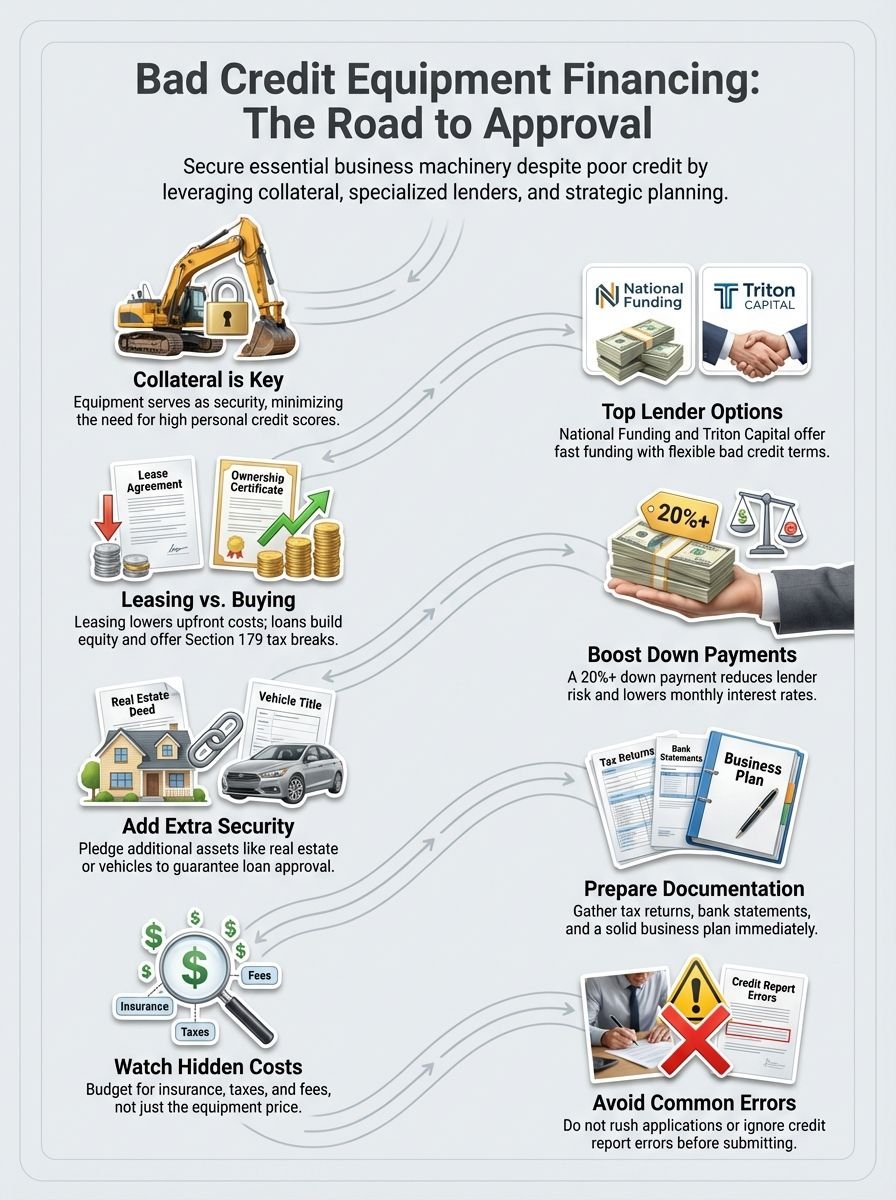
No Credit Check Equipment Financing: How It Works
No credit check equipment financing relies on the value of the equipment itself. The equipment acts as collateral, reducing the need for lenders to focus heavily on your credit history.
This allows businesses with poor or no personal credit to still qualify for funding.
Lenders often review other factors like cash flow, revenue, and down payment size instead of a minimum credit score. Borrowers may pay higher interest rates or agree to shorter loan terms because of higher risks involved.
Applications are typically online and simple, with some approvals happening in minutes. Just ensure the lender isn’t running a hard pull unless you’re ready to commit since it can lower your score further.
“Your equipment becomes both an investment and a safety net,” providing trust between borrower and lender despite bad credit challenges.
Top Equipment Loan Options for Bad Credit
Bad credit doesn’t mean you’re out of options. Some lenders focus on helping businesses like yours get the gear they need with flexible terms.
National Funding
National Funding offers flexible financing for businesses with bad credit. They provide equipment loans up to $150,000 without strict credit score requirements. Businesses need at least 6 months of operation and $250,000 in annual revenue to qualify.
Their minimum accepted credit score is 600.
Funds can be released as quickly as 24 hours after approval, helping businesses secure the equipment they need fast. Repayment terms range from 24 to 60 months, providing manageable options for borrowers.
With rates starting at a factor rate of 1.1 for top-tier credit scores, it’s a solid choice for companies struggling with traditional lenders.
Triton Capital
Triton Capital offers flexible equipment financing for businesses with bad credit. They provide loans up to $250,000, making it possible to purchase heavy machines or smaller tools your company needs.
Their interest rates range from 5.99% to 34.99%, allowing borrowers with lower credit scores a chance to qualify.
Loans are processed fast; funds can be available in just one or two business days after approval. To apply, your business must have been running for at least 24 months and earn $250,000 yearly revenue.
A minimum personal credit score of 580 is required, which helps more small businesses get approved despite financial struggles.
“Quick funding and fair terms make Triton Capital an option worth considering.”
Balboa Capital
Balboa Capital offers equipment loans customized for businesses with bad credit. They provide funding up to $500,000, making it possible to secure both new and used equipment. Approvals are quick; you can get approved within an hour during business hours.
For urgent needs, same-day funding is available.
To qualify, your business should have at least 12 months of operations and earn $100,000 annually. Their repayment options range from short-term plans to 24–60 months. While their minimum accepted credit score is 620, a strong revenue stream increases approval chances.
Leasing vs. Financing: Which is Best for Bad Credit?
Leasing may be better if credit is poor. Many leasing companies accept bad credit and skip a down payment. Leasing allows businesses to rent equipment with fixed costs, often including flexible terms like monthly or seasonal payments.
Crestmont Capital even offers 100% financing for new or used gear up to $2 million.
Financing provides full ownership but needs stronger financial backing. Loans can require higher interest rates or collateral when credit scores are low. For tighter budgets, leasing avoids the upfront expense of buying outright and sometimes includes tax perks, like tax-free payments for qualified entities.
Equipment Loan vs. Chattel Mortgage: Cost Comparison
An equipment loan and a chattel mortgage may look similar at first glance, but they differ in key ways. Both offer businesses a way to acquire equipment, but the costs and benefits can vary widely. Here’s a quick breakdown to help you compare.
| Feature | Equipment Loan | Chattel Mortgage |
|---|---|---|
| Ownership | Lender may hold the title until loan is paid off. | Borrower owns the equipment from day one, but it serves as mortgage collateral. |
| Interest Rates | Rates may start as low as 5.99%, but bad credit can push rates up to 34.99%. | Rates are often lower because lenders have collateral security. |
| Tax Advantages | May not include upfront tax benefits. | Section 179 tax deductions may apply, reducing taxable income significantly. |
| Repayment Terms | Typically ranges from 12 to 84 months, depending on lender and credit profile. | Similar repayment terms, but flexibility often depends on down payment and credit history. |
| Down Payment | Often requires a 20% or higher down payment for bad credit borrowers. | May also require a sizable down payment, but collateral can reduce upfront cash required. |
| Flexibility | Great for financing new or used equipment, but restrictions may apply for soft costs. | Can cover equipment, freight, installation, and other soft costs, offering broader use. |
| Risk Factor | Higher for lenders, hence higher interest rates for bad credit borrowers. | Lower for lenders due to collateral, leading to potentially better terms for borrowers. |
While both options have their pros and cons, the right choice often boils down to your goals and financial position. One protects credit lines, while the other offers possible tax savings.
Strategies to Improve Approval Odds
Boosting your chances for approval doesn’t have to be tricky. Small actions, like offering extra security or upfront cash, can make a big difference!
Offer a Larger Down Payment
A larger down payment can make a big difference in equipment financing for bad credit. Putting down 20% or more reduces what you need to borrow, which lowers lender risk. Lenders often feel more confident when borrowers invest upfront, even with poor credit histories.
Paying more upfront could also lead to better interest rates and lower monthly payments. Some lenders might even allow flexible payment setups if the initial deposit is strong enough.
This option can be especially helpful for startups or small businesses buying heavy equipment or vehicles.
Provide Additional Collateral
Offering extra collateral can boost your chances of getting equipment financing with bad credit. Lenders value security. Business assets like property or inventory make good options.
Real estate is another strong choice if available. These additions lower the lender’s risk, making approval easier.
Lenders might place liens on provided assets for safety measures. Valuable collateral may also help reduce interest rates or extend repayment terms. Always document the item’s worth clearly before applying for loans for better results.
Alternatives to Equipment Financing Without Credit Check
Equipment leasing can help businesses with bad credit. Some lessors approve applicants even with low scores. Leasing lets you use the equipment without owning it, making payments smaller and more manageable.
Short-term loans are another option. These loans cover equipment costs but come with high interest rates. Repayment terms often last up to two years, ideal for quick needs but costly over time.
Microloans from nonprofits or community lenders work well too. They offer up to $50,000 for small-business owners and have flexible rules compared to traditional banks.
Merchant cash advances provide fast money by borrowing against future card sales. While convenient, they add fees that grow your debt if not handled carefully.
Small business grants give free funding that doesn’t need repayment. These take longer to secure due to competition but eliminate loan burdens completely once approved.
Steps to Apply for Equipment Loans with Bad Credit
Getting equipment financing with bad credit can feel tricky, but it is possible. Follow these steps to prepare and improve your chances of success.
- Gather Basic Information
Start by collecting required documents like a valid driver’s license, a voided business check, and an equipment quote. These are usually non-negotiable requirements. - Prepare Financial Documents
Have financial records ready, including balance sheets, tax returns, and bank statements. Showing your business’s financial health can help offset a low credit score. - Write a Business Plan
Create a strong business plan explaining how you’ll use the equipment to increase revenue. Lenders value clear goals and solid strategies. - Provide Additional Collateral
Offer collateral such as vehicles or existing assets to secure the loan. It reduces risk for lenders and boosts approval chances. - Offer a Large Down Payment
Save up for a larger down payment if possible. This shows commitment and lowers the lender’s risk. - Choose the Right Lender
Pick financing companies that specialize in bad credit equipment loans, like National Funding or Triton Capital. Always check reviews before applying. - Opt for Preapproval First
Go with lenders that offer preapprovals using soft inquiries only. This avoids further damage to your credit score during the early stages. - Submit Application Online
Complete an online application form with accurate details about your business and finances. Some lenders may approve loans within 2–4 hours with funding in 1–2 days. - Respond Quickly to Requests
Reply promptly if asked for more documentation or information after applying. Missing requests could delay funding or lead to denial. - Double-Check Your Credit Report
Fix any errors on your credit report before applying for loans again in the future, even small mistakes can cause rejection next time!
Common Mistakes to Avoid During the Application Process
Applying for equipment financing with bad credit can be tricky. Many mistakes can lead to higher costs or denial, so it’s crucial to get it right.
- Skipping a Budget Check
Ignoring how much you can afford for monthly payments is risky. Overestimation may hurt your cash flow and strain your business. - Choosing Short Payment Terms
Picking repayment periods that are too short can make monthly payments too high. This may increase the chance of late payments or loans going into default. - Missing Credit Pull Details
Not checking if preapproval involves a hard or soft pull can harm your credit score. Always ask before applying to avoid unexpected hits on your report. - Failing to Organize Paperwork
Submitting incomplete financial records slows processing times and increases rejection odds. Lenders want clear proof of income and stability. - Overlooking Lender Reputation
Going with unknown lenders can backfire if they have poor customer service or hidden fees. Always research reviews and ratings before committing. - Settling for High Fees
Accepting sky-high interest rates without comparing options could lead to unnecessary debt. Even bad credit loans vary in cost among lenders. - Trusting “Guaranteed Approval” Offers
Some lenders use this language as bait for risky loans with unfair terms. Be cautious of scams targeting businesses with poor credit. - Forgetting Total Loan Costs
Only focusing on the equipment price while ignoring soft costs like fees or insurance is a major mistake. These extras often add up quickly. - Rushing Through the Process
Hurrying through applications might cause errors that get you denied. Double-check forms, documents, and lender policies before submitting anything. - Underestimating Down Payments
Offering a small down payment reduces trust from lenders, especially with bad credit histories. Larger upfront contributions improve approval chances significantly.
By avoiding these common errors, applicants have better odds of getting fair terms without extra stress!
Case Studies: Success Stories in Financing with Bad Credit
CAG Truck Capital helped a trucking business owner secure funding for a high-mileage semi-truck. The business struggled with no minimum credit score and limited time in operation. CAG approved the loan quickly and offered repayment terms ranging from 24 to 84 months.
This gave the owner flexibility to grow their operations while paying off the truck at a steady pace.
A small construction company turned to Balboa Capital after facing rejections elsewhere. With only 12 months in operation, they received same-day approval for equipment financing. The firm used this capital to purchase critical machinery, allowing them to complete projects faster and take on more jobs.
Their success highlights how businesses can thrive with quick funding options designed for bad credit situations.
FAQs About Equipment Financing and Leasing for Bad Credit
Bad credit equipment financing often asks for higher interest rates. Many lenders may need a down payment of 20% or more. Some accept credit scores as low as 500 but usually require collateral, such as the purchased equipment.
Leasing can be a better choice if loan terms feel too strict. It does not promise ownership but offers lower monthly payments. Same-day funding might happen with certain lenders, yet bank processing times can slow it down.
Check if personal guarantees are needed to avoid surprises later!
Conclusion
Finding equipment financing with bad credit might feel like climbing a steep hill, but it’s possible. Many lenders offer options that don’t rely on traditional credit checks. Explore loans, leasing plans, or even grants that fit your business needs.
Research well and compare terms like interest rates and repayment lengths. With patience and strategy, you can secure the tools to grow your business without breaking the bank!
For an in-depth comparison on the cost implications of equipment loans versus chattel mortgages, visit our detailed guide here.
FAQs
1. What is equipment financing, and how does it work for bad credit?
Equipment financing helps businesses get the equipment they need by providing loans or leases. Even if your credit score isn’t strong, some lenders offer options like asset-based lending or using the equipment as collateral to secure funding.
2. Can I qualify for an equipment loan with bad credit?
Yes, you can still qualify for an equipment loan with bad credit. Many financial institutions provide flexible financing solutions designed specifically for businesses with poor credit histories.
3. What are the best options to finance or lease equipment without a credit check?
For businesses looking to avoid a strict credit check, vendor financing, renting smaller equipment purchases, or exploring capital-based agreements may be good choices.
4. How does using collateral help in getting an equipment loan?
Using collateral such as the new equipment itself gives creditors security against defaulting on payments, making it easier to get approval even with low scores.
5. Does applying for an equipment loan impact my credit score?
It depends on the type of lender and their process when pulling your credit report. Some lenders perform soft checks that don’t affect your score; others might do hard inquiries that could temporarily lower it.
6. Are there advantages of leasing over purchasing business equipment outright?
Leasing allows you access to technology upgrades and flexibility in returning old assets while avoiding large upfront costs tied to ownership of expensive machinery or tools needed for operations.
