Starting a restaurant is hard, and buying expensive equipment can feel impossible. The good news? Best restaurant equipment financing for startups makes it easier to get the tools you need, like ovens or fridges, without draining your savings.
In this guide, you’ll learn how financing works and find options that fit your budget. Ready to make your dream eatery come alive? Keep reading!
Key Takeaways
- Financing spreads equipment costs into smaller payments, helping startups preserve cash for daily needs like payroll and ingredients.
- Options include leasing or loans even with a credit score as low as 550, making it possible for new businesses to access quality tools.
- Tax deductions under Section 179 allow a full write-off if equipment is bought before December 31st, saving businesses money.
- Leasing offers flexibility with lower upfront costs and allows easy upgrades when older equipment wears down.
- Strong business plans and careful lender research can improve approval chances and secure better terms for financing.
What is Restaurant Equipment Financing?
Restaurant equipment financing helps startups get kitchen tools and appliances without paying all at once. Instead, costs are split into smaller monthly payments. This option is perfect for new restaurant owners trying to keep more cash on hand for other needs like marketing or supplies.
Some financing plans don’t even require a down payment or collateral. Banks, lenders, and specialists in the restaurant industry often provide these loans or leases. Leasing is also an option if buying outright feels too expensive.
With leasing, you can upgrade equipment later while keeping upfront costs low. Even if your credit score isn’t great, some options still let you access what you need to start cooking up success!
Benefits of Financing Restaurant Equipment for Startups
Financing restaurant equipment can be a game-changer for startups. It helps manage costs and keeps operations running smoothly.
- Preserves Cash Flow
Paying upfront for expensive kitchen equipment can drain funds. Financing spreads out payments, keeping money available for day-to-day expenses like payroll or ingredients. - Access to High-Quality Equipment
Financing allows startups to invest in modern commercial kitchen equipment like stoves or walk-in refrigerators. This improves food safety and efficiency. - Tax Deductions
Section 179 offers potential tax benefits by allowing a 100% deduction if the equipment is purchased before December 31st. This reduces taxable income significantly. - Supports Faster Scaling
With financing, businesses can add new equipment quickly without massive upfront capital. For example, coffeehouses can upgrade espresso machines as they grow their customer base. - Improves Credit History
Making timely payments on a restaurant equipment loan builds good business credit, which helps secure better loans in the future. - Flexible Payment Options
Leasing agreements often come with flexible terms that match startup needs. Some even include lease-to-own options at the end of agreements. - Allows Focus on Growth
Startups can redirect saved cash toward marketing campaigns or hiring skilled chefs, creating room for growth instead of worrying about large purchases. - Less Risk Involved
Leasing used pieces of equipment often requires inspections but lowers risk compared to purchasing outright depreciating assets. - Upgrades Become Easier
Older tools wear down over time; financing makes upgrading simpler without breaking the bank or halting operations entirely. - Leverages Hard Assets for Capital Loans
Equipment leasing lets startups leverage hard assets to secure working capital without needing strong business history or perfect credit scores right away!
How to Choose the Best Financing Option for Your Restaurant
Starting a restaurant is exciting, but financing your equipment can feel overwhelming. The right choice depends on your goals, budget, and credit.
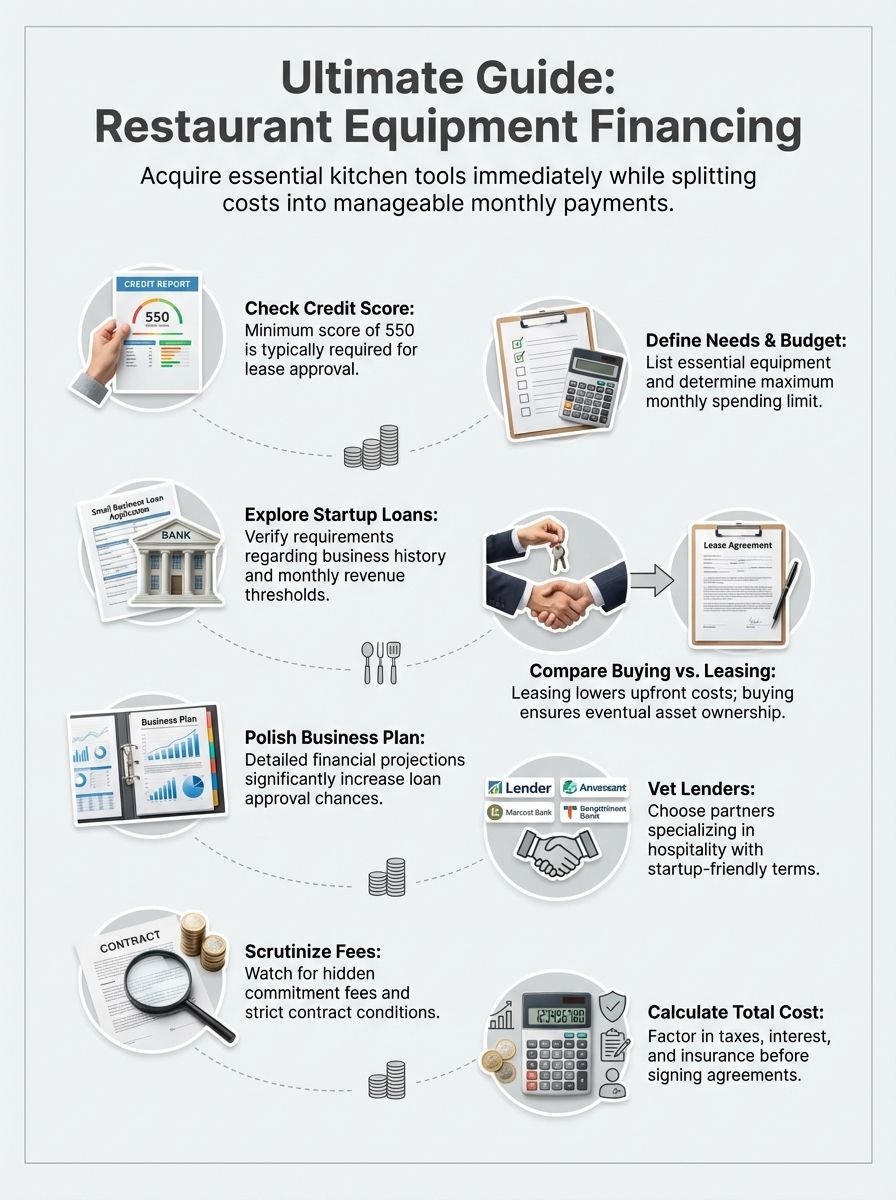
- Check your credit score.
Lenders value strong credit. A minimum score of 550 is often needed for leases. Good credit can get you lower interest rates. - Know your budget and needs.
List the equipment you need first. Decide if you want to lease or buy outright based on costs and flexibility. - Explore loan options for startups.
Some banks require six months of business history and $10,000 in monthly revenue. New businesses may face higher interest rates due to risk. - Compare leasing vs buying directly.
Leasing restaurant equipment can reduce upfront costs, while buying means you own it outright later. - Prepare a solid business plan.
A clear concept with detailed numbers improves approval chances for loans and leasing options. - Research lenders carefully.
Not all lenders offer the same terms or services. Pick one that supports startups and offers fair rates. - Review fees and conditions.
Watch out for commitment fees or higher costs due to poor credit scores. - Focus on long-term savings.
Look at total costs like taxes, interest rate, insurance, and outstanding balance before signing anything.
Conclusion
Finding the right financing for your restaurant can make all the difference. It helps you get key equipment without breaking the bank. Whether you choose to lease or borrow, there’s a solution for every need.
Think about your budget, credit, and what fits best for your business plan. With smart choices, your dream kitchen is just around the corner!
FAQs
1. What is restaurant equipment financing, and how does it work?
Restaurant equipment financing allows startups to borrow money or lease tools needed for their kitchen or dining operations. You can pay in installments instead of buying the equipment outright, making it easier to manage costs.
2. What are my options for restaurant equipment financing as a startup?
You can explore business loans, leasing agreements, or other tailored solutions like low-interest installment plans. These options help cover your specific equipment needs without requiring full payment upfront.
3. Can I finance food trucks or bakery equipment with these solutions?
Yes! Financing and leasing options apply to various businesses like food trucks, bakeries, and even franchising ventures. They allow you to get the commercial kitchen setup you need without breaking the bank.
4. Do I need good credit to qualify for restaurant equipment financing?
Some types of financing may require a credit check, but there are flexible programs available that cater specifically to startups with limited credit history.
5. How do I choose between purchasing and leasing my restaurant equipment?
Leasing lets you use the tools without owning them; this works well if you want lower monthly payments or plan upgrades at the end of your lease term. Buying outright gives long-term ownership but requires a larger initial investment.
6. What’s involved in the application process for getting restaurant equipment financing?
The process usually includes filling out forms about your business needs and finances, providing details on the cost of the equipment you’re looking to purchase or lease, and waiting for approval based on market value assessments by lenders or lessors.
