
Starting a business is tough, especially if you need expensive equipment to grow. The good news? The best equipment financing for startups in California can help you get what you need without draining your cash flow.
This guide will show you the top options and how they work, so you can focus on growing your company. Ready to learn more?
Key Takeaways
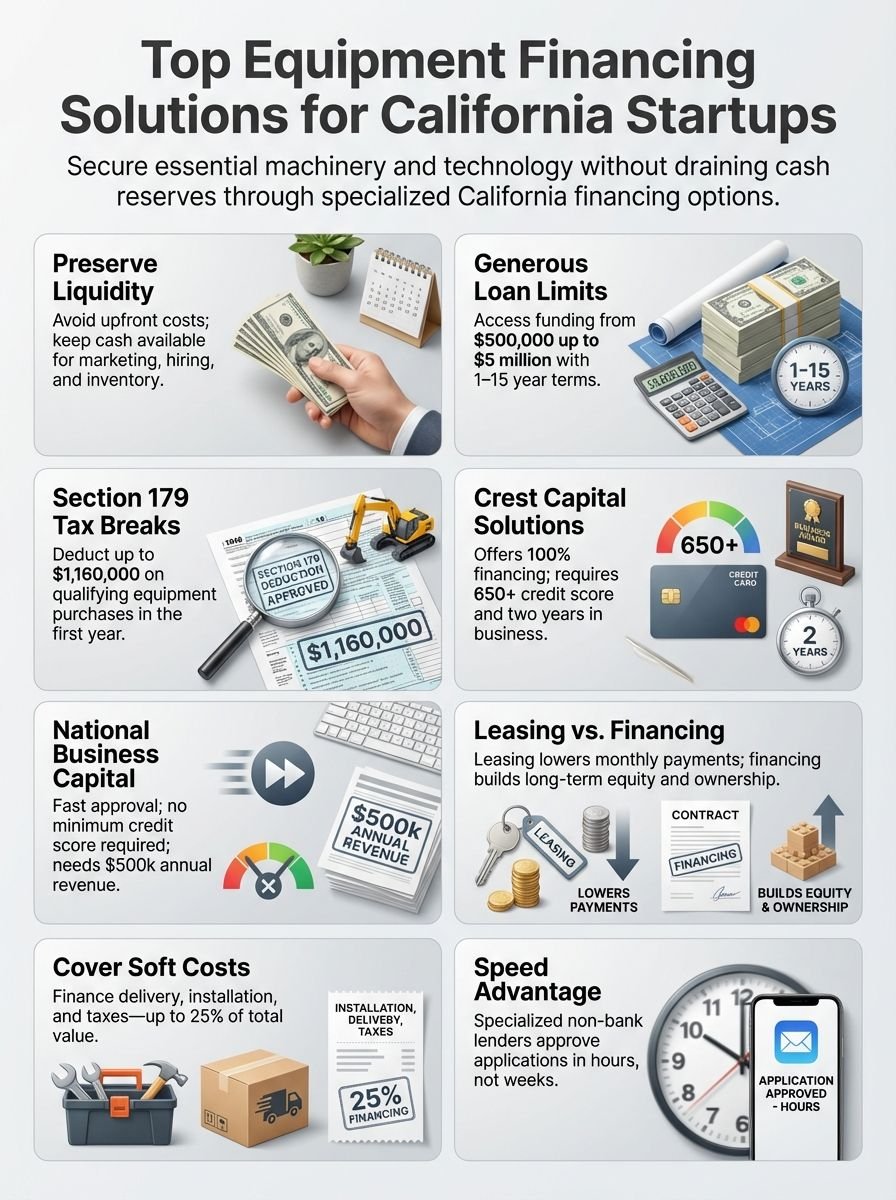
- Equipment financing helps California startups acquire machinery, vehicles, or tech without large upfront costs. Loan amounts range from $500,000 (Crest Capital) to $5 million (National Business Capital).
- Crest Capital offers fast approvals up to $250,000 with flexible payment plans like step-up or deferred options. National Business Capital funds loans in under 24 hours for businesses earning $500,000+ annually.
- Section 179 tax benefits let startups deduct up to $1,160,000 on qualifying purchases and include interest deductions on equipment loans.
- Flexible terms from lenders range between 1–15 years with rates as low as 2%. Seasonal payment options help businesses manage cash flow effectively during off-seasons.
- Specialized lenders approve loans faster than traditional banks. They accept new businesses with less experience and offer simpler online applications without heavy collateral requirements.
What Is Equipment Financing for California Startups?
Equipment financing helps startups in California buy or lease the tools they need. This can include machinery, vehicles, computers, or other essential business equipment. Instead of paying a big upfront cost, you spread payments over time.
Most lenders cover up to 100% of costs, including soft expenses like delivery and installation.
Many businesses use this option to keep cash on hand for growth or emergencies. Loan amounts range from $500,000 with Crest Capital to as high as $5 million through National Business Capital.
Payment terms usually last between 1 and 15 years. Interest rates can be as low as 2%, but they might go up to 20%, depending on your credit score and revenue history.
Key Benefits of Equipment Financing
Equipment financing helps businesses get what they need without big upfront costs. It also keeps more money in your pocket for growth and other goals.
Increased Liquidity for Business Growth
Spreading large purchases into monthly payments frees up cash. Businesses can use this capital for marketing, hiring, or stocking inventory. Most lenders offer 100% financing with no down payment, which avoids upfront costs entirely.
Payment plans like seasonal or deferred options further ease pressure on cash flow. For instance, startups in farming or construction often benefit from deferring payments during off-seasons.
This flexibility allows business owners to scale without draining resources immediately.
Tax Advantages for California Startups
Section 179 allows startups to deduct up to $1,160,000 on qualifying equipment in the first year. This applies to both new and used equipment put into service during the tax year. Interest on equipment loans is also tax-deductible, which reduces costs even further.
Leasing can lower taxable income since payments are often deductible as business expenses. Tools like Crest Capital’s Section 179 calculator help estimate savings quickly. Tax benefits make securing capital for equipment more affordable for small businesses looking to grow their operations.
Flexible Payment Terms and Options
Flexible terms make equipment financing easier for startups. Payment plans can stretch from 1 to 15 years, depending on your needs. Options include monthly, quarterly, or even seasonal payments to match cash flow cycles.
Step-up or deferred payments let you start small and pay more as your business grows.
Lenders like Crest Capital offer early payoff choices with little or no penalties. This means you can repay faster if profits increase. CB&T’s Equipment Finance Lines allow funding for multiple purchases without annual re-qualifications.
These options keep costs low and make managing equipment expenses simple.
Flexible payment schedules keep businesses moving forward without breaking the bank.
Best Equipment Financing Providers in California
Finding the right financing company can feel like searching for a needle in a haystack, but these options make it simpler—read on to see who stands out!
Crest Capital: Tailored Solutions for Startups
Crest Capital provides fast, reliable equipment financing solutions for startups. They offer 100% financing, including soft costs up to 25% of the equipment’s value. Startups can secure up to $250,000 with same-day approval.
Larger amounts take only 24–48 hours for a decision. The company works with businesses that meet a minimum credit score of 650 and have been under current ownership for at least two years.
Their payment plans are flexible, featuring options like step-up, deferred, and seasonal schedules. Crest Capital also funds used or refurbished equipment as old as ten years in many cases.
No cross-collateral or strict debt-to-equity rules are required for approval. Applying online is simple; it won’t affect your credit score either! With an A+ BBB rating and being part of the National Equipment Finance Association, they stand out among other lenders offering business loans in California.
National Business Capital: Fast and Flexible Funding
National Business Capital offers quick funding solutions for startups and growing businesses. Their loans range from $100,000 to $5 million, with terms of 1 to 5 years. Some borrowers receive funds in under 24 hours through their simple digital application.
Approval is fast, often taking just hours or days instead of weeks like traditional banks.
New businesses with less-than-perfect credit can still qualify. While no minimum time in business is required, they prefer companies operating for six months or more with at least $500,000 in annual revenue.
Interest rates vary between 2% and 20%, based on the applicant’s profile. Minimal paperwork and no need for collateral make the process even smoother for many startups seeking equipment financing options.
How to Qualify for Equipment Financing
Getting approved for equipment financing often depends on your credit, income, and business goals—read on to learn how startups can meet these needs without breaking a sweat!
Credit Score and Revenue Requirements
A credit score of 650 or higher can help with securing equipment financing from Crest Capital. They also check borrowing history to assess eligibility. Strong credit often means lower interest rates, ranging from 2% to 20%.
National Business Capital approves funding without a minimum credit score but usually requires startups to show at least $500,000 in annual revenue. For newer businesses, NBC is more flexible, only needing six months in operation compared to Crest’s two-year requirement.
Flexible Options for Startups with No Minimum Time in Business
Some lenders in California, like National Business Capital (NBC), make equipment financing easier for startups. They don’t have a strict requirement for minimum time in business.
While six months is preferred, new businesses without that can still qualify. This flexibility gives early-stage startups access to the equipment they need without long wait times.
NBC also skips demanding high credit scores. Their approach includes partnering with 75+ lenders to boost approval chances. Applications take just minutes online, requiring minimal paperwork compared to banks.
Funding can happen fast too, often within 24 hours, helping businesses hit the ground running with essential tools and machines!
Equipment Leasing vs. Equipment Financing: Key Differences
Leasing often comes with lower monthly payments than financing. It’s like renting, and you don’t own the equipment during the lease. At the end, you can renew, buy it at a set price, or return it.
Some leases include options like operating leases for even smaller payments or TRAC leases with fixed buyout terms.
Financing gives full ownership after paying off the loan. You may qualify for tax deductions using Section 179, which leasing doesn’t always allow. Payments are usually higher than leasing but help build equity in the equipment over time.
This approach works well if your goal is long-term use of machinery or vehicles without renewal concerns.
Steps to Apply for Equipment Financing in California
Applying for equipment financing in California doesn’t have to be overwhelming. Follow these simple steps to get started quickly.
- Identify Your Equipment Needs
Decide what equipment your business requires, whether it’s machinery, vehicles, or technology. Be specific about the type of equipment and its cost. - Choose a Lender
Research equipment financing companies like Crest Capital or National Business Capital. Look for options offering fast approvals and flexible terms. - Check Your Eligibility
Review lender requirements such as credit score, business income, or time in operation. Some lenders like NBC do not require minimum credit scores or collateral. - Gather Necessary Documents
Collect financial records like revenue statements or bank details. For loans above $250,000 with Crest Capital, ensure you have full financial statements on hand. - Complete the Application
Fill out the online application form through your chosen lender’s platform. Crest Capital offers a one-page form; NBC keeps their process digital and quick. - Review and Sign Agreements
Use e-signatures to finalize contracts securely and easily once approved by the lender. - Receive Funding
After approval, the lender pays the vendor directly for your equipment needs within as little as 24 hours in many cases at NBC.
Types of Equipment You Can Finance
You can finance almost anything your business needs to operate smoothly. From tools to machinery, the options are as wide as your ambitions.
Machinery, Technology, Vehicles, and More
Startups in California can finance a wide range of equipment. Machinery like forklifts, 3D printers, and assembly line tools are often covered. Computers and advanced software for IT or design businesses also qualify.
Vehicles such as trucks, vans, or construction vehicles are common options too.
Lenders allow funding for both new and used equipment up to 10 years old. Soft costs like delivery and taxes can be included, covering up to 25% of the total value. Industries such as manufacturing, food processing, printing, and tech benefit greatly from these options.
This flexibility helps many businesses scale without draining their working capital upfront.
Financing Options for Special Situations
Some businesses face tough credit histories or need help financing expensive equipment. There are options designed to work around these challenges, giving companies a chance to move forward.
Best Way to Finance a Tractor with Bad Credit
Bad credit doesn’t slam the door on tractor financing. National Business Capital (NBC) offers funding with no minimum credit score, helping applicants secure equipment financing even after financial missteps.
Crest Capital also supports borrowers with past credit issues and avoids tough debt-to-equity rules or cross-collateral demands.
Used tractors up to 10 years old qualify for financing, keeping costs in check. Seasonal payment plans fit agriculture’s cash flow cycles perfectly. Plus, you can finance delivery fees, taxes, and setup costs up to 25%.
Fast online applications mean decisions arrive in hours or days instead of weeks.
Common Questions: Approval Times and Payment Plans
Getting equipment financing can feel confusing. Here are answers to common questions about approval times and payment plans.
- Approval is fast with non-bank lenders. Crest Capital offers same-day approvals up to $250,000, while National Business Capital takes 24 to 72 hours for qualifying requests.
- Traditional banks take longer. Approval usually ranges from 1 to 3 weeks due to stricter processes and higher documentation needs.
- Payment terms vary by lender and equipment type. Most lenders offer plans from 1 to 15 years, making it easy for startups to budget.
- Payments can be flexible. Options include monthly, quarterly, seasonal, step-up, or even deferred structures that match business cash flow.
- Early payoffs are possible with many lenders. Penalties are minimal or waived entirely in several cases.
- Static payment structures help stability. They allow startups to plan finances better since the payments remain consistent over time.
- Leasing payment options differ slightly from financing ones. Leases may let you renew agreements or return equipment after a set period instead of owning it outright.
- Equipment costs impact payment plans too. Heavier machinery often has longer terms than smaller tech gadgets or office tools.
- Some lenders cater better to poor credit scores than others do. Specialized providers often relax minimum requirements compared to traditional banks or credit unions.
- Seasonal businesses benefit most from custom schedules like seasonal payments during high-revenue months, reducing pressure during slower seasons of the year.
Why Choose a Specialized Lender Over Traditional Banks?
Specialized lenders like Crest Capital or National Business Capital approve loans faster. They process applications in hours or days, while traditional banks take weeks. Their one-page forms save time and reduce stress compared to the extensive paperwork required by banks.
These lenders often don’t demand collateral or a 680+ credit score. Banks usually need both. Specialized financing can cover 100% of equipment costs, including soft expenses like delivery fees.
Flexible payment options and quick customer support make them more reliable for startups needing fast solutions without headaches.
Top Tips for Securing the Best Equipment Financing Deal
Getting the best deal on equipment financing can save you time and money. Follow these tips to make smart choices and boost your chances of approval.
- Check your credit score. A score of 650 or higher can help secure the best rates with lenders like Crest Capital.
- Review lender requirements. Most programs need annual revenue of $500,000 or more for approval.
- Consider flexible payment plans. Options like step-up or seasonal plans match your cash flow easily.
- Take advantage of tax benefits. Section 179 allows write-offs up to $1,160,000 for qualified equipment purchases.
- Shop around for offers. National Business Capital connects you with over 75 lenders, giving you competitive options fast.
- Use online calculators before applying. Tools from Crest Capital can estimate monthly payments and tax savings quickly.
- Apply online for faster funding times. Some lenders approve applications in under 24 hours, saving valuable time.
- Include soft costs in financing deals. Cover up to 25% of additional expenses like training or setup without using extra funds.
- Look into options for startups with low business history. Certain programs don’t require a minimum time in operation for approval.
- Focus on total loan costs, not just interest rates alone. Review fees, repayment terms, and hidden charges before signing agreements.
- Evaluate lease vs purchase options carefully first hand. Leasing works if you want lower payments; buying gives ownership long-term.
- Always negotiate where possible before agreeing! Many lenders offer lower rates or better terms when asked directly upfront.
Conclusion
Finding the right equipment financing can change your startup’s path. It helps you grow faster without draining your cash. With options like loans or leases, there’s something for every need.
Research providers, compare rates, and pick what fits best. Smart choices today will fuel tomorrow’s success!
For those facing credit challenges but needing to finance a tractor, explore our guide on the best ways to finance a tractor with bad credit.
FAQs
1. What are the basic requirements for equipment financing in California?
To qualify, most lenders require a business plan, good personal credit, and at least a few months in business. Some may also ask for collateral or proof of steady income.
2. Can startups get equipment financing without much credit history?
Yes, many lenders offer options like an equipment lease or loans tailored to new businesses with limited credit histories.
3. How does leasing compare to purchasing equipment outright?
Leasing lets you use the necessary equipment without straining your capital upfront. You can often renew the lease or return the equipment when it’s no longer needed.
4. What types of funding are available for heavy machinery purchases?
Startups can explore term loans, finance leases, or even lines of credit for acquiring heavy machinery or specialized tools crucial to their operations.
5. Do banks and credit unions provide flexible loan options for startups?
Yes, many banks and credit unions offer small business loans that help you scale your business by covering costs like new or used equipment at fair market value.
6. Is prepayment allowed on most loan agreements for startups?
Some agreements allow early payment but check carefully as some lenders charge penalties if you pay off loans ahead of schedule! Always review terms before signing anything official.
