Starting a business is exciting, but buying equipment can drain your wallet fast. The good news? The best equipment financing for startups can help you get what you need without breaking the bank.
In this guide, you’ll learn about top funding options to grow your business while saving cash. Keep reading to find the right fit!
Key Takeaways
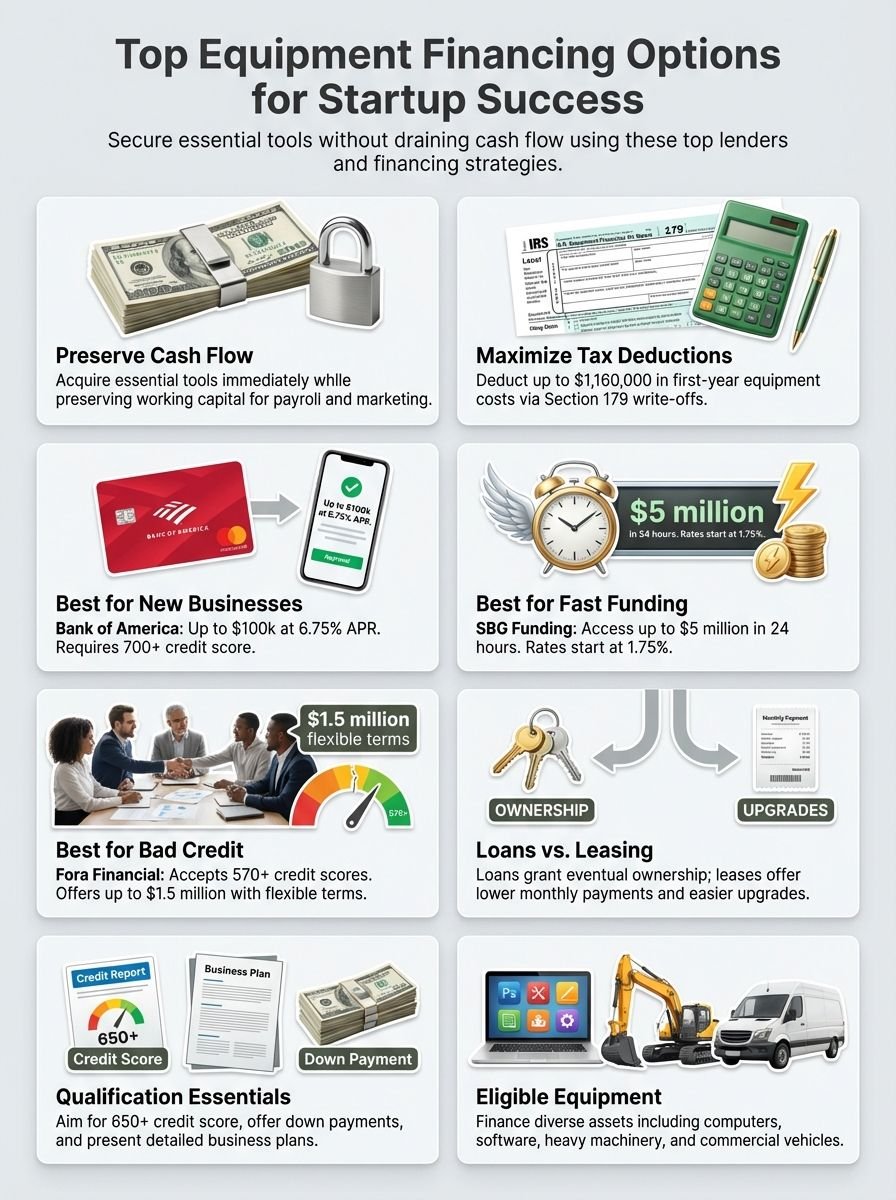
- Equipment financing helps startups save money by preserving cash flow, offering flexible payment plans, and providing tax benefits like Section 179 deductions of up to $1,160,000 in 2023.
- Top financing options include Bank of America for loans up to $100,000 (requires a 700 credit score), SBG Funding for fast funding within 24 hours (accepts scores as low as 600), and Fora Financial for bad credit solutions (approves scores starting at 570).
- Leasing is ideal for short-term needs with flexibility but doesn’t offer ownership without a buyout. Loans provide long-term asset ownership but require you to handle maintenance costs.
- Construction equipment can be financed for terms between 1–10 years based on the equipment’s useful life. Vendors like Crest Capital allow early payoff options with minimal penalties.
- To qualify, maintain a good credit score (650 or higher improves chances), prepare documents upfront like business plans and equipment quotes, and monitor personal/business credit regularly.
Key Benefits of Equipment Financing for Startups
Starting a business isn’t cheap, and buying equipment outright can drain your funds fast. Equipment financing helps you get what you need now while keeping money free for other expenses.
Preserving cash flow while acquiring essential tools
Acquiring equipment doesn’t have to drain your wallet. Equipment financing helps businesses preserve cash by requiring little to no upfront payment for new or used tools. This allows startups to keep working capital for other needs like payroll, marketing, or inventory.
Flexible payment options make it even easier. Monthly and seasonal plans fit different budgets, while deferred payments give breathing room during slower months. As funds are strictly tied to the equipment being purchased, you avoid overspending on unrelated expenses.
Accessing tax advantages like Section 179 deductions
Section 179 can save businesses significant money. It allows a first-year write-off of up to $1,160,000 for equipment purchases in 2023. This means you can deduct most or all of the cost for new or used business equipment right away.
Interest paid on equipment loans may also be tax-deductible. Some companies like Crest Capital offer tools like a Section 179 Tax Calculator, which helps estimate savings easily. Financing programs that cover soft costs can even increase your deduction amount further under this tax rule.
Top Equipment Financing Options for Startups
Starting a business comes with plenty of costs, and equipment is often one of the biggest. The right financing option can help you get what you need without draining your budget.
Best for newer businesses: Bank of America
Bank of America offers equipment financing up to $100,000 with an APR starting at 6.75%. Businesses need to be at least 6 months old and have a minimum credit score of 700 to qualify.
It provides term loans and lines of credit, including secured options for added flexibility.
This financing works for various assets like machinery, vehicles, and technology. There’s full cost transparency with no hidden charges, making it ideal for startups managing tight budgets.
Bank of America’s reputation as a top lender adds trust while helping newer businesses access the tools they need for success.
Best for fast funding: SBG Funding
SBG Funding offers equipment financing up to $5 million, with money available in just 24 hours. Businesses with a credit score of 600 or higher can apply, though lower scores may still qualify.
Their interest rate starts at 1.75% per month, making it competitive for fast loans.
Applicants should meet high annual revenue requirements to qualify. The process is quick and easy, ensuring approvals are fast. SBG also provides working capital loans and revenue-based financing options alongside equipment loans.
This makes it ideal for businesses needing funds quickly without hassle.
Best for bad credit: Fora Financial
Fora Financial works well for startups with bad credit. They offer equipment financing up to $1.5 million and accept credit scores as low as 570. Borrowers need at least $240,000 in projected yearly revenue to qualify.
With a 1.10 factor rate on loans, payments stay manageable.
This financing company keeps things simple by not requiring annual re-qualification. They also don’t report loans to business credit bureaus, which helps if building credit is not your main goal right now.
Fora Financial supports newer or struggling businesses with flexible terms on lines of credit and term loans lasting up to two years.
Equipment Financing vs. Equipment Leasing
Owning or renting equipment can change how your business grows. Each option has unique perks, so it’s worth knowing what fits your goals best.
Key differences in ownership and flexibility
Loans give you ownership of the equipment after final payments. Leases, on the other hand, may require a buyout to own it. A loan means you handle all maintenance and repairs. Leasing might include these costs in your agreement.
Leasing offers flexible payment plans like seasonal or deferred options. Loans usually have fixed terms that don’t change over time. If you want long-term assets, loans are better.
Leasing works well for short-term needs or frequent upgrades without worrying about depreciation value.
How Long Can You Finance Construction Equipment?
Construction equipment can be financed for 1 to 10 years. SBA loans even allow up to a 10-year term just for equipment purchases. The length depends on the type of loan and the machine’s useful life.
For example, lenders like Crest Capital offer terms based on how long the equipment stays valuable.
Used or refurbished machines also qualify, but many lenders set age limits of 10 years or less. Some programs, like vendor financing, give businesses added flexibility. You may even pay off early with little to no penalties if your lender allows it.
Always match the loan’s length with how long you plan to use the equipment.
How to Qualify for Equipment Financing
Lenders want to see strong financials, a solid business plan, and steady cash flow. Boosting your credit score can also open more doors for funding.
Credit score requirements and tips to strengthen your application
A strong credit score can improve your chances of getting equipment financing. Lenders often check this to assess risk.
- Aim for a credit score of at least 650. Bank of America typically requires 700, while SBG Funding accepts 600. Fora Financial may approve scores as low as 570.
- Offer a larger down payment if possible. This shows commitment and reduces lender risk.
- Include additional collateral in your application. Equipment you already own or business assets can boost approval odds.
- Add a co-signer with better credit history to your loan if needed. This helps startups with limited or poor credit profiles.
- Show lenders your detailed business plan. Highlight industry experience, revenue projections, and how the equipment will grow your business.
- Report all payments on time once approved for financing. Beacon Funding reports timely payments to credit agencies, which builds your business credit.
- Avoid big debts before applying for equipment loans. Lowering existing debt improves both personal and business credit scores.
- Submit all required documents upfront when applying for financing options like small business loans or leases. Prepare info about company name, industry type, contact details, and equipment cost.
- Regularly monitor personal and business credit scores using free online tools to catch errors early and stay prepared for future applications!
Types of Equipment You Can Finance
You can finance almost anything your business needs to grow. From heavy machinery to office computers, there’s a fit for every industry.
Technology, machinery, vehicles, and more
Startups can finance nearly any equipment they need. This includes computers, software, and other technology tools essential for daily operations. Heavy machinery like excavators or forklifts is also eligible for loans, helping businesses in construction or manufacturing.
Commercial vehicles such as tow trucks or delivery vans are often covered too. Even specialized assets, like embroidery machines and food packaging gear, fit under financing options.
Used equipment up to 10 years old is generally accepted by many lenders.
Steps to Secure Equipment Financing
Start by knowing what equipment you need and your budget, then pick a lender that fits your business goals—dig into the details to find the best deal!
Confirm needs, compare lenders, and review terms
Knowing your needs and comparing options can save you money and headaches. Follow these steps to secure the right financing for your business tools:
- Identify what equipment you need. Make a list of essential items, like machinery, vehicles, or technology.
- Get quotes for the equipment’s cost. Use these to estimate how much funding you’ll require.
- Research different lenders online and offline. Look into banks, alternative lenders, and companies like Bank of America or SBG Funding.
- Prequalify with three to five lenders. This helps compare interest rates, terms, repayment lengths, and speed of funding.
- Review all offers carefully. Check for hidden fees or unclear terms that could hurt your budget later.
- Use a payment calculator for planning. Calculate monthly payments to confirm it fits your cash flow.
- Choose a lender with strong security practices and customer reviews. Don’t forget to read feedback from other borrowers before deciding.
- Confirm their requirements ahead of applying. Gather needed documents like credit scores, business plans, or equipment invoices to streamline approval time.
Conclusion
Finding the right equipment financing can change your startup’s future. The right choice helps you grow, save cash, and access essential tools. Compare options carefully, check terms, and pick what fits your needs best.
With smart planning, you’ll scale your business without breaking the bank!
For more detailed information on financing durations for specific equipment, check out our comprehensive guide here.
FAQs
1. What is equipment financing, and how does it work?
Equipment financing is a loan or lease that helps businesses buy equipment they need. The equipment itself often acts as collateral for the loan, making it easier to secure funding.
2. Should I choose an equipment lease or purchase?
It depends on your business needs and budget. Leasing allows you to use the equipment without owning it, while purchasing gives you full ownership but may require more upfront capital.
3. What types of businesses benefit from equipment loans?
Startups, small businesses, and companies needing heavy machinery or specialized tools can all benefit from these loans. Equipment financing supports growth by providing access to essential items like medical devices, furniture, or industrial machines.
4. How do I apply for equipment financing?
To apply for an equipment loan, gather financial statements and information about your business credit score and time in business. Many online lenders offer quick applications with flexible rates and terms.
5. Can startups qualify for this type of funding?
Yes! Even new businesses can get approved if they meet basic requirements like personal credit checks or provide guarantees such as collateral (like the financed equipment).
6. Are there tax benefits when using an equipment finance option?
Yes! Some leases or loans allow tax deductions under certain conditions because payments may count as business expenses—saving you money while helping grow your company!
