
Buying construction equipment isn’t cheap, especially for small builders starting out. Heavy machinery like excavators or loaders can cost thousands of dollars, making it tough to pay upfront.
This blog explains how small builders afford machinery through smart financing options, helping them save money and grow their business. Keep reading to learn practical tips that could change your game!
Key Takeaways
- Small builders can finance machinery with options like equipment loans, leases, and business lines of credit. Each fits different budgets and goals.
- Equipment loans offer ownership from the start but need a 5%–20% down payment. Monthly payments are fixed, making costs predictable.
- Leasing is ideal for tight budgets or short-term needs. It often comes with low to no upfront cost and allows easy upgrades.
- Renting or buying used equipment saves money on tools needed briefly or infrequently for seasonal work.
- Good credit scores (600–650+) and steady income help qualify for better financing terms with lower interest rates.
Types of Equipment Financing for Small Builders
Small builders have several ways to fund equipment purchases. Each option offers benefits and fits different budgets, goals, and business sizes.
Equipment Loans
Equipment loans let contractors buy heavy equipment without paying the full price upfront. The equipment itself acts as collateral, lowering risk for both lenders and borrowers. These loans often come with fixed interest rates and predictable monthly payments, making budgeting simpler.
Borrowers usually need a down payment between 5% to 20%, depending on credit scores or lender terms.
Ownership starts right after purchase. This is ideal for machines like tractors, diggers, or earthmoving tools that have long lives. Builders can grow their fleets while building equity in their assets over time.
These loans also provide potential tax benefits, as businesses may deduct depreciation costs yearly from taxes filed within the United States systems.
Equipment Leasing
Leasing is a smart way to get construction equipment without heavy upfront costs. It’s perfect for startups and small businesses on tight budgets. Many leases have 0% down payment options, which means you can start working with minimal expense.
Plus, the monthly payments are often lower compared to loans.
Some agreements include maintenance or insurance. This reduces the hassle of repairs and upkeep for contractors. Leasing also makes it easier to upgrade machinery when needed since contracts usually last shorter terms than loans.
For builders who replace tools often or need flexibility, leasing keeps things affordable and simple.
“Leasing helps small contractors access reliable equipment at a fraction of the cost.”
Business Lines of Credit
A business line of credit offers fast and adaptable funding for small construction companies. It’s ideal for purchasing tools or managing repairs without exhausting savings. Interest is charged only on the amount used, making it an economical choice.
Approvals can occur within 24 hours, with funds available in as little as three business days after paperwork is completed.
This type of financing is effective for seasonal cash flow challenges or smaller equipment purchases like skid steers or cabs. Instead of paying a large lump sum upfront, builders access money only as required.
It functions as a financial safety net customized to your specific project needs!
Key Factors for Qualifying for Financing
Lenders want to see steady income and a solid financial history. Good credit and proof of revenue can open more doors for financing options.
Credit Score and Financial Documentation
A credit score in the 600–650 range can often qualify you for equipment financing. Higher scores, though, lead to better rates and terms. Strong personal credit becomes especially useful for newer contractors or startups with limited business credit history.
Lenders may also accept collateral, like the construction machinery itself, if your score is lower.
Financial documents such as tax returns and profit-and-loss statements are a must. These help banks or creditors check your income stability and ability to repay. Showing steady revenue growth impresses lenders too.
Consistently paying off loans builds better business credit over time, helping future loan approvals feel less like pulling teeth.
Good financial habits today set the foundation for tomorrow’s big wins.
Time in Business and Revenue Requirements
Most lenders want your business to be at least six months old. This shows stability and some track record of operations. New contractors can still qualify by having strong personal credit or using a co-signer.
Lenders also check revenue carefully. They need proof that your income can cover monthly payments without stressing the budget. For startups, leasing might work better than loans since it requires less financial history.
Business lines of credit may suit companies with steady earnings, offering flexibility for growing expenses like machinery purchases or repairs.
Alternatives to Traditional Equipment Financing
Small builders often rent equipment for short jobs to save money. Renting avoids the high purchase price and offers flexibility, especially for tools like cranes or pumps used only a few weeks.
This method reduces long-term costs since you don’t need to worry about storage or repair expenses. It’s also helpful when dealing with seasonal work, as renting can align with project timelines without tying up your capital.
Buying high-quality used machinery is another smart choice. Used equipment usually costs less than new and helps small companies grow their business without overspending. Thoroughly inspect the equipment before buying to avoid hidden problems, and ask for warranties from trustworthy sellers or dealers.
High-yield savings accounts can help you set aside funds for these purchases in advance, keeping your finances steady while acquiring essential tools and equipment.
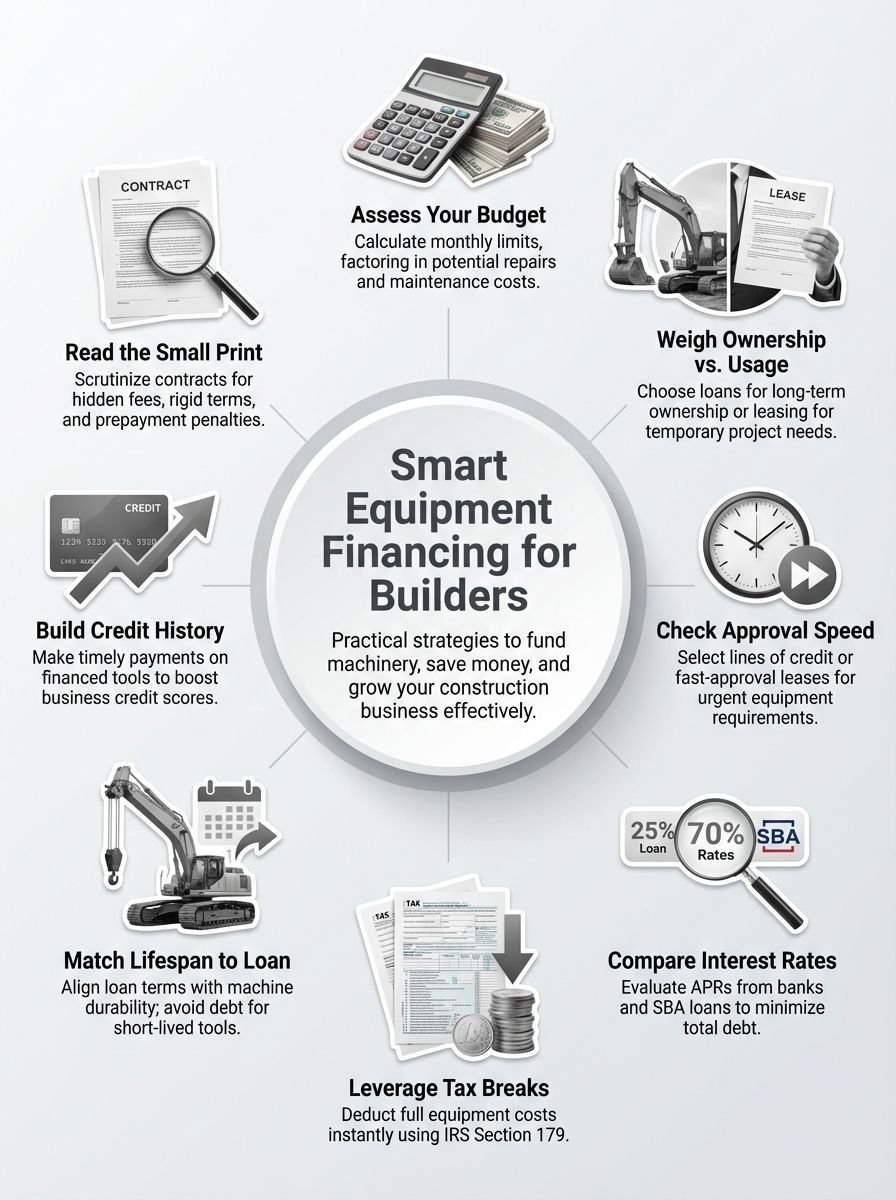
Tips for Choosing the Right Financing Option
Finding the right financing option can significantly influence a construction business’s success. Follow these tips to make a smart choice.
- Assess Your Budget
Determine how much you can allocate for monthly payments. Be cautious not to overextend your finances, as unplanned expenses like replacement parts or repairs may arise. - Weigh Ownership vs Usage
Decide if you prefer owning the equipment outright or using it for a limited time. Loans are ideal for ownership, while leasing is a good fit for temporary requirements. - Check Approval Speed
For situations where equipment is needed promptly, consider lines of credit or leases with fast approval processes. These options are beneficial for urgent construction projects. - Compare Interest Rates
Research and evaluate rates from various lenders, including banks and SBA loans like the 7(a). Carefully review APRs to prevent high debt costs. - Think About Taxes
Utilize IRS Section 179 to deduct the cost of new equipment in one tax year, significantly reducing your business expenses. - Factor in Equipment Life Span
Opt for long-term loans only if the machine promises enduring productivity and reliability. Avoid taking on substantial debt for items prone to quick devaluation or becoming obsolete. - Build Credit History
Use financing as an opportunity to strengthen your creditworthiness by making timely payments on financed equipment, such as tools, trucks, or earthmoving machines. - Read the Small Print
Be vigilant for issues like hidden fees and rigid terms in agreements from lenders or manufacturers offering flexible payment plans.
Red Flags to Watch Out for in Equipment Financing Agreements
Hidden fees can drain your wallet fast. Watch for charges like documentation fees or prepayment penalties tucked in the fine print. These add up, making an affordable option expensive over time.
Variable interest rates are another trap. Payments may start low but balloon unexpectedly, putting your budget at risk.
Overborrowing is a slippery slope too. Borrow only what you can repay comfortably to protect your working capital. Short-term cash advances often sound tempting, but their sky-high APRs can crush profits quickly.
Be cautious with seller financing as well; not all deals offer fair terms or competitive rates. Lastly, don’t ignore restrictions on modifying equipment or unclear maintenance and insurance responsibilities in leases and rental agreements.
Always read every detail closely before signing that dotted line!
Conclusion: Smart Financing Solutions for Small Construction Businesses
Smart financing helps small builders grow without breaking the bank. Choosing between loans, leases, or credit can make getting equipment easier and faster. Always check agreements for tricky fees or high rates.
Invest in reliable tools to save time and boost profits. The right plan keeps your business moving forward, even on a tight budget!
For more innovative strategies on affording construction equipment without traditional loans, check out our article How to Finance Construction Tools Without Loans.
FAQs
1. What are the common equipment financing options for small construction companies?
Small builders often rely on business loans, bank loans, or specialized lending programs like the SBA 7(a) loan. These options help them acquire essential tools such as earthmoving equipment or skid steers.
2. Is buying used machinery a good idea for small contractors?
Yes, buying used can be strategic and cost-effective. Reputable sellers may also offer warranties to protect your investment while keeping expenses low.
3. Can startups with limited credit histories get financing for machinery?
Startups might face challenges, but they can explore nonprofit organizations or Small Business Administration (SBA) programs that cater to new businesses needing effective tools.
4. Are there tax advantages when financing construction equipment?
Yes, many financing options provide tax benefits tied to equipment acquisition. This helps reduce costs while growing a profitable business in the construction sector.
5. How quickly can I access financed equipment after approval?
With some lenders specializing in quick transactions, you could have access to your piece of equipment within days if all paperwork is complete and interests align.
6. How do I avoid obsolescence when investing in machinery?
Consider versatile machines like skid steers or compaction tools that stay relevant across projects such as waste management and road work; this reduces risks linked to outdated technology over time.
