
Broken equipment can mess up your day, especially when you have no savings. A simple repair can often save money instead of buying new replacements. This guide will show you how to replace broken equipment with no savings by fixing and maintaining what you own.
Don’t throw it out just yet, there’s a better way!
Key Takeaways
- Inspect broken items first. Small repairs, like fixing a clogged drain ($194), cost less than replacing big equipment like a furnace ($4,000).
- Try DIY fixes using online guides or YouTube. Basic tools and patience can help repair appliances, clothes, furniture, and more at home.
- Use cheap spare parts from eBay or Amazon. Refurbished options and local shops can save money too.
- Local repair services may be cheaper for older items. Ask friends for recommendations or barter skills with neighbors.
- Regular maintenance prevents breakdowns. Check monthly to spot wear early and avoid costly future repairs.
Assessing the Damage: Can It Be Repaired?
Take a close look at the broken appliance or equipment. Ask yourself if fixing it costs less than buying new.
Evaluating the cost and feasibility of fixing the broken equipment.
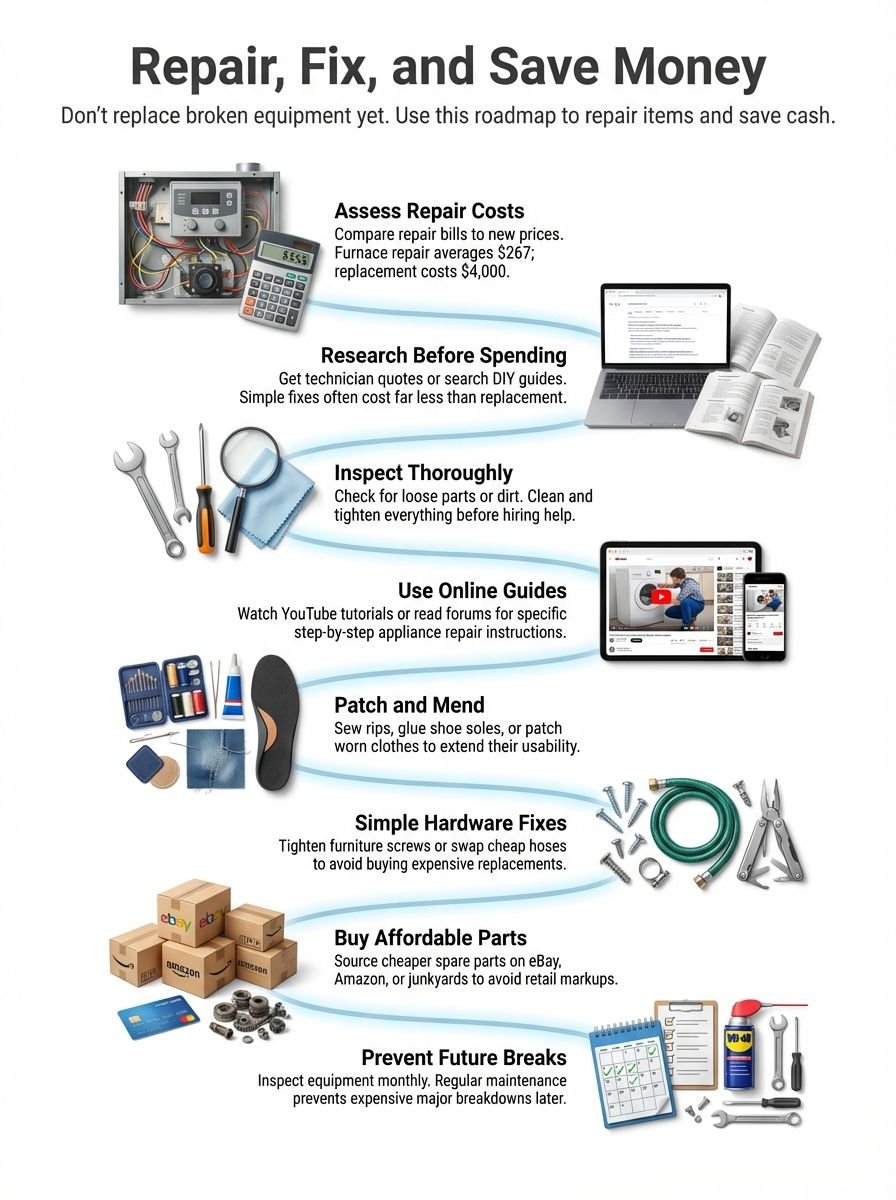
Inspect the broken equipment carefully. Check if a repair makes sense or will cost more than buying new. For example, fixing a furnace averages $267, but replacing one could be up to $4,000.
Look for hidden issues that may raise costs later.
Get quotes from technicians or research DIY fixes online. A minor problem like a clogged drain might only cost $194 on average to fix, while more serious damage adds up fast. Ask yourself: can this repair extend its useful life long enough to justify the expense?
DIY Repairs: Tools and Techniques to Save Money
Grab a wrench, some glue, and a bit of patience—you might just fix that broken dryer or fridge yourself!
Step-by-step ideas for fixing common household items and machinery.
Fixing broken items at home saves money and reduces waste. You don’t need special skills, just patience and basic tools.
- Inspect the equipment. Check if it’s a simple issue, like a loose part or dirt buildup. Clean or tighten anything obvious first.
- Find online guides. Forums or YouTube videos show step-by-step repairs for dryers, refrigerators, ovens, water heaters, or other household appliances.
- Patch clothing tears. Sew small rips using heavy-duty thread and a curved needle from your sewing kit. Replace lost buttons with ones from an old jar to save money.
- Repair shoes easily. Use super glue or hot glue to fix loose soles or holes in worn-out slippers and shoes.
- Fix furniture damage fast. Tighten screws on wobbly chairs or tables with a basic screwdriver. For torn fabric on cushions, staple new fabric after cutting it to size.
- Save your dishwasher. Replace cracked hoses cheaply by buying spares online. A faulty switch can be replaced with simple tools as proven by repairing a 14-year-old model.
- Mend kids’ clothes creatively. Cover holes in pants with patches cut from old jeans or turn damaged pants into shorts instead of tossing them out.
- Use household glue for small jobs around the house like sealing cracks in lightweight materials such as plastic containers or cheap tableware.
- Repurpose unfixable items wherever possible before discarding them to reduce downtime costs from constantly replacing everything new.
- Be proactive with maintenance by inspecting equipment monthly for wear and tear; this stops major breaks later on saving much more long-term expenses!
Sourcing Affordable Spare Parts and Repair Services
Finding spare parts doesn’t have to break the bank. Check local shops, online marketplaces, or junkyards for affordable options.
Where to find budget-friendly replacement parts or professional repair assistance.
Online stores like eBay or Amazon often sell spare parts at lower prices than local shops. Search for refurbished options too, especially for home appliances or vehicle parts. A bit of research can help you find discounts that save money in the long run.
Local repair shops may offer affordable services, especially if they focus on fixing older equipment instead of selling new ones. Ask friends about reliable technicians, or check online reviews to avoid wasting time with poor service.
Bartering skills with neighbors could also secure free help if cash flow is tight!
Conclusion
Fixing broken stuff doesn’t have to break the bank. With some effort, you can repair and reuse many items at home. Start small with tools or basic DIY techniques. Shop smart for affordable parts or help if needed.
Every fix adds up in savings and keeps your wallet happy!
FAQs
1. How can I repair broken equipment without spending too much money?
Start by inspecting your equipment to see if it’s easy to fix. Perform maintenance or try predictive maintenance techniques. If you’re not able to repair it, hire a professional who can help at a reasonable cost.
2. Should I repair or replace old equipment?
Repairing is often cheaper and helps extend the life of existing equipment, especially for items like water heaters, laundry machines, or kitchen sinks. Replacing should only be considered when repairs are no longer effective or costs outweigh buying new.
3. What are some ways homeowners can save money on home repairs?
Focus on preventative maintenance to avoid unexpected expenses later. Fix things as soon as they malfunction instead of waiting until they break completely. For bigger issues like roofs or plumbing problems, consider warranties or insurance coverage.
4. Is replacing my old appliance always worth the initial cost?
No, not always! While upgrading might seem appealing, repairing certain pieces of equipment often provides better return on investment by lowering long-term maintenance costs and avoiding high upfront expenses.
5. Can regular inspections really save me money in the long run?
Absolutely! Inspections catch small problems before they become big ones that cost more to fix—or worse—require replacement entirely.
6. What should I do if I have no savings but need urgent repairs?
Look into frugal options like self-service laundromats while saving up for fixes at home. You could also explore debt relief methods such as credit card payment plans or small loans for essential repairs like hot water systems or doors that aren’t working properly anymore!
