
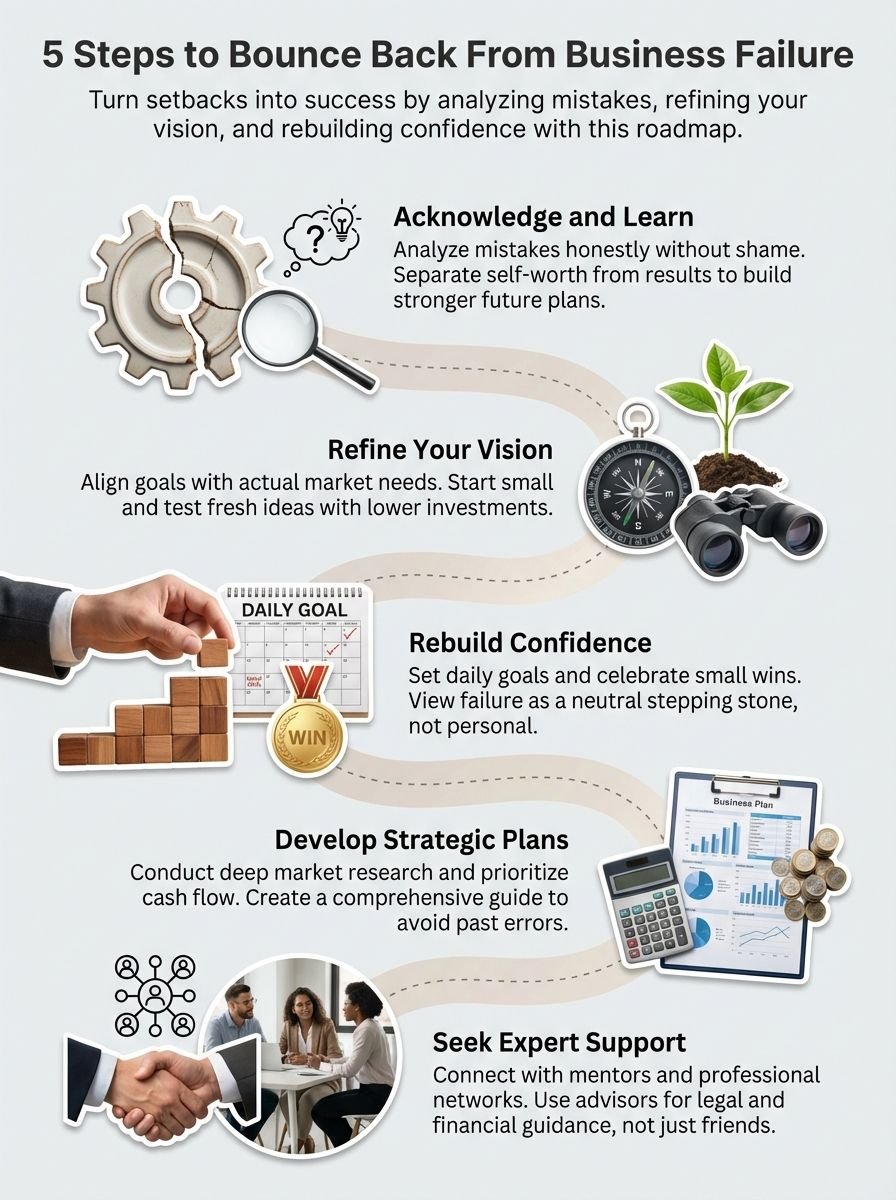
Acknowledge the Failure and Embrace the Lessons
Facing a failed business is tough, but it’s also a chance to grow. Take an introspective look at your business journey and ask yourself hard questions. What went wrong? Maybe the market wasn’t right, or money management fell apart.
Write down every mistake, even if it stings. Was there overspending? Did marketing miss the mark? Understanding these points helps build stronger plans for your next venture.
Shame or pain from failure can cloud judgment, so separate your self-worth from results. Many entrepreneurs see their first company fail before success comes knocking. Use this setback as a stepping stone instead of a stop sign.
Every past lesson shows you what not to repeat and where new opportunities might lie ahead!
Revisit and Refine Your Business Vision
Shift your focus to what truly matters. A failed venture offers a chance to rethink goals and reshape your purpose. Ask yourself, “What did I want from my business?” Then compare that with what the market actually needs.
For example, maybe the last venture pushed hard on tech innovation but ignored customer pain points.
Start small this time. Test fresh ideas with lower investments like $10,000 instead of risking $200,000 right off the bat. Study competitors closely; learn why they succeed where you didn’t.
Check if your product solves real problems or just looks good on paper.
Failure isn’t final if it leads to better strategy.
Rebuild Confidence and Strengthen Your Mindset
Losing confidence after a business failure feels discouraging, but it’s normal. Start small to get back on your feet. Set daily goals and stick to them using tools like a calendar or task list.
Celebrate small wins, because progress builds trust in yourself again. Focus on what you learned from the mistakes rather than blaming yourself for things that didn’t work out. Many successful people failed several times before reaching success; Thomas Edison tested thousands of ideas before inventing the light bulb.
Change how you view failure by treating it as neutral, not personal. Surround yourself with stories of entrepreneurs who bounced back after huge financial losses or setbacks. Read their books or watch interviews for inspiration and wisdom.
Feed your mind with motivational quotes like Winston Churchill’s “If you are going through hell, KEEP GOING!” It’s good fuel when doubts creep in late at night. Train your brain to seek solutions instead of dwelling on problems; rewire negativity into action plans for future growth!
Develop a Strategic Plan for Your Next Steps
A solid plan is key to recovering after a business failure. Think of it as your guide to avoid past mistakes and grow stronger.
- Examine what went wrong in your previous venture. Identify the mistakes, gaps in cash flow, or weak marketing strategies. Use these lessons as building blocks for growth.
- Set clear goals for your next business idea. Focus on specific steps like market research, pricing plans, and target audience details.
- Conduct deeper research into market demand before starting another business. Align ideas with your passions and skills to improve chances of success.
- Develop a comprehensive business plan that includes finances, marketing strategies, and operations. Add backup plans for potential issues like economic downturns or missed projections.
- Prioritize cash flow management during this new venture planning stage. Aim for positive cash flow early by keeping a close watch on spending and maintaining steady income sources.
- Avoid the tendency to rush decisions by thinking them through carefully this time. A well-structured timeline helps prevent impulsive moves that might repeat failures.
- Recognize and celebrate small achievements during implementation to stay motivated while building progress step by step toward success!
Seek Support and Guidance from Mentors or Networks
Surround yourself with people who understand business struggles. Mentors and networks can offer advice, fresh ideas, or solutions you hadn’t thought of before. LIFTed Business Advisors provide legal and financial guidance to help rebuild your foundation.
Their Breakthrough Session (call 817-264-7447) is a resource worth exploring.
Don’t lean solely on family or friends; they may not fully grasp entrepreneurial challenges. Instead, seek peers or experts like Tammy Silvas from Silvas Law for succession planning or estate help.
Attend events such as “Protection, Succession & Whiskey” on September 12th at 6:30 PM to connect with knowledgeable professionals.
Conclusion: Turning Failure into a Stepping Stone for Success
Failure hurts, but it isn’t the end. Every stumble is a chance to learn and grow. Take those lessons, dust yourself off, and try again with sharper focus. Success stories often begin in the ashes of failure.
You’ve got what it takes to write yours next!
Discover how to overcome one of the biggest challenges after a setback by learning how to replace broken equipment with no savings.
FAQs
1. What should I do first after a business fails?
Take time to decompress and reflect on what went wrong. Analyze the lessons learned, avoid the blame game, and focus on how you can approach things differently next time.
2. How can I mentally recover from the psychological trauma of failure?
Understand that you’re not alone in this journey. Many entrepreneurs face setbacks. Give yourself time away to heal, gain new perspectives, and rebuild your confidence before diving back into another venture.
3. Should I start another business right away?
No need to dive right into the deep end immediately. Take a step back, evaluate your biggest lessons from the failed business venture, and develop a well-laid-out plan for payment structures or marketing strategies before trying again.
4. How do I find fresh new ideas for my next entrepreneurial journey?
Look at problems around you as potential opportunities for solutions. Make further research using past mistakes as key points to shape better business ideas that show signs of growth over time.
5. What practical steps should I take when starting over?
Start with a clear plan that includes changes and progress based on what didn’t work last time. Seek help if needed; don’t be afraid to ask an accountant or mentor for guidance while creating solid goals.
6. Is it possible to turn failure into success later on?
Yes! Failure doesn’t mean it’s going to fail forever—it’s just part of entrepreneurship’s ups and downs. With continuous efforts, willingness to learn, and adjustments along the way, it’s possible to bounce back stronger than ever!
