
Feeling stuck growing my business is frustrating and overwhelming. Many small business owners hit a plateau and don’t know how to move forward. This guide will help you identify obstacles, shift your mindset, and find practical solutions to keep growing.
Let’s get things moving again!
Key Takeaways
- Identify signs of being stuck, like flat sales or disorganization. Focus on working smarter, not harder.
- Update outdated systems and delegate tasks to save time and boost profits. Hire skilled team members for key roles.
- Create a clear strategic plan with measurable goals to avoid running in circles. Specialize instead of chasing every opportunity.
- Use scalable tools like CRM software, automation platforms, and marketing analytics to improve efficiency and track progress.
- Seek outside help from mentors, peers, or business coaches for fresh ideas and guidance when growth stalls.
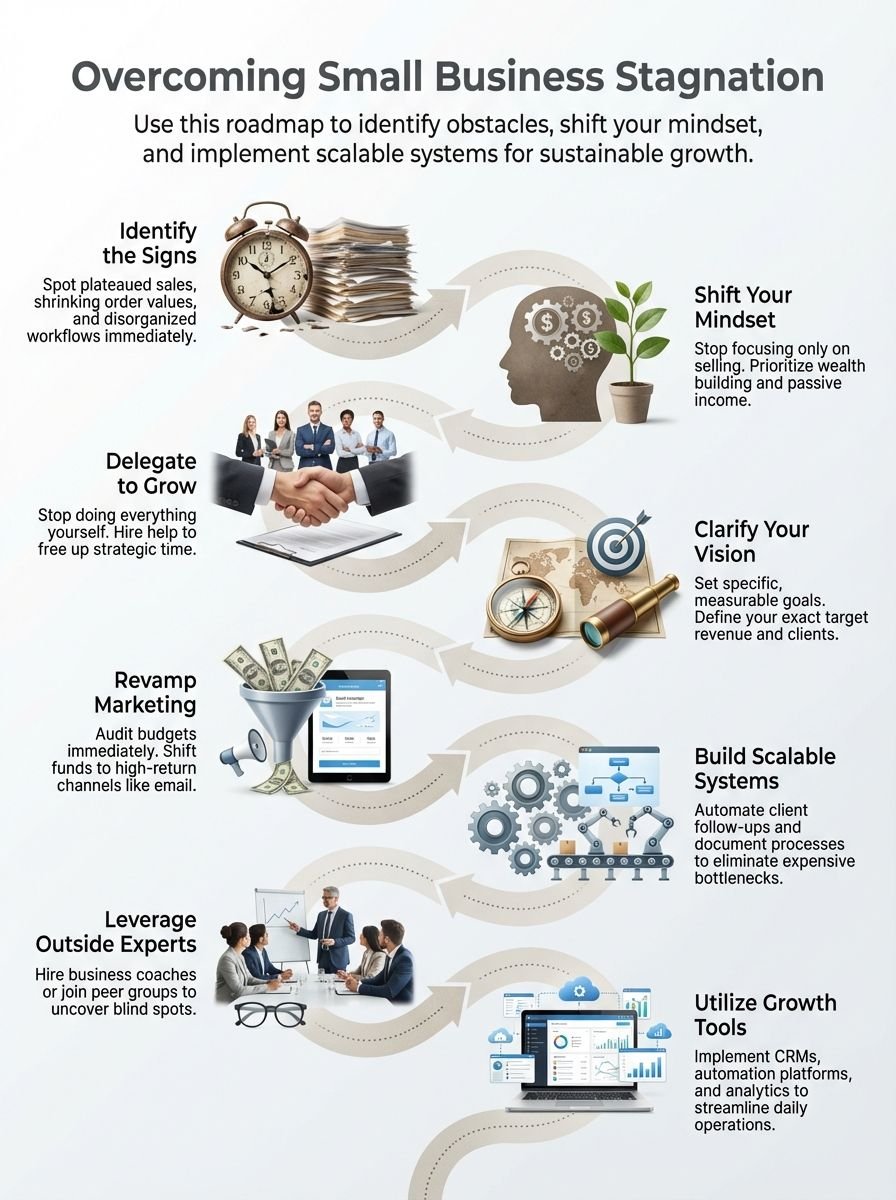
Identifying the Signs of Being Stuck
Your business may be stuck if sales have plateaued or your website traffic has stopped growing. Shrinking average order values and a rising customer churn rate are red flags too. Disorganization, like missing emails or poor calendar management, can also signal trouble.
Feeling overworked without results is another clue.
It’s not about working harder, it’s about working smarter.
Some entrepreneurs notice high referrals but feel less satisfied with their work. Losing freedom and feeling overwhelmed often come next. Focusing only on selling without a clear strategy might keep you spinning in circles without progress.
Common Causes of Business Growth Plateaus
Growing pains are normal, but they can feel like quicksand pulling you down. Sometimes, the problem is right under your nose, hiding in plain sight.
Outdated systems and processes
Outdated systems slow business growth, like a rusty machine. Disorganization creeps in with lost emails, misplaced materials, and messy calendars. Without clear systems, tasks take longer and errors pile up.
Missed opportunities and unhappy customers follow.
A small business can’t rely on clunky or manual processes anymore. Owners often spend hours solving avoidable problems caused by inefficiency. A five-minute organization fix can save five hours of work later.
Thirty minutes of streamlining could reclaim almost a week’s worth of time and energy! Scalable tools and repeatable systems stop the chaos and keep operations smooth as you grow your business forward again.
Overworking without delegation
Doing everything yourself can grind growth to a halt. Many business owners push harder, thinking more hours will solve the problem. It won’t. Jim Palmer’s mantra says it best: *“Delegate or die.”* Overworking limits your energy and focus on big-picture goals like scaling and strategy.
Hiring isn’t just about lightening your load; it should boost profits too. Ask, “Will this hire free up time for tasks that grow revenue?” Delegation lets you serve more clients efficiently instead of spinning plates alone.
Building a team turns one-person effort into many hands moving the needle forward.
Lack of a clear strategic plan
A small business without a clear strategic plan often runs in circles. Owners focus on immediate problems, which keeps them stuck in day-to-day tasks. This leaves no time for long-term planning or growth.
Fear of tough decisions adds to the chaos, making it harder to take bold steps forward.
Operating without direction can lead to accepting every job just to stay afloat. Businesses lose focus and dilute their brand by trying to do too much at once. Without specialization or targeted strategies, growth feels impossible.
To grow sustainably, owners must commit to building a solid plan and taking calculated risks.
Shifting Your Mindset to Move Forward
Stop focusing only on selling. This mindset can trap you in a cycle of overwhelm and stagnation. Instead, think bigger. Shift your focus to building wealth and creating new income streams.
For example, consider adding digital products or partnerships that bring passive revenue.
Don’t fear bold decisions. Small tweaks might not be enough to move the needle in your business operations. Take strategic risks like launching fresh marketing campaigns or revamping sales approaches entirely.
Tune out unhelpful feedback from unqualified critics; listen only to those with proven expertise to guide your next move forward confidently!
Setting New Goals and Clarifying Your Vision
Feeling stuck in business often means unclear goals and vision. To grow, you need a clear path forward with action steps.
- Ask yourself what your “Dream Business” looks like. Be specific about revenue, team size, and the type of clients or customers you want.
- Set measurable goals tied to actions. An example is aiming for 20% more sales in six months through better email marketing campaigns or new marketing channels.
- Focus on fewer, high-value services instead of chasing every opportunity. Specialization attracts higher-paying clients and simplifies operations.
- Align your team’s efforts around this vision. Hold meetings to share your plan so everyone knows their role in achieving growth.
- Use the “Green Light Formula” for decisions: Will this help you reach your goals? Will it increase profits? What will saying yes force you to give up?
You can’t grow without clear direction and purpose behind every move.
Evaluating What’s Holding You Back
Sometimes, the problem isn’t what you’re doing—it’s what you’re not seeing. Take a moment to spot blind spots that might be blocking your growth.
Ineffective marketing strategies
Outdated marketing drains money. A poorly planned campaign will fail to convert leads into customers. Audit your marketing budget now. Move funds toward channels that bring strong returns, like email or paid ads.
Check if your website pulls in organic traffic and converts visitors. If it doesn’t, fix the SEO and improve the design.
Look at customer behavior for drop-off points in their journeys. Weak spots hurt sales growth. Create clear campaigns that target specific audiences instead of guessing what works.
Hiring a pro can help you build strategies for sustainable success faster and smarter than going alone.
Gaps in team skills or structure
Skill gaps can stop your business from growing. A poorly structured team may lack the ability to adapt or handle new challenges. Cross-train your employees to make them flexible and capable of covering multiple tasks.
This improves teamwork and keeps things running smoothly during busy times.
Hire skilled professionals to fill expertise gaps and deliver high-quality work. Offer training programs to help current staff improve their abilities. Reward top performers with raises, promotions, or even simple praise.
Building a strong team culture focused on growth makes it easier to take your business to the next level.
Building Scalable Systems for Efficiency
Streamlining systems cuts down errors, speeds up tasks, and keeps clients happy. Start small. Document simple processes like onboarding new customers or handling refunds. Small tweaks can lead to significant savings in both time and money.
For example, automating emails for client follow-ups reduces manual work and ensures no one gets overlooked. Five minutes of organization today could save hours next week.
Investing in technology upgrades helps eliminate bottlenecks that slow your business down. Tools like CRM software keep track of leads and sales effortlessly while freeing you for strategic decisions.
Clear systems also enable team members to take ownership without constant supervision, letting you focus on growing your business instead of fixing daily problems.
Leveraging Outside Perspectives
Fresh eyes can spot blind spots you’ve missed, sparking ideas that can get your business moving forward again.
Working with mentors or business coaches
A business coach helps you fix problems and find new solutions. They guide you to improve processes, clarify your goals, and stay accountable. Investing in a coach shows commitment to growth, which can change your mindset and drive motivation.
Mentors who have overcome similar challenges can identify gaps in your business that hold you back.
Regular sessions with a mentor provide fresh ideas and honest feedback. They also help avoid common mistakes many small businesses face as they grow. For example, Jim Palmer is known for helping entrepreneurs refine strategies into actionable steps.
This support keeps momentum strong when growth stalls or feels stuck.
Networking with peers in similar industries
Talking with others in your field can spark new ideas. Peer groups and industry meetups bring fresh insights and strategies to grow your business. Sharing struggles helps uncover solutions you might miss on your own.
Peers often spot trends or threats early, giving you a competitive edge. They may also share referrals or partnership opportunities that expand your client base. Plus, connecting with others reminds you that growth challenges are normal, not failure.
Updating Your Marketing to Match the Market Shift
Stay ahead by studying your competitors. Watch their pricing, promotions, and how they treat customers. Sign up for their emails and follow them on social media. You’ll uncover what’s working for them—and maybe even spot gaps you can fill! Try “secret shopping” or ask their customers what drew them in.
Refresh your marketing channels to meet customer needs today. Are your ads still hitting the right note? Tweak features, test new prices, and improve user experience. Highlight benefits that stand out to your audience.
Add strong social proof like reviews or case studies to build trust fast. Create bold campaigns aimed at grabbing attention from fresh eyes while keeping current clients hooked!
Expanding and Empowering Your Team
Add skilled people to handle growing work. Hire professionals like a VP of Marketing or a Controller for high-level tasks. This shift lets you focus on strategy, not daily operations.
Cross-train your staff so tasks don’t stop if someone’s out. Flexibility keeps the business running smoothly.
Offer training and growth opportunities to fill skill gaps in your team. Promote strong performers from within and reward them with bonuses or raises. Celebrate wins together to boost morale and build loyalty.
A happier, motivated team will drive faster, more sustainable growth for your business.
The Importance of Strategic Decision-Making
Strategic decision-making separates thriving businesses from stuck ones. Clear yes-or-no choices help you avoid delays and keep your business moving forward. Many entrepreneurs struggle because they hesitate to make tough calls.
For example, fear of upsetting a team member can stop you from letting go of underperformers, but holding onto them costs time and money. Tools like the “Green Light Formula” simplify decisions by focusing on goals, profitability, and trade-offs.
This method helps you align actions with long-term results instead of short-term comfort.
Every choice impacts growth; hiring is one clear example. Adding someone to the sales or marketing team should save time while boosting revenue. Indecisiveness eats away at progress like rust on metal, slowing success before it begins.
Seeing opportunity costs clearly lets you prioritize what truly matters for scaling your small business back up when it feels stuck or stagnant. Strong decisions aren’t just helpful; they are essential for growing stronger every step forward!
Tools and Resources to Support Your Business Growth
Sometimes, you need the right tools to get unstuck and grow your business. These resources can save time, cut costs, and simplify problem-solving.
- Business Growth Assessment Tools
These tools help you figure out where your business stands. They also guide you in choosing the next steps for growth. - Process Documentation Software
Use software like Trainual or Process Street to organize workflows. This makes tasks easier to delegate across your team. - Automation Platforms
Platforms like Zapier or HubSpot automate repetitive tasks. Automation frees up time to focus on big-picture goals. - Marketing Analytics Tools
Google Analytics and SEMrush track marketing performance. These tools let you make smarter decisions based on real data. - Customer Relationship Management (CRM) Platforms
CRMs like Salesforce or Zoho help manage customer interactions. This leads to better organization and stronger client relationships. - Accounting Software
QuickBooks or Xero can streamline managing finances. They make tracking expenses easy while keeping records clean. - Peer Advisory Groups
Join mastermind groups with other entrepreneurs for support and ideas. Brainstorming with peers often sparks fresh solutions. - Business Coaches
Consult experts dedicated to helping businesses grow fast and efficiently. Call numbers like 405-919-9990 for personalized advice. - Project Management Tools
Trello and Asana keep projects running smoothly across teams of any size. These platforms boost accountability among team members too. - Scalable Team Training Resources
Offer online courses through platforms such as LinkedIn Learning for skill development within your team, filling any knowledge gaps quickly. - Video Content Tutorials Online
Free tutorials via YouTube simplify how-to guidance for every type of problem-solving approach owners may face daily operations-wise using creative angles firsthand insights shared globally!
12*. Financial Planning Guides Strong budgeting calculators assist making future-proof forward scaling possible regardless fluctuating unpredictable market trends business-inspired hopping hurdles effectively managers alike!
Avoiding the Trap of Incremental Fixes
Small tweaks won’t fix a business stuck in stagnation. Many owners try patching issues with minor changes but ignore the root problems. This approach keeps you busy, yet your growth stays frozen.
Instead, take bold action and rethink how you run your business. Stop refining plans endlessly, launch them instead, and track results.
Focus on long-term fixes like building better systems or hiring key team members. Don’t just work harder; improve efficiency by upgrading outdated processes. A marketing campaign overhaul or a new strategic direction can reinvigorate your business faster than small adjustments ever could.
Making Long-Term Plans for Sustainable Scaling
Building a team with smart hires can give your business the push it needs. Hiring key roles like a VP of Marketing or Controller brings structure to operations. Their expertise helps stabilize growth and keeps things running smoothly as sales increase.
The owner’s role should shift, focusing less on daily tasks and more on leadership decisions. This change allows time for creating strategies that reflect long-term goals.
Investing in technology improves efficiency across departments. Upgraded systems handle higher sales volumes without added stress or delays. Dedicate budgets to train teams or hire new staff for growth areas, like digital marketing campaigns targeting fresh audiences.
Promoting innovation within the company ensures you adapt quickly to market changes and customer needs over time, so your business doesn’t lose momentum while scaling upward.
Conclusion
Feeling stuck is normal, but it’s not permanent. Take a step back and look at what’s holding you down. Small changes like better systems or clearer goals can spark big growth. Don’t be afraid to ask for help, whether from mentors, podcasts, or peers.
Your business can grow again if you stay focused and take the right steps forward.
FAQs
1. Why does my small business feel stuck?
Your business might feel stuck because of stagnation in growth, ineffective marketing efforts, or hitting a wall with your current strategies. It’s common for every business to face this at some point.
2. How can I start growing my business again?
Step back and look at the bigger picture. Identify what’s not working, ask the right questions, and uncover new ways to improve your sales team or launch fresh marketing campaigns.
3. What should I do if I’m working harder but seeing no results?
If you’re working harder than ever but still not growing, it’s time to take a hard look at your systems and processes. You may need to make some changes that align better with your goals.
4. How can I find inspiration when my business is stuck?
Look for inspiration in podcasts, blogs, or even over coffee chats with other entrepreneurs who’ve faced similar challenges. Sometimes an objective point of view sparks great ideas.
5. Is it normal for businesses to hit a wall in growth?
Yes! No business grows forever without challenges along the way. Stagnation happens; what matters is how you adapt and solve complex problems using intuition and thoughtful planning.
6. What steps should I take to attract new clients?
Focus on improving marketing and sales strategies while truly understanding what potential clients need from you. New marketing campaigns or refining existing ones could help get things back on track quickly!
