
Struggling to get equipment financing with bad credit? You’re not alone, and the good news is it’s possible. Many lenders now offer options that work even for businesses with low credit scores.
Stick around, we’ve got practical tips to help you get approved!
Key Takeaways
- Some lenders, like Crestmont Capital, offer up to $2 million in equipment financing for poor credit scores as low as 500.
- Leasing often skips hard credit checks and provides flexible payment options while allowing up to 100% equipment cost coverage.
- Offering collateral (like real estate or vehicles) or a higher down payment (20% or more) can greatly increase approval chances.
- Updating your business plan with strong financial projections and clean records boosts trust with lenders despite bad credit.
- Alternative lenders may approve faster using cash flow or soft credit checks but typically have higher interest rates.
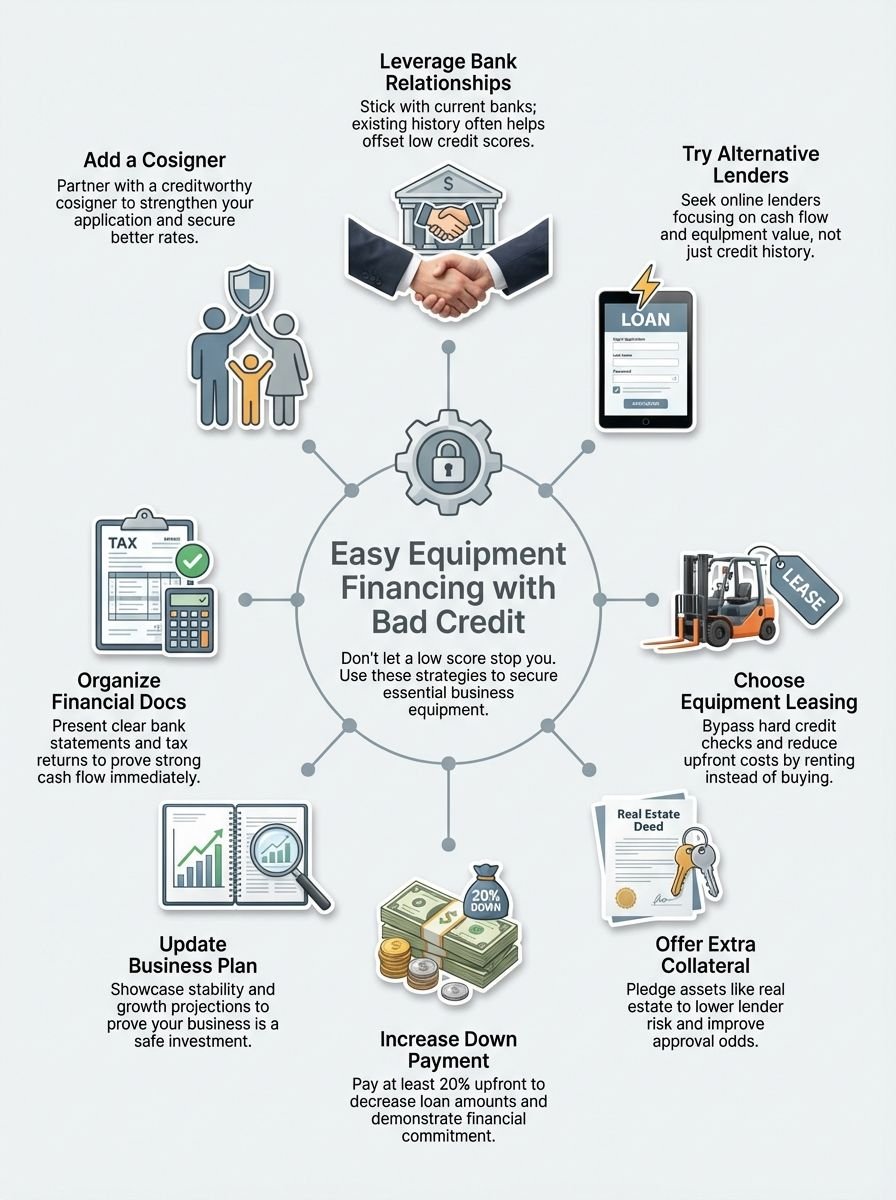
Understanding Equipment Financing with Bad Credit
Bad credit doesn’t slam the door shut on equipment financing. Lenders use the equipment as collateral, lowering their risk even if your credit history isn’t great. Terms often range from 24 to 72 months, with rates starting at 5.99%.
Some lenders, like Crestmont Capital, even fund up to $2 million for new or used equipment including taxes and setup costs.
Approval can come fast, sometimes within hours. Businesses with scores as low as 500 can still qualify through lease-to-own or specialized programs offered by alternative lenders. This offers flexibility for small business owners who need trucks, machines, or other tools to keep things running smoothly despite financial hiccups in the past.
Tips for Securing Equipment Financing with Bad Credit
Getting equipment financing with bad credit can feel like climbing a steep hill, but it’s not impossible. Small steps, smart choices, and the right approach can tip the odds in your favor.
Start with Existing Bank Relationships
Stick with your current bank if possible. Long-standing customers often get better terms for equipment financing. Banks trust clients they know, even those with bad credit. Some banks offer lower rates or flexible payment plans to loyal businesses.
A strong relationship can also help offset a low credit score. Banks may focus more on your history with them than your financial gaps elsewhere. They might ask for documents, like bank statements or business records, but being a familiar client could speed things up.
Explore Alternative Lenders for More Flexibility
Online lenders and private financing firms often approve bad credit equipment loans faster than traditional banks. Some offer preapproval using a soft credit check, avoiding harm to your score.
Others focus on cash flow, bank statements, or the value of the equipment itself rather than strict credit requirements.
These lenders can provide up to $500,000 with basic application details. With extra financial documents, you may access amounts as high as $10 million. While down payments might hit 20% or more for poor credit borrowers, flexible terms help manage risks better for startups or struggling businesses.
Just be cautious—higher interest rates and stricter repayment plans are common trade-offs here.
Consider Equipment Leasing as an Option
Leasing equipment can be a smart move for businesses with bad credit. It often skips hard credit checks and requires less paperwork than loans. Leasing allows you to access up to 100% of the equipment’s cost, whether it’s new or used.
This means you won’t need to empty your savings or wait months for approval.
Some leases come with tax benefits too, like tax-exempt options for qualified government entities. Payments are flexible; they can fit your schedule—monthly, quarterly, or even seasonally.
Still, watch out for extra costs like maintenance fees and possible buyout charges at the end of the contract. As they say, “The devil is in the details.
Offer Additional Collateral for Approval
Pledging extra collateral like real estate or heavy equipment can boost approval odds. Lenders see this as a safety net, lowering their risk if payments are missed. For applicants with bad credit, offering hard assets shows commitment and trustworthiness.
Collateral value plays a big role in decisions. High-value items may even lead to better loan terms or reduced interest rates. Some lenders might ask for an appraisal to confirm the asset’s worth.
If borrowing larger amounts, be ready to pledge more significant collateral.
Increase Your Down Payment to Reduce Risk
Providing more money upfront can have a significant impact. A greater initial payment decreases the loan amount, which in turn reduces monthly payments and total debt. For bad credit equipment financing, lenders typically require at least 20%.
Demonstrating this commitment can assure them you’re dedicated, decreasing their risk.
Contribute as much cash as you are able to. This could assist in securing improved terms or lower interest rates. If your business requires heavy equipment or high-value items, a larger payment becomes even more beneficial.
Bigger upfront payments might also lessen the necessity to provide additional collateral beyond the equipment itself.
Improving Your Chances of Approval
Boosting your approval odds takes planning and a little strategy. Show lenders you run a steady, trustworthy business built to handle its finances well.
Update Your Business Plan to Showcase Stability
Show lenders your business is steady by updating your plan. Add a clear company overview, market analysis, and operational plans. Show how your business fits in the industry and how you handle challenges.
Highlight future growth with strong financial projections, even if credit isn’t great.
Organize every detail to make it easy for lenders to follow. Prove you’ve thought things through by showing strategies for revenue growth or cutting expenses. A thorough plan can help offset bad credit and present your business as a reliable investment option.
Organize and Present Clear Financial Documentation
Keep your financial records neat and clear. Lenders will likely ask for bank statements, tax returns, and business financials. Show strong cash flow with accurate documents to boost their confidence in your ability to repay.
Include equipment quotes, appraisals, and legal compliance papers if required. Organize accounts payable and receivable records for easy review. A detailed yet simple presentation can make or break approval for bad credit equipment financing applications.
Use a Cosigner to Strengthen Your Application
A cosigner with strong credit can boost your chances of securing equipment financing. Lenders see them as extra security, lowering their risk in case payments are missed. This option works well for startups or businesses with bad credit or limited history.
The cosigner’s good credit and financial stability may lead to better loan terms, like lower interest rates or longer repayment periods. Their involvement often speeds up approval since lenders gain more confidence in the application.
Be aware, though, that the cosigner takes responsibility if you default on payments.
Common Mistakes to Avoid in Equipment Financing
Getting equipment financing with bad credit can be tricky. Avoid these common mistakes to improve your chances and protect your finances.
- Ignoring monthly payment limits
Failing to check if payments fit your budget can hurt cash flow. This could lead to missed payments or default on the loan. - Choosing short repayment terms
Short terms lower interest but raise monthly costs. High payments can strain small business finances quickly. - Skipping paperwork preparation
Not having documents like financial statements or a business plan delays approval. Lenders need proof of stability before they approve loans. - Forgetting extra leasing costs
Leasing often includes hidden fees like maintenance, insurance, or buyout charges at the end. These costs add up fast over time. - Applying without reviewing credit reports
Credit errors can lower scores without you knowing it. Fixing them boosts approval odds for equipment financing options. - Relying on one lender only
Comparing rates and terms across lenders helps avoid bad deals. Some lenders specialize in financing businesses with bad credit. - Overlooking collateral options
Offering collateral like inventory or vehicles may ease lender fears about loan risk. It shows commitment from your side as well! - Focusing only on personal credit health
Lenders also review business income and stability, not just personal credit scores. Weak business financials reduce approval chances significantly!
Evaluating Pros and Cons of Equipment Leasing vs. Financing with Bad Credit
Deciding between equipment leasing and financing can feel challenging when dealing with bad credit. Both options have their benefits and drawbacks. Here’s a quick breakdown to clarify:
| Factor | Leasing | Financing |
|---|---|---|
| Upfront Costs | Lower initial cost, often just first-month payment. | Higher upfront expense, may require substantial down payment. |
| Monthly Payments | Generally lower, more manageable for tight budgets. | Higher monthly payments, depending on loan terms. |
| Tax Benefits | Possible Section 179 tax deductions for lease payments. | Depreciation deductions and potential interest write-offs. |
| Ownership | No ownership; you’re essentially renting the equipment. | Full ownership once the loan is paid off. |
| Flexibility | Easier upgrades at lease-end, ideal for short-term needs. | Better for long-term usage or significant business investments. |
| Credit Requirements | A lower credit score might still qualify. Some lenders accept 500. | Stronger credit profile required for better terms. |
| Total Costs | Higher total expenses for long-term leases. | Lower total cost if equipment is used long-term. |
| Risk of Repossession | High risk if payments are missed, as the lender owns the equipment. | Same risk applies; defaulting can lead to repossession. |
Leasing keeps cash available but may lead to higher costs over time. Financing provides ownership but requires a heavier upfront commitment. Both carry risks if payments are missed. Each option depends on your business needs, whether short or long term, and your financial situation.
How Much Do Equipment Finance Brokers Make?
Equipment finance brokers earn money through commissions. These are often based on the size of loans or lease deals they arrange. Deals typically range from $10,000 to $2 million. Brokers may also handle repayment terms between 24 and 72 months.
Larger transactions or longer terms can mean higher earnings.
Some brokers work with lenders that don’t charge upfront costs, which could impact fees and payouts. Commissions might be a fixed amount or a percent of the loan value. For example, helping close a $500,000 deal for Crestmont Capital might bring in more significant pay than smaller transactions.
Bonuses may also apply for handling bigger deals or offering flexible payment options to clients.
Conclusion
Getting equipment financing with bad credit isn’t impossible. Stay proactive, work with flexible lenders, and show your business’s stability. Small steps like offering collateral or increasing a down payment can make a big difference.
Keep pushing forward—your business deserves the tools to grow!
FAQs
1. Can I finance equipment with bad credit?
Yes, you can! Many lenders offer equipment financing options for borrowers with bad credit. The equipment itself often acts as collateral, making it easier to qualify even with lower credit scores.
2. What is the minimum credit score required for equipment financing?
There’s no universal answer since requirements vary by lender. Some lenders specialize in helping businesses with bad credit or no established credit history secure financing.
3. How can I improve my chances of getting an equipment loan with bad credit?
Focus on providing a detailed business plan and showing strong business cash flow. Offering additional collateral or a larger down payment may also help offset your credit challenges.
4. Are there alternatives to buying new equipment outright if I have poor credit?
Yes, leasing is a great option if purchasing isn’t feasible due to funding issues or low scores. Leasing allows you to use the necessary tools without needing to buy them upfront.
5. Will applying for an equipment loan impact my current credit score?
It depends on the lender’s process and whether they perform hard inquiries when reviewing your application. Some lenders offer financing without strict checks, which might be helpful for those concerned about their score.
6. Is heavy equipment financing available for startups or small businesses?
Absolutely! Even startup companies can access heavy machinery loans through asset-based lending or vendor programs tailored specifically for new ventures needing essential gear like trucks or construction machines.
