
Buying a new phone or tablet can feel expensive. But did you know you don’t have to pay the total price upfront? Device financing lets you break that cost into smaller monthly payments.
Stick around, and we’ll explain what does device financing mean and how it works for you!
Key Takeaways
- Device financing spreads the cost of gadgets like phones or tablets into smaller monthly payments. Plans usually last 24 to 48 months, with some offering 0% interest rates.
- Retailers, manufacturers like Apple and Samsung, and service providers like Verizon offer device financing options. Some plans include trade-ins to lower costs further.
- BNPL (Buy Now, Pay Later) splits payments into short-term installments but needs careful planning to avoid missed payment penalties affecting credit scores.
- Common risks include delayed payments hurting credit and theft/loss leaving buyers responsible for ongoing payments. Tools like remote locking can help prevent fraud or misuse.
- Financing works well for buyers without enough upfront cash; buying outright avoids extra fees and gives full ownership immediately after purchase.
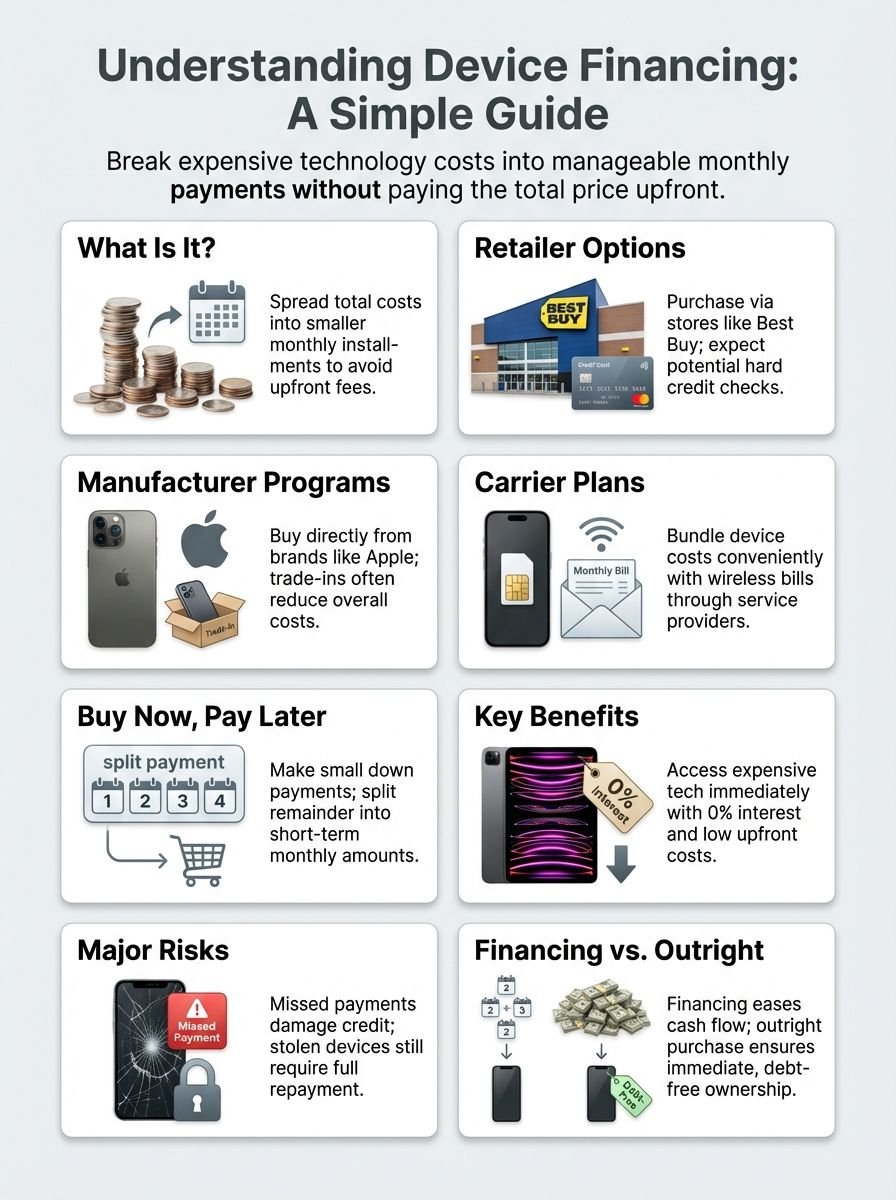
What is Device Financing?
Device financing allows you to buy laptops, smartphones, or tablets without paying the full price upfront. Instead, you spread the cost into smaller monthly installments. These plans often last 24 months but can go up to 48 months for pricier devices like Apple products.
Some companies offer a 0% interest option on such payment plans. This means you only pay the actual device price without extra charges. For example, Verizon lets users finance mobile devices through their phone bill over time.
Financing is helpful if you want expensive gadgets but can’t afford high upfront costs right away.
Types of Device Financing
You have several ways to spread out the cost of a new device. Each option offers different benefits, so picking the right one depends on your needs.
Retailer-Based Financing
Retailer-based financing lets you buy expensive devices from stores without paying the full cost upfront. Many retail stores offer this option for phones, tablets, and smartwatches.
You pay in smaller amounts over time, often monthly. Some programs ask for a down payment; others don’t. For example, big retailers like Walmart or Best Buy provide such plans at checkout.
A hard credit inquiry might be required to approve your application. This could slightly lower your credit score temporarily. These plans are popular because they simplify buying new technology while sticking to a budget.
Larger contracts might last 24 or even 36 months depending on terms, but you own the device once it’s paid off completely!
Manufacturer Financing Programs
Big companies like Apple and Samsung offer manufacturer financing to help you buy devices directly from them. You can spread the price of the phone or tablet over monthly payments, instead of paying everything upfront.
These programs often include 24-month contracts with reasonable interest rates, or sometimes no interest at all.
You may also get perks like trade-in offers for old devices to lower costs. For example, use the trade-in value of your current mobile phone to reduce how much you need to pay on a new one.
With such plans, you can stay updated with the latest technology without draining your wallet in one go.
Financing Through Service Providers
Service providers like Verizon and Boost Mobile offer device financing with flexible terms. For example, Verizon’s plan allows you to pay off your phone or tablet in monthly installments over 36 months with 0% APR.
Contracts signed before February 3, 2022, may have shorter terms like 24 or 30 months.
Boost Mobile provides financing for up to three years on select devices. These programs make it easier to get many devices without a large upfront payment. You just add the monthly cost of the device to your wireless bill until the remaining balance is paid in full.
Buy Now, Pay Later (BNPL) Options
BNPL lets you purchase a device with a small down payment. The rest of the payments are split into equal monthly amounts. This option is short-term and easy to manage. Many retailers offer BNPL for devices like phones or tablets at checkout.
You can get the device without paying the full price upfront.
For example, if a tablet costs $600, you might pay $60 now and spread the remaining $540 over six months. It’s great for tight budgets but requires careful planning. Missing payments could hurt your credit history, so set reminders to avoid fees or risks!
Key Advantages of Device Financing
Device financing makes buying expensive gadgets less stressful. You can spread the cost over time, making it easier on your wallet.
Lower Upfront Costs
Paying upfront for pricey devices, like mobile phones or tablets, can be tough. Device financing spreads out the price of the device into smaller payments over time. Boost Mobile even offers 0% APR with no down payment for those who qualify.
Down payments, if required by some plans, help lower your monthly bill further. For example, this option lets you get a high-end phone now without emptying your wallet all at once.
Flexible Payment Plans
Flexible payment plans let you pay off devices in smaller chunks. These financing terms often range from 24 to 48 months, making it easier for buyers to manage monthly device costs.
For example, Verizon allows customers to either pay the full price upfront or spread payments over time. Boost Mobile also offers early payoff options by contacting their customer care team.
Many companies give you freedom with your financing plan. You can choose a prepaid mobile phone or stick with a contract-based option. After finishing all payments, most providers unlock the device for free, letting you upgrade your phone or keep the device without extra charges.
Common Challenges in Device Financing
Paying late can mess up your credit and lead to extra fees. Losing or breaking a device while still paying for it is another big headache.
Delayed Payments and Credit Risks
Delayed payments can cause big problems for both users and companies. Many people miss their monthly phone payment deadlines, leading to extra fees or debt collection issues. Financing companies must track thousands of devices purchased under financing agreements.
Managing these payments adds strain, especially when defaulters pile up.
A weak credit score system in some regions makes it harder to approve loans safely. Service providers like Verizon look at a user’s financial history before offering any financing option.
Past-due amounts or late payments lower your chances of approval for new plans or upgrades. Keeping up with the balance in full helps avoid risks and keeps your mobile service uninterrupted.
Device Theft or Loss Concerns
Losing a financed device can leave you stuck with monthly payments. Even if the mobile phone, tablet computer, or laptop vanishes, the contract doesn’t stop. For example, Verizon requires customers to keep paying until devices are fully paid off.
Device theft is also a big risk for financing companies in places without strong credit systems. Tracking stolen gadgets becomes hard after they’re distributed to buyers. This makes anti-fraud tools and records crucial for protecting both businesses and customers from losses.
Solutions to Overcome Financing Risks
Protecting your investment is key when financing a device. Smart tools and timely payments can make the process smoother.
Remote Locking and Theft Prevention Tools
Remote locking stops thieves in their tracks. NuovoPay offers a tool to lock financed devices remotely if payments are missed. This system works even offline, protecting the device from resale or theft.
Users regain access once pending charges and credits are settled.
NuovoPay also secures SIM cards using SIM-based locking tech. Pre-installed SIMs link to telecom providers, keeping customer loyalty intact. These tools reduce fraud risks while helping companies expand into areas without credit score systems, making financing safer for everyone involved.
Automated Payment Reminders
Automated payment reminders help keep payments on track. NuovoPay offers alerts that remind users of due dates for financing payments. This reduces the chance of missed deadlines, which could impact credit risks or delay paying off a device.
Their system includes a dashboard with pre-written reminder templates. It also integrates with leading billing systems to manage payment records easily. These tools make it simple to pay the monthly amount for your financed device without worry.
Device Financing vs. Buying Outright: Which is Better?
Device financing spreads the cost of a phone over months. It’s helpful for those without enough cash upfront. For example, paying $30 a month for 24 months might be easier than spending $720 all at once.
Financing also makes it possible to get newer models without emptying your wallet.
Buying outright gives full ownership from day one. You avoid interest or extra fees tied to financing plans. Once paid off, no monthly payments remain, and you can switch carriers anytime after the contract period ends.
This option works well if you have the money ready and want long-term savings on your device price.
Top Equipment Financing Companies
Verizon stands out with its device payment program. It allows buyers to finance a phone through monthly payments. You can cover the cost of the device you prefer over time without paying the entire retail price upfront.
This flexibility helps users obtain their desired mobile devices while distributing costs across months.
Boost Mobile also provides appealing financing plans. Its options include leasing or trade-in value to lower total costs. Customers can even select a pay-as-you-go model, making it simpler to handle monthly expenses and maintain their phones in good condition throughout the payment period.
Conclusion
Device financing makes owning gadgets easier without draining your wallet upfront. It breaks big payments into smaller chunks, giving you flexibility and control. Whether it’s a smartphone or tablet, there’s an option for everyone.
Just choose wisely, pay on time, and enjoy your device stress-free!
Discover the best options for your needs by exploring our list of top equipment financing companies.
FAQs
1. What is device financing?
Device financing means paying for a mobile phone or other devices over time instead of buying it upfront. You can choose payment options like monthly payments or a two-year contract.
2. How does mobile phone leasing work?
With mobile phone leasing, you pay a set amount each month for the phone. At the end of the lease, you can return the device in good working condition, buy out the device by paying off what’s left, or trade it in.
3. Can I reduce my monthly payments when I finance a device?
Yes! You can use your current device’s trade-in value to reduce what you owe on your new one. This lowers your remaining payments and makes getting the device you want more affordable.
4. What happens if my device isn’t paid off yet but I want to upgrade?
If your current device isn’t fully paid off, some plans let you pay the difference to settle it early or roll its cost into a new plan when upgrading to another model.
5. Is credit required to finance a mobile phone?
Most providers require credit approval before offering funding options for devices at point of sale; this applies whether you’re using a credit card or signing up for installment plans through companies like Apple Inc., among others.
