
Struggling to secure equipment because of bad credit? You’re not alone. The good news is, there are options for the best equipment financing for bad credit that can help you grow your business.
This guide breaks down loan choices and steps to get what you need. Keep reading, it’s simpler than you think!
Key Takeaways
- You can obtain equipment financing even with a credit score as low as 550. Loan amounts vary from $75,000 to $15 million, based on lender terms and business requirements.
- Traditional financing provides ownership but may require upfront payments. Leasing offers lower costs, flexibility, and upgrade options but does not include ownership without a buyout option.
- Lenders such as National Funding provide loans up to $150,000 with only 6 months in business and a credit score of 600 or above. Some lenders accept even lower scores, starting at 550.
- Section 179 allows businesses to deduct up to $1 million for eligible equipment in the same tax year, helping save on costs through tax benefits.
- Steps to apply include preparing necessary documents, reviewing lender requirements, using loan calculators for estimates, applying online quickly (3–5 minutes), and receiving funds within two days after approval.
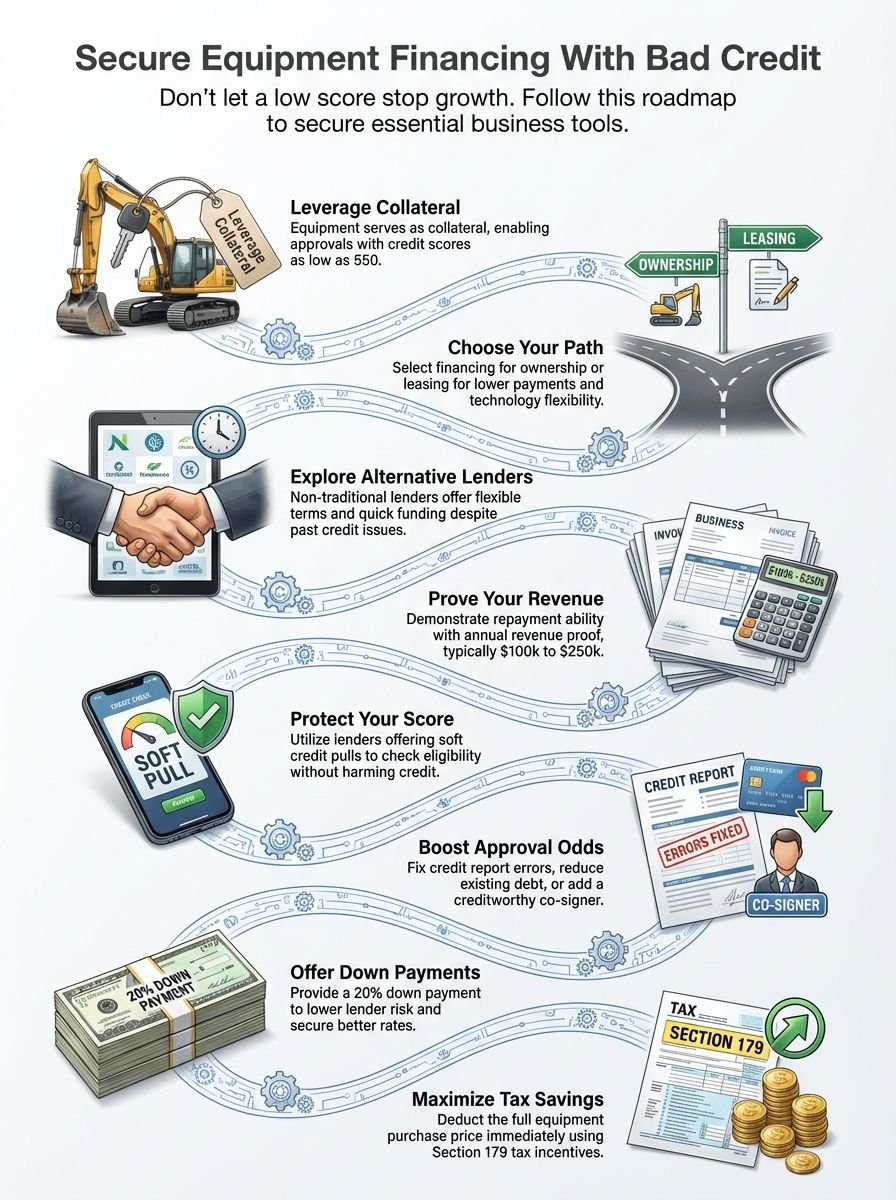
Understanding Equipment Financing for Bad Credit
Bad credit doesn’t shut the door to equipment financing. Lenders often use the purchased equipment as collateral, reducing their risks. This means even with a credit score as low as 550, you can still qualify.
Equipment finance amounts vary widely, ranging from $75,000 to $15 million, giving businesses flexibility for large or small purchases.
Borrowers with bad credit might face higher interest rates and shorter loan terms. Some lenders may require larger upfront payments for added security. Most programs expect at least two years in business but don’t demand perfect personal credit scores.
“Your tools drive your business,” so securing funding is essential even when past debt issues linger.
Top Loan Options for Bad Credit Equipment Financing
Finding loans with bad credit isn’t easy, but it’s possible. You can explore different financing paths to get the equipment your business needs.
Traditional Equipment Financing vs. Leasing
Traditional equipment financing and leasing both offer paths to secure equipment, but their differences dictate their appeal. Below is a comparison to help understand each option better.
| Aspect | Traditional Equipment Financing | Leasing |
|---|---|---|
| Ownership | Equipment becomes yours once the loan is paid off. | You don’t own the equipment unless you choose a buyout option. |
| Payment Structure | Requires monthly payments plus interest until the loan is repaid. | Often includes lower monthly payments, with no upfront costs or down payment. |
| Tax Benefits | Qualifies for Section 179 deductions as the equipment is recorded as an asset. | Lease payments may be tax-deductible as a business expense. |
| Flexibility | Less flexible, as you are committed to long-term ownership. | Highly flexible, offering options to return, renew, or buy the equipment after the term. |
| Depreciation | You bear the risk of depreciation, impacting resale value. | Leasing avoids risks tied to equipment devaluation. |
| Initial Costs | Often requires a down payment or collateral. | Can provide 100% financing with no upfront fees. |
| Technology Updates | You may be stuck with outdated equipment as technology advances. | Allows you to upgrade to newer models during or at the end of the lease. |
| Best For | Businesses wanting long-term ownership and asset control. | Businesses needing flexibility, lower costs, or those in fast-changing industries. |
Both paths have their perks. One gives you ownership. The other gives freedom. Choose based on your goals and financial standing.
Alternative Lenders for Bad Credit (National Funding, Crestmont Capital, Patriot Financial)
Finding equipment financing with bad credit can feel like a steep hill to climb. Thankfully, alternative lenders offer flexible options to help businesses grow.
- National Funding provides loans up to $150,000 for businesses with at least 6 months of operations and $250,000 in annual revenue. A minimum credit score of 600 is required, and funding can be secured in just 24 hours. Their factor rate starts at 1.1%.
- Crestmont Capital offers an easy application process that does not impact your credit score. They are based in Irvine, California, and can be reached at (800) 949-0401 for more details.
- Patriot Financial works with businesses of all sizes, including those with bad credit histories. They focus on quick approvals and competitive rates to make the process simple for business owners.
Each lender brings something unique to the table while helping you finance the equipment your business needs to succeed!
Key Benefits of Bad Credit Equipment Financing
Bad credit won’t lock you out of getting the gear your business needs. These loans offer simple terms and practical solutions to keep your operation running smoothly.
Flexible Terms and Easy Repayment Options
Loan terms can extend from 24 to 84 months, giving businesses plenty of time. Payments work around you, with options like monthly, quarterly, or even seasonal schedules. Need more breathing room? Deferred payments for up to six months are available for higher credit tiers.
Financing as high as $15 million covers both small and large equipment needs. For used equipment under five years old, 72-month plans are offered too. This flexibility helps businesses manage cash flow without breaking the bank.
As one lender puts it:.
We design payment plans that grow with your business.
No Collateral or Upfront Fees Required
Some lenders don’t ask for collateral except the equipment you’re financing. This means your business doesn’t need to risk other assets. Companies like Crestmont Capital also offer 100% financing with no down payment required.
Applications are quick, taking just 3–5 minutes. Many lenders use soft credit pulls, so it won’t hurt your score. No upfront fees keep things simple and affordable for small businesses that need equipment fast.
How to Get Equipment Financing with Bad Credit
Getting equipment financing with bad credit may feel like climbing a tall hill, but it’s possible. Focus on your business income and show lenders you can repay.
Minimum Revenue and Business Requirements
Some lenders have strict revenue and business length requirements for equipment financing. National Funding asks for at least $250,000 in annual revenue and six months in business.
Triton Capital requires the same income but insists on 24 months of operation. Balboa Capital sets a lower bar with $100,000 yearly revenue and one year in business.
Other companies are more flexible. Lenders like eLease and JR Capital do not require minimum annual earnings. New Business Programs may need two years of history and a strong credit score (720+) to approve larger amounts—between $75,000 to $150,000—for equipment purchases.
No Minimum Credit Score Needed
Bad credit doesn’t have to stop your business. Some lenders, like CAG Truck Capital, don’t require a minimum credit score for certain loans. Others, such as eLease, accept scores as low as 550 and offer flexible equipment financing options.
You may even get pre-approved with a soft credit pull that won’t harm your score. Programs like merchant cash advances often skip strict checks too, making it easier for businesses with bad credit to secure the equipment they need.
Steps to Apply for Equipment Financing
Applying for equipment financing is simple and quick. Follow these steps to get your business the funds it needs fast.
- Gather Required Documents
Collect basic business information, such as your company name, revenue details, and time in business. Some lenders may also request financial statements or tax returns. - Check Lender Requirements
Different equipment financing companies have different rules. Confirm if they require a credit score check or specific revenue levels before applying. - Use an Equipment Loan Calculator
Estimate loan amounts, monthly payments, and terms using free online tools. This helps you budget and understand what you can afford. - Complete the Application
Fill out an online form with basic contact details and business info. Many applications take only 3-5 minutes to complete. - Submit a Soft Credit Pull
This allows lenders to review your credit without affecting your score. They will use this to gauge your eligibility for funding. - Wait for Approval
Lenders often give decisions within hours of receiving your application. Be ready for follow-up calls or requests for additional information to finalize the process. - Sign the Agreement Electronically
Once approved, review and sign the financing agreement online to speed up processing times. - Receive Funds in 1-2 Days
Approved funds are deposited into your account quickly after signing, so you can purchase equipment without delays.
Tips to Secure the Best Rates and Terms for Bad Credit Loans
Getting the best rates and terms for bad credit loans takes effort. Small steps can make a big difference in approval chances and costs.
- Fix Credit Report Errors
Check your credit report for mistakes. Dispute any incorrect marks to improve your score quickly. Even small errors can lower your credit. - Pay Down Existing Debt
Lowering your debt-to-income ratio looks good to lenders. Pay off smaller balances first or focus on high-interest debts. - Offer Collateral If Possible
Using valuable assets like equipment, vehicles, or property increases trust with creditors. It lowers risk for lenders, which can mean better terms. - Consider a Larger Down Payment
Saving up to pay 20% or more upfront reduces the loan amount needed. This shows responsibility and makes lenders more comfortable offering loans. - Get a Co-Signer with Good Credit
A co-signer’s solid credit history helps you qualify for better rates and stretches repayment options. Be sure they trust you, as they’re responsible if you miss payments. - Prepare Strong Financial Documents
Gather bank statements, tax returns, balance sheets, and profit-loss summaries before applying. Organized records increase lender confidence in your business stability. - Compare Multiple Lenders
Look at banks, credit unions, online lenders, and vendors who offer equipment leases or loans for businesses with bad credit. Compare interest rates, fees, and terms closely to find the most affordable option. - Use Loan Calculators First
Estimate potential monthly payments based on rate offers using free loan calculators online before signing anything. - Avoid Scams Offering Guaranteed Loans without Credit Checks
Legitimate financing always includes some form of eligibility review like business income verification or a soft pull of your credit history. - Have a Detailed Business Plan Ready
Show how you’ll use the funds to grow revenue or reduce costs by purchasing new equipment or upgrading current tools safely within expected timelines.
Leasing vs. Financing: Which is Right for You?
Leasing lets you use equipment without owning it. It often has lower upfront costs, flexible terms, and 100% financing options. At the end of a lease, you can return, renew, or buy the equipment.
Leasing is great if your business values cash flow or worries about outdated machinery. Payments may also offer tax advantages.
Financing involves buying the equipment outright through a loan. You’ll own it fully after completing payments. This adds an asset to your balance sheet but usually requires higher upfront fees or collateral.
Financing is better if long-term ownership fits your goals and the equipment won’t lose value quickly over time.
Tax Advantages of Equipment Financing (Section 179 Deductions)
Section 179 lets businesses deduct the full price of qualifying equipment during the same tax year. This limit can go up to $1 million, helping small and medium enterprises save money.
For instance, if a business buys heavy equipment worth $10,000 with a 10% tax rate, they could save $1,000 in cash after taxes. These savings lower the net cost of owning or leasing new or used equipment for your business.
Both financing and leasing options work with Section 179 deductions. Businesses can use tools like a Section 179 Savings Calculator to estimate their potential savings before making an investment.
This deduction boosts working capital by freeing up funds that would have gone toward taxes. Whether you’re buying furniture, manufacturing tools, or software, this benefit offsets costs while keeping your operations running smoothly.
Common FAQs About Equipment Financing for Bad Credit
Equipment financing for bad credit can feel overwhelming. Below are common questions and clear answers to help you understand the process.
- Can I qualify with a low credit score?
Yes, many lenders work with bad credit borrowers. Some don’t require a minimum score, but expect higher interest rates. - What is the difference between leasing and financing?
Leasing lets you use equipment without owning it. Financing helps you buy the equipment outright over time. - Do I need collateral for an equipment loan?
Most equipment loans don’t need extra collateral since the equipment itself serves as security. - Are there options beyond traditional banks?
Yes, alternative lenders like National Funding or Crestmont Capital cater to bad credit businesses. They often approve loans quicker too. - How much can I borrow?
Loan amounts depend on your business revenue and the cost of the equipment you want to purchase. - Are same-day approvals available?
Some lenders provide same-day decisions with funding in 24 hours if requirements are met quickly. - What industries are eligible?
Many sectors qualify, including trucking, construction, healthcare, manufacturing, and security. - Can these loans help improve my credit score?
Yes, making on-time payments can boost your credit over time. It’s important to stay consistent with repayments. - Is there a tax benefit for financing equipment?
You can claim Section 179 deductions on financed or leased equipment, reducing your taxable income. - How long do repayment terms last?
Terms vary by lender but usually range from 12 months to 7 years depending on loan conditions and business needs.
Conclusion and Next Steps
Bad credit doesn’t have to stop you from growing your business. Many loan options can help you afford the equipment you need. Whether leasing or financing, there’s a solution that fits your needs.
Take time to compare terms and pick what works for your budget. Start applying today, and scale up with confidence!
FAQs
1. What is equipment financing for bad credit?
Equipment financing for bad credit helps businesses with low credit scores secure the funds they need to purchase or lease equipment. It allows business owners to get the right equipment, even if their credit isn’t perfect.
2. Can I qualify for an equipment loan if my business has bad credit?
Yes, you can qualify for an equipment loan even with bad credit. Lenders may consider factors like collateral, type of equipment, and your ability to repay instead of focusing solely on your credit score.
3. What are my options if I want to finance or lease equipment?
You can choose between a loan or leasing option based on what works best for your business needs. Loans help you own the equipment outright over time, while leasing offers flexibility by letting you return or upgrade the gear after a set period.
4. How does collateral work in securing an equipment loan?
Collateral is often required when applying for an equipment loan with poor credit. In many cases, the purchased item itself serves as security until you pay off the debt fully.
5. Are there tax benefits tied to financing or leasing business equipment?
Yes! You may benefit from Section 179 depreciation deductions when purchasing new or used items through certain loans or leases; this reduces taxable income and saves money during tax season.
6. Will lenders pull my full credit history during application reviews?
Some lenders perform hard checks that impact your score slightly, but others rely on soft pulls that don’t affect it at all; ask upfront which method applies before proceeding further!
