
Are you wondering how to become an equipment finance broker? The demand for financing solutions in the commercial industry keeps growing. This guide will outline clear steps to help you start a lucrative career in this field.
Stick around, success might be closer than you think!
Key Takeaways
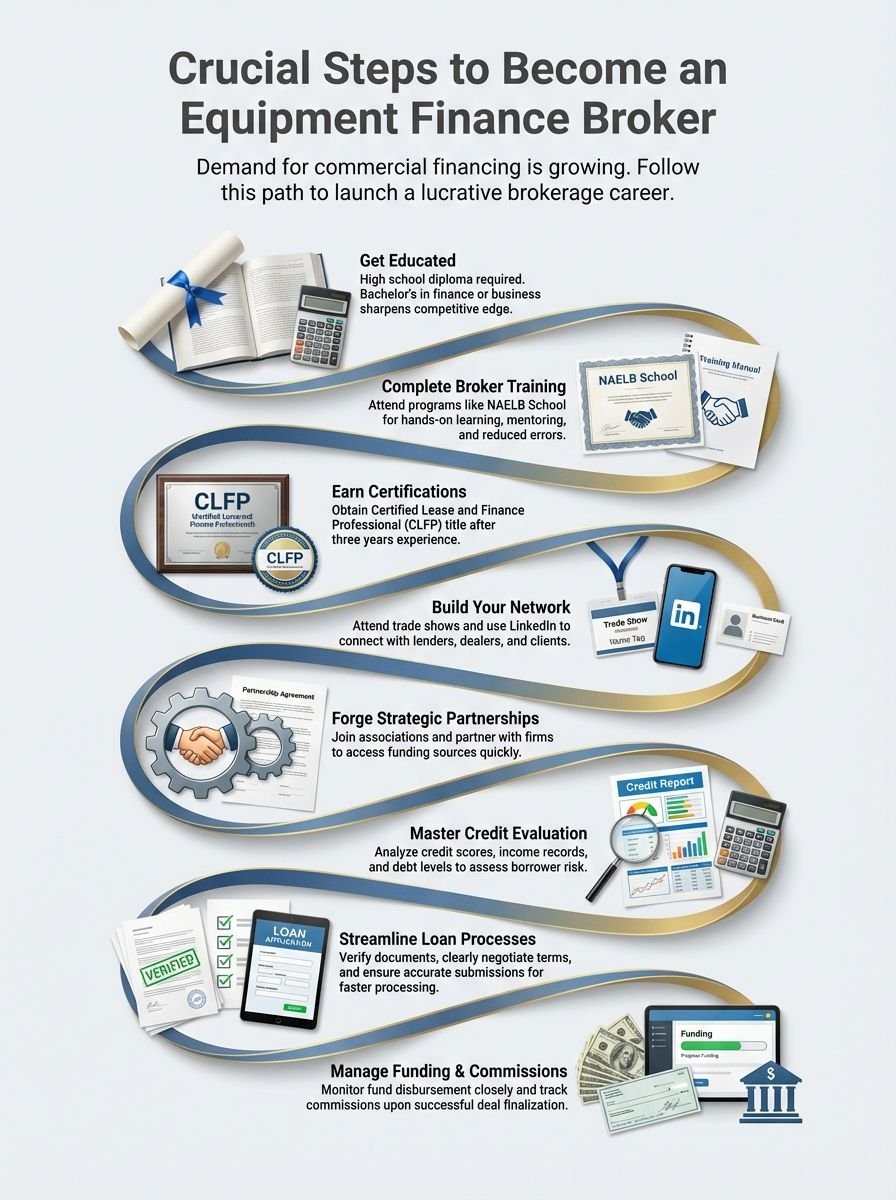
- Earn at least a high school diploma or GED; consider a bachelor’s degree in finance, business, or economics for better skills.
- Gain training through programs like NAELB School, which offers 40-hour courses and one year of mentorship.
- Pursue certifications like the Certified Lease and Finance Professional (CLFP) after three years of experience to show expertise.
- Build networks by joining associations such as NAELB and attending trade shows to connect with lenders and equipment dealers.
- Learn key skills like reviewing borrower creditworthiness, negotiating loans clearly, and using CRM tools for client management.
Education and Training for Aspiring Equipment Finance Brokers
A high school diploma or GED gets your foot in the door, but a bachelor’s degree in finance, business administration, or economics sharpens your edge. Serious about success? Programs like NAELB School offer full training.
Their one-week course packs 40 hours of hands-on learning, followed by a year of mentoring and membership perks. This approach reduces rookie mistakes while boosting productivity.
Special certifications set you apart too. After three years of experience as an equipment lease broker, you can aim for the Certified Lease and Finance Professional (CLFP) title. Passing its detailed exam shows expertise that customers and lenders value.
As part of many broker programs, attending big conferences strengthens industry knowledge while building networks with vendors and financial institutions alike.
Building Strong Industry Relationships and Networks
Attend trade shows and join business groups to meet potential partners. Lenders, equipment dealers, and small companies can open doors to new deals. Use social media like LinkedIn to connect with professionals in leasing or financing.
Share insights, posts, and updates there for better visibility.
Join associations such as the NAELB for resources and mentoring programs. Partnering with firms like Madison Capital helps link you with funding sources quickly. Keep communication open with clients and lenders alike; this builds trust over time.
Strong networks lead to repeatable success in your career path as an equipment lease broker!
Mastering the Skills and Process of Equipment Financing
Mastering equipment financing takes time and effort. You need a mix of skills, knowledge, and smart processes to succeed.
- Learn how to evaluate creditworthiness. Check the borrower’s credit score, income records, and debt levels carefully. This helps reduce risks.
- Stay organized when collecting borrower information. Verify documents like tax returns and bank statements for errors or mismatches.
- Negotiate loan terms clearly with your clients. Use simple language so borrowers understand payment schedules, interest rates, and collateral requirements.
- Submit loan applications through fax, email, or online portals. Accurate information saves time during processing.
- Review all written notifications after transaction approval. Double-check details like funding amounts and payment timelines.
- Understand the importance of security deposits. Some loans may require checks made payable to Madison Funding or directly to brokers with specific approvals.
- Monitor fund disbursement steps closely. Vendors often get paid after delivery confirmation and customer acceptance of equipment.
- Keep track of commissions received at funding completion. Brokers only earn fees once deals are finalized successfully.
- Build strong communication skills through web conferencing or CRM software tools. These help manage relationships with business owners and creditors better.
- Gain confidence in your decision-making process over time by completing transactions involving loans, same-day funding options, bridge loans, or hard money loans efficiently.
Conclusion
Becoming an equipment finance broker takes effort, learning, and connections. Build strong industry ties to find the best financing options for your clients. Focus on improving skills like sales and customer management.
With time and the right training programs, you can help businesses grow while growing your own career too!
FAQs
1. What does an equipment finance broker do?
An equipment finance broker helps businesses secure financing options for equipment leasing or purchasing. They connect companies with lenders, banks, and other financing programs to meet their needs.
2. How can I start as a new broker in this field?
Start by joining a training program that teaches you about commercial loans, collateral requirements, and customer relationship management. Focus on building strong sales skills and finding your niche.
3. Do I need experience in banking or lending to become an equipment lease broker?
While experience in banking or lending is helpful, it’s not required. Many brokers begin without prior knowledge but gain expertise through comprehensive training programs and hands-on work.
4. What industries can I specialize in as an equipment finance broker?
You can specialize in areas like vehicle leasing, factoring for construction companies, franchise financing, or helping small businesses expand with flexible options tailored to their needs.
5. How do brokers help customers who need financing?
Brokers guide customers through the puzzle of selecting the right financing programs based on their business goals and available collateral while offering flexibility that matches their situation.
6. Can becoming a broker help grow my business long-term?
Yes! By leveraging strong partnerships with lenders and offering diverse financing solutions like commercial loans or custom templates for clients’ needs, you can build lasting relationships that drive growth over time.
