
Struggling to figure out the minimum credit score for equipment financing? Most lenders look for a score of at least 600, though higher scores mean better terms. This guide breaks down loans, leases, and ways to get approved even with bad credit.
Keep reading to learn how your business can secure the gear it needs!
Key Takeaways
- Most lenders require a credit score of at least 600 for equipment financing, but scores above 700 get the best rates and terms.
- Specialized lenders may approve loans for scores as low as 550 with higher interest rates or collateral like machinery or vehicles.
- Loans offer ownership and tax benefits, while leases provide flexibility, especially for startups or businesses with bad credit.
- Adding a co-signer with good credit or offering strong collateral can help you secure better loan terms even with a low score.
- Top lenders like National Funding, Balboa Capital, and Triton Capital cater to various needs based on your credit score and business history.
Understanding Credit Score Requirements for Equipment Financing
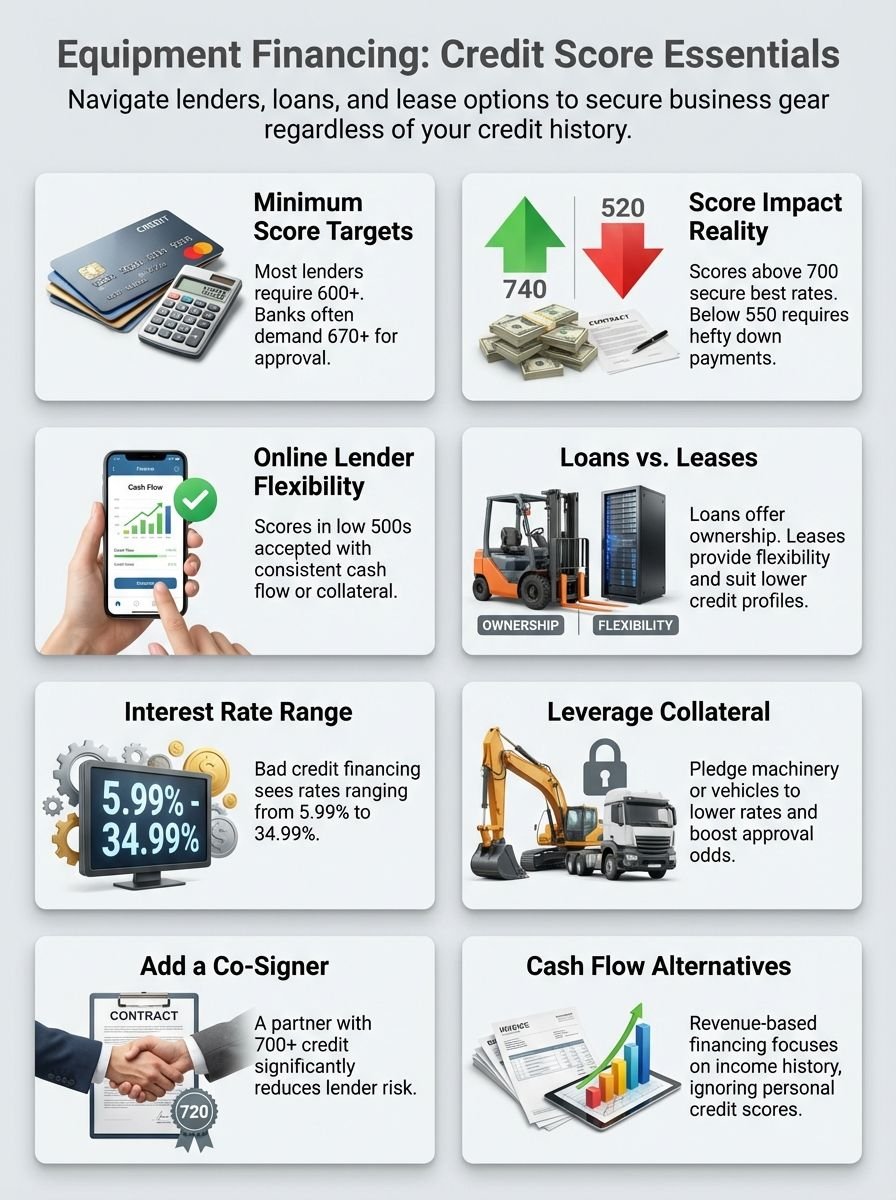
Your credit score plays a big role in equipment financing. Most lenders prefer a minimum score of 600, but many recommend 650 or higher for better terms. Banks usually set the bar even higher, often requiring scores above 670.
A strong business history and revenue over $250,000 per year can also help improve your chances.
Online lenders are more flexible than banks. Some may accept scores in the low 500s if you have consistent cash flow or provide collateral like heavy machinery or vehicles. That flexibility comes with strings attached though, such as shorter loan terms or higher interest rates.
One lender might say,.
We need numbers on paper; lower credit is okay if your books make sense.
It’s all about risk for them!
Minimum Credit Score Needed for Equipment Loans
Your credit score matters a lot when applying for equipment loans. Lenders use it to decide your loan terms, interest rates, and approval chances.
Typical credit score ranges required by lenders
Different lenders have varying credit score requirements for equipment financing. Below is a clear breakdown of typical ranges, along with what borrowers can expect.
| Credit Score Range | Approval Likelihood | Key Notes |
|---|---|---|
| 700+ | High | Best rates and easiest approval process. |
| 650–699 | Moderate to High | Fair rates; banks often favor borrowers in this range. |
| 600–649 | Moderate | Minimum required by many lenders; may need additional documentation or larger down payment. |
| 550–599 | Low | Specialized lenders like eLease approve with higher interest rates and fees. |
| Below 550 | Very Low | Rare approvals; lenders may require strong collateral or at least 20% down payment. |
Keep in mind, scores over 700 offer the most favorable financing. Those under 600 often require alternative approaches or specialized lenders.
How credit scores affect loan terms and interest rates
Lenders use credit scores to decide your loan terms. A higher score, like 650 or above, can mean lower interest rates and longer repayment plans. For example, businesses with scores of 680 may get better offers than those below 600.
Lower scores often lead to shorter loans and higher costs. Bad credit loans usually feature rates between 5.99% and a hefty 34.99%. Some lenders might ask for down payments up to 20% or a co-signer if the score is under 600.
As one lender puts it:.
Your score impacts how much you pay over time.
Types of Equipment Financing Options
Equipment financing comes with choices, and each one fits different business needs. Some options let you own the equipment, while others feel more like renting.
Loans vs. Leases: Key differences and suitability
Choosing between an equipment loan and lease can feel like a tough nut to crack. Each option suits different business needs, credit scores, and goals.
- Loans let you own the equipment immediately. You may need a down payment, and interest rates depend on your credit score. Monthly payments go toward full ownership.
- Leases are more flexible for short-term use. You don’t own the equipment during the lease term but may have an option to buy it at the end. Down payments are often low or not required.
- Leasing works well for businesses with lower credit scores. It also covers depreciation costs, which helps when using high-tech or rapidly outdated equipment.
- Loans give tax benefits through Section 179 depreciation deductions. These help reduce taxable income by claiming large assets.
- Credit risk affects both options differently. A strong score gets better loan terms with lower interest rates, while leasing still offers chances to businesses with poor credit history.
- Startups benefit from leases if they aren’t ready for big commitments. Established companies may prefer loans for long-term growth and asset ownership.
Each choice impacts your budget and business operations differently; consider total cost and goals before deciding!
Top Lenders for Equipment Financing
Finding the right lender can feel like hunting for a needle in a haystack. Some lenders cater to startups, while others work better with bigger companies or specific industries.
National Funding
National Funding offers equipment financing up to $150,000. Business owners need a minimum credit score of 600 to qualify. Loan terms range from 24 to 60 months, giving flexibility for repayment.
Factor rates start at 1.1, keeping costs competitive.
To apply, your business must generate at least $250,000 in annual revenue and operate for six months or more. This lender focuses on helping small businesses acquire necessary equipment without delays or high barriers.
Balboa Capital
Balboa Capital offers equipment financing of up to $500,000. Applicants need a minimum credit score of 620 to qualify. Loan terms range from 24 to 60 months, providing flexibility for different needs.
Same-day funding is available, helping businesses get their equipment fast.
Your business must meet specific requirements. It should have at least $100,000 in yearly revenue and be active for 12 months or longer. Balboa’s programs suit startups and established companies needing heavy or smaller equipment purchases efficiently.
Triton Capital
Triton Capital offers business owners equipment financing up to $250,000. To qualify, you need a minimum credit score of 575. This lender requires your company to have at least $250,000 in annual revenue and be operating for at least two years.
Loan terms range from 12 to 60 months. Interest rates vary between 5.99% and 34.99%, depending on factors like credit score and finances. Triton Capital can help businesses acquire expensive equipment without paying the full cost upfront.
How to Get Approved with a Low Credit Score
A low credit score doesn’t slam the door shut. With smart moves and creative options, you can still secure equipment financing!
Strengthening your application with collateral or co-signers
Offering collateral can boost your chances of approval. Lenders prefer “hard” equipment, like trucks or machinery, because these hold higher resale value. Pledging such assets may also lower interest rates or reduce down payment requirements.
A strong piece of collateral reassures lenders that risks are covered.
Adding a co-signer with excellent credit strengthens the application further. Someone with a 700+ score and steady income makes you less of a risk to lenders. This step can lead to better loan terms, like lower interest rates or smaller monthly payments.
It’s an easy way to offset low personal credit while still getting business financing for the equipment you need.
Alternatives like cash flow-based or story-based financing
Cash flow-based financing focuses on your business’s revenue, not credit scores. Online lenders often approve loans based on consistent cash flow. This option works well for startups or businesses with low personal credit but steady income.
Merchant cash advances are one example; they provide fast funds and get repaid from future card sales.
Story-based financing helps if you have a unique background or strong business idea. Nonprofits or community lenders may offer microloans up to $50,000. These come with flexible terms and even free business training.
Grants are another choice, offering funds without repayment but require detailed applications and competition against others.
Equipment Financing: Understanding Which Type Is Best for Purchasing Equipment to Open Your Business
Choosing the right equipment financing depends on your business needs, credit score, and cash flow. Loans are great if you want to own the equipment outright. They work best for businesses with good credit or those looking for tax benefits.
For example, purchasing construction equipment through a loan lets you deduct interest and depreciation from taxes. On the other hand, equipment leases suit businesses needing flexibility or facing tight budgets.
Leasing also works well for startups with limited credit history since collateral is often tied to the leased item itself.
Rent-to-own options let you use the equipment while spreading out payments over time. This can help maintain working capital without taking on large upfront expenses. Vendors may offer special deals, like deferred payment programs or low-interest rates, which could lower starting costs further.
Government-backed loans such as SBA 504 loans are another choice for small businesses needing heavy machinery or software tools. Consider newer gear if using it as collateral; many lenders prefer items with higher resale value in case of defaulting on a loan agreement.
Conclusion
Getting equipment financing doesn’t have to feel like climbing a mountain. A solid credit score can unlock better terms, but lower scores don’t shut the door entirely. Understand your options, compare lenders, and focus on what fits your business needs best.
Whether it’s a loan or lease, there’s always a path forward to get the tools you need for growth. Keep digging into the details and take smart steps today!
Explore our guide on determining the best type of financing for purchasing equipment to open your business for a deeper dive into making the right decision.
FAQs
1. What is the minimum credit score required for equipment financing?
The minimum credit score for equipment financing varies by lender, but most require a personal credit score of at least 600. Some lenders may accept lower scores, especially if you offer collateral or have strong business financials.
2. Can startups qualify for equipment financing?
Yes, startups can qualify for equipment loans or leasing options. Lenders often consider factors like your business plan, time in business, and projected revenue when assessing your application.
3. How do I choose between an equipment loan and leasing?
Choosing depends on your needs and budget. Loans let you own the equipment outright after payment, while leasing involves renting with an option to purchase later. Leasing may work better if you need flexibility or lower upfront costs.
4. Does bad credit mean I can’t get equipment financing?
Not necessarily! While great credit helps secure better rates, some lenders offer flexible options for businesses with poor credit scores. You might face higher interest rates or need to provide collateral.
5. Are there tax benefits to financing heavy equipment?
Yes! Equipment purchases through loans or leases often qualify as tax-deductible expenses under IRS rules in the United States. Always consult a tax professional to understand deductions specific to your situation.
6. What happens if I default on my equipment loan?
Defaulting could lead to repossession of the financed item by creditors since it’s typically tied to the loan as collateral (finance). Your balance sheet will also reflect this debt until resolved fully with repayment arrangements made promptly where possible!
