
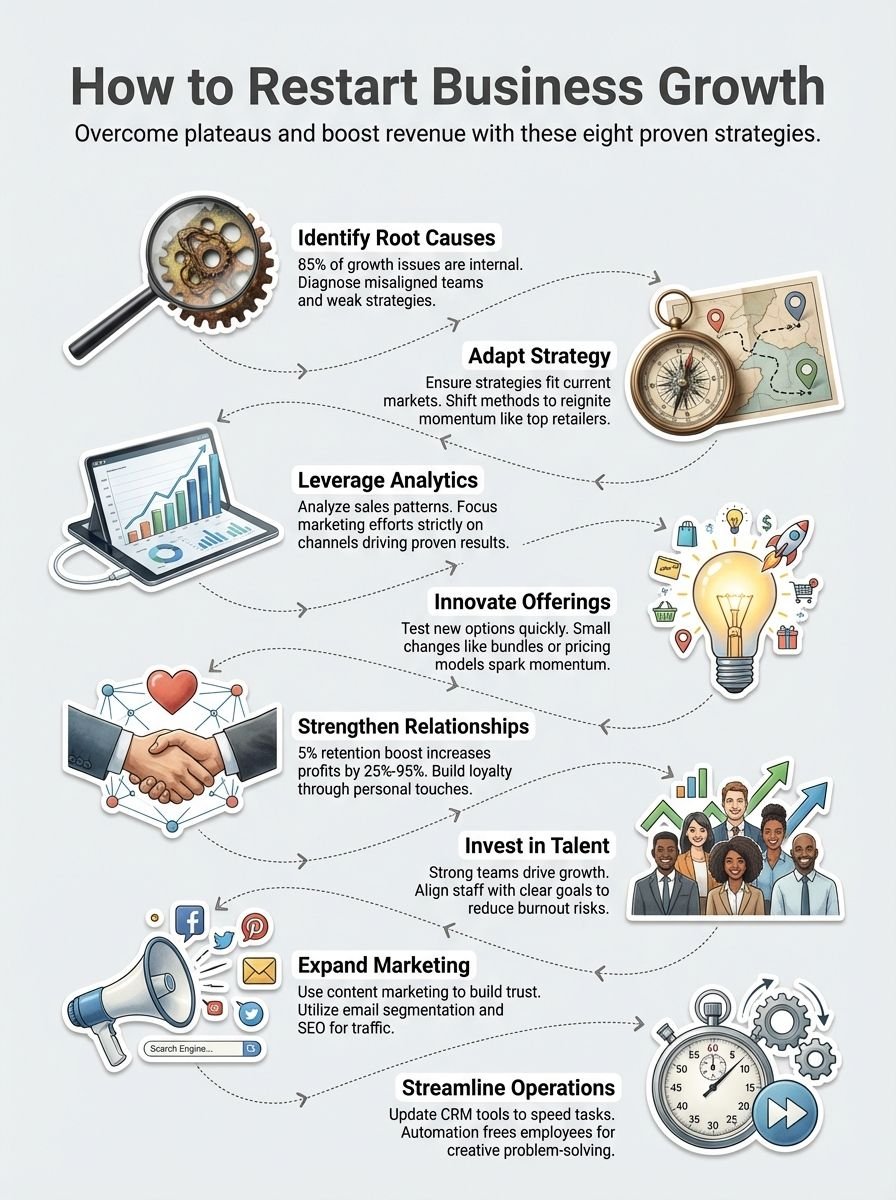
Identify the Root Causes of Stalled Growth
Growth slows when internal barriers stack up. Research shows 85% of profit growth issues come from inside the business, not outside forces. Misaligned teams, outdated systems, or a weak strategy can all play a part.
Stuck in daily tasks? That’s another warning sign. Many business owners are too busy “putting out fires” to step back and find the real problem.
Market conditions also add pressure. Economic downturns shift consumer habits fast, like during the 2008 financial crisis. Market saturation and tough competition shrink opportunities further.
Pinpoint these bottlenecks before moving forward; it’s critical to get your business back on track. Use data to diagnose what’s really holding you back—guesswork won’t cut it here!
Reevaluate and Adapt Your Business Strategy
Take a step back and study your current business plan. Many businesses fail to grow because their strategies no longer fit the market. During the 2020 pandemic, retailers who shifted to online sales grew faster than those stuck in old methods.
Apple and Starbucks reinvented themselves during hard times, proving that change can reignite momentum.
Focus on gaps or outdated practices within your company. Research shows 85% of growth issues come from internal barriers like misalignment or resistance to change. Regularly review pricing models, marketing efforts, and customer preferences to stay ahead of competitors.
A fresh strategy could mean new markets, better margins, or exciting products for untapped customers.
Change before you have to. – Jack Welch
Leverage Data and Analytics for Informed Decision-Making
Analyze sales data to find patterns. Examine where your last 50 customers originated using tools like Google Analytics. This helps identify which marketing channels perform best. Adjust efforts to focus on what drives results.
Track key metrics, such as customer retention rates and revenue growth, regularly. If retention decreases, reevaluate loyalty programs or enhance customer support systems.
Study market trends to identify risks early. Surveys and reviews quickly reveal customer needs and frustrations. Use the feedback to improve products or services before competitors do.
CRM systems improve communication by organizing client information in one place. Regularly reviewing this data keeps businesses ahead of market changes and strengthens their strategic plans for sustainable long-term growth!
Innovate Your Product or Service Offerings
Fresh ideas keep your business growing. Look at what customers need now, not five years ago. A software company added subscriptions to their sales plan, bringing in steady income. This simple change boosted their profits.
Test new options quickly and often. Try small changes like offering bundles with tutorials or adjusting pricing models. One example: a car manufacturer shifted to electric cars to match environmental trends, keeping them competitive.
Even small experiments, like changing email designs or refining how products are pitched online, can spark momentum again.
Strengthen Customer Relationships and Feedback Channels
Happy customers bring growth. A 5% boost in retention can increase profits by 25%-95%. Build loyalty with small but personal touches like birthday discounts or points systems. These keep customers coming back and telling friends about your business.
Talk to them directly. Short, 30-minute chats with at least six top clients may uncover needs you didn’t see before. Respond fast on social media too; timeliness wins trust and shows care.
Use feedback wisely; if a restaurant updates menus based on suggestions, so can you! Smart listening helps businesses stuck in a plateau get back on track.
Invest in Talent Development and Team Alignment
Strong teams drive growth. Invest in skill-building programs to close the talent gap. Studies show 70% of firms struggle to find skilled workers. Startups and small businesses face this too, making training critical.
Host regular team meetings for open feedback and fresh ideas. Align everyone with clear goals and check-ins. Transparent leaders inspire trust, boost morale, and reduce burnout risks.
Support employees through mentorships or workshops on leadership skills. Happier teams mean better retention, saving costs on layoffs or replacements during tough times like recessions.
Expand Marketing Efforts and Explore New Channels
Use content marketing like blogs and videos. These tools build trust with your audience. Regular updates can make your brand an industry leader. Social media platforms such as Instagram or Facebook help reach new customers fast.
They also allow businesses to monitor trends and respond quickly.
Try email marketing for personalized messages. Segmented emails improve clicks and conversions. Influencer partnerships boost traffic, sales, and engagement too. SEO strategies, like adding keywords or improving mobile design, bring organic traffic without high costs.
Bundle products with other companies to reach more people easily!
Streamline Operations and Optimize Processes
Cutting waste and fixing weak spots can restart business growth. Outdated tech systems or clunky inventory handling often slow things down. Update tools like CRM software to speed up tasks and reduce errors.
Automation frees employees from routine work, giving them time for creative problem-solving.
Switching to cloud services lowers costs and helps teams work remotely without a hitch. Regularly train staff on new processes for best results. Managing cash wisely is just as key; missed payments or poor budgeting lead many startups to fail.
Focus resources on high-impact projects that improve daily operations and keep the business growing steadily.
Conclusion: Execute with Focus and Consistency for Sustainable Growth
Restarting growth needs focus and action. Fix what’s broken, listen to your customers, and keep improving. Test new ideas, train your team, and sharpen your strategy. Growth doesn’t happen by chance, so stay consistent.
With the right steps, any business can move past a plateau and thrive again!
FAQs
1. Why does a business hit a growth plateau?
A business might hit a plateau due to common reasons like outdated systems, lack of new ideas, or not having the right people in key roles. Sometimes, it’s just time to step back and reassess strategies.
2. How can I get unstuck if my business has stopped growing?
To get unstuck, consider building a strategic roadmap with actionable steps. Reassess your products and services, explore digital marketing tactics, and seek outside perspectives like hiring a coach.
3. What are some growth strategies for businesses facing stagnation?
Growth strategies include investing in employee retention programs, improving payroll systems, developing new marketing plans, and nurturing customer relationships through tailored services.
4. Should I take risks when trying to grow my business again?
Yes! Taking calculated risks is often necessary for growth. Experiment with new ideas or expand into untapped markets while keeping an eye on potential challenges.
5. How do I know if downsizing is the right move during stagnation?
If current operations feel bloated or inefficient, downsizing could help streamline processes and free up resources for reinvestment in areas that drive growth.
6. Can remote work impact my business’s growth positively?
Absolutely! Remote work opens doors to diverse talent pools across genders and abilities while reducing overhead costs. With the right systems in place, it can boost productivity too!
