
Starting a gym or upgrading equipment can feel expensive and stressful. Leasing gym equipment for business offers a way to reduce upfront costs while getting what you need. This blog will explain how leasing works, its benefits, and what costs to expect.
Keep reading, it’s worth your time!
Key Takeaways
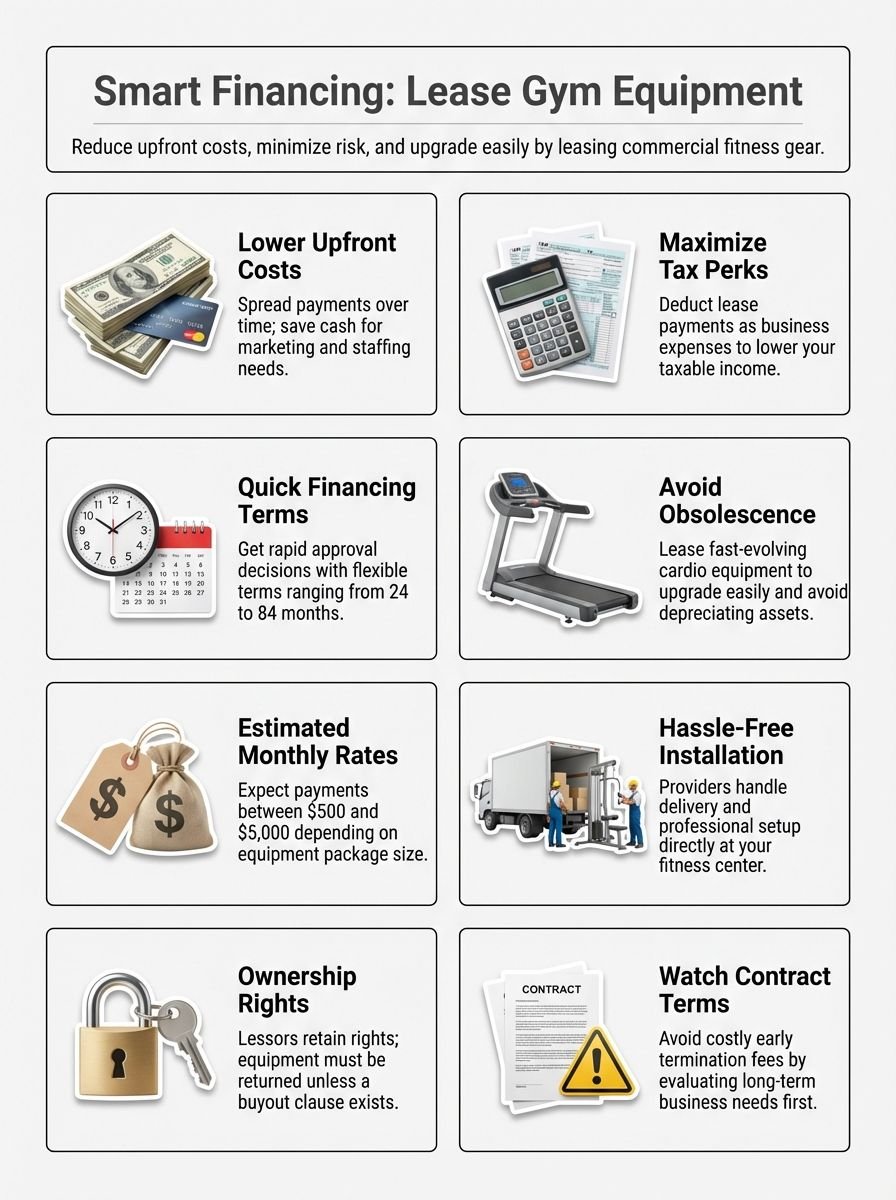
- Leasing gym equipment reduces upfront costs. Monthly payments range from $500 to $5,000 based on size, terms, and credit.
- Leases often include tax benefits. Payments can be deducted as business expenses to lower taxable income.
- This option avoids risks of outdated gear, especially cardio machines that become obsolete fast. Some leases cover maintenance too.
- Lease terms vary from 24 to 84 months with flexible plans but no ownership unless a buyout is included. Early termination fees may apply.
- Leasing allows gyms to stay updated with new tech while keeping budgets manageable and saving cash for other needs like marketing or staff hiring.
Benefits of Leasing Gym Equipment for Your Business
Leasing gym equipment helps businesses lower upfront costs. Instead of spending thousands at once, you can spread payments over time. Monthly lease payments often range between $500 and $5,000 based on the type of fitness equipment, lease term, and credit profile.
This makes it easier to save cash for marketing or hiring staff. It’s a practical way for gym owners to manage expenses without draining their wallets.
Tax perks sweeten the deal too. Lease payments are usually deductible as business expenses, which lowers your taxable income. Another big plus? Leasing shifts the risk of outdated machines to the lessor.
Cardio equipment improves fast these days; leasing lets you stay current without wasting money on items that become obsolete quickly. Some agreements even cover maintenance costs, saving extra stress and dollars down the road.
Leasing helps gyms grow smarter while keeping costs in check.
How Leasing Gym Equipment Works
Leasing gym equipment is a simple process. It allows businesses to get the gear they need without paying large sums upfront. Here’s how it works:
- Choose your equipment: Pick from treadmills, strength machines, or other commercial fitness equipment that fits your business goals.
- Apply for financing: Fill out a short financing request form with basic details. This won’t impact your credit score.
- Get approval: Many providers offer quick decisions, sometimes within hours, for financing amounts starting as low as £3,000.
- Compare payment plans: Review flexible options based on terms ranging from 24 to 84 months. These include fixed monthly payments.
- Sign the contract: Once you agree to costs and terms, finalize the leasing agreement with set conditions like term length and fees for early termination.
- Schedule installation: After payment approval and checks, providers install the equipment at your fitness center or gym space.
- Enjoy added benefits: Many leases include maintenance services or allow easy upgrading at lease end, so you stay competitive with new technology.
- Plan for lease maturity: Decide if you want to purchase the used equipment or upgrade to newer models through another lease option.
This setup keeps upfront capital low while supporting growth in a busy fitness business market!https://www.youtube.com/watch?v=r–NKgJYheg
Cost Considerations for Leasing Fitness Equipment
Cost plays a big role in choosing whether to lease gym equipment. Below is a breakdown of key factors influencing the expense of leasing fitness equipment:
| Factor | Details |
|---|---|
| Monthly Lease Costs | Rates typically range from $500 to $5,000, depending on the size of the equipment package. Larger gyms pay more, while small setups often cost less. |
| Payment Term Length | Flexible options are available, from 24 months to 84 months. Shorter terms result in higher monthly costs but save in total expenses. Longer terms spread payments out but increase total spending. |
| Tax Benefits | Leasing may allow a full deduction on new equipment in the first year. Consult a CPA to verify current tax laws and possible savings. |
| Equipment Depreciation | Cardio machines often become outdated faster. Leasing these avoids owning assets that lose value quickly. Strength equipment lasts longer and might be better purchased. |
| Ownership | No ownership is gained during a lease. The lessor retains full rights to the equipment, which must be returned at the end of the agreement unless a buyout clause exists. |
| Early Termination Fees | Canceling a lease early can lead to costly penalties. Businesses should evaluate long-term needs before committing to avoid unnecessary expenses. |
Understanding costs upfront helps gym owners manage budgets without exceeding financial limits.
Conclusion
Leasing gym equipment is a smart move for many businesses. It helps save cash, cuts upfront costs, and keeps your options open for upgrades. Whether you’re running a startup or refreshing an old setup, leasing offers flexibility and ease.
Do the math, weigh the perks, and pick what fits your gym’s goals best!
For gym and fitness center owners seeking additional financing options, explore our comprehensive guide on the best commercial truck finance companies.
FAQs
1. What is gym equipment leasing, and how does it work?
Gym equipment leasing allows businesses to rent exercise machines instead of buying them outright. You pay fixed amounts over the term of the lease, which helps manage cash flow while accessing high-quality fitness equipment.
2. Is leasing gym equipment better than buying?
Leasing versus buying depends on your business needs and goals. Leasing often minimizes upfront costs, provides access to the latest fitness technology, and avoids long-term obsolescence. Buying builds equity but requires more capital upfront.
3. How much does it cost to lease gym equipment?
The cost to lease gym equipment varies based on factors like the type of commercial fitness equipment, financing terms, and leasing providers’ rates. Competitive rates are available from leading providers offering flexible options for every gym size.
4. Are there tax advantages with gym equipment financing?
Yes, leasing offers potential tax incentives for gyms or health clubs by allowing deductions as operating expenses during the term of the lease instead of depreciating purchased assets over time.
5. Can startups use financing solutions for their first fitness facility?
Absolutely! Financing options help startup companies minimize initial spending while securing top-notch commercial gym gear from trusted manufacturers like Life Fitness or other brands tailored for strength training or personal training spaces.
6. What happens at the end of a lease agreement?
At the end of a lease, you may have several options depending on your contract: return the leased items; buy them outright at a pre-agreed price; or renew your agreement if upgrading makes sense to keep your gym competitive!
