
Starting a business often means big expenses. The purchase of the equipment to open a business is which type of financing many owners need to understand. Equipment financing helps small businesses get necessary tools without draining their savings.
Keep reading to learn how this can drive your success!
Key Takeaways
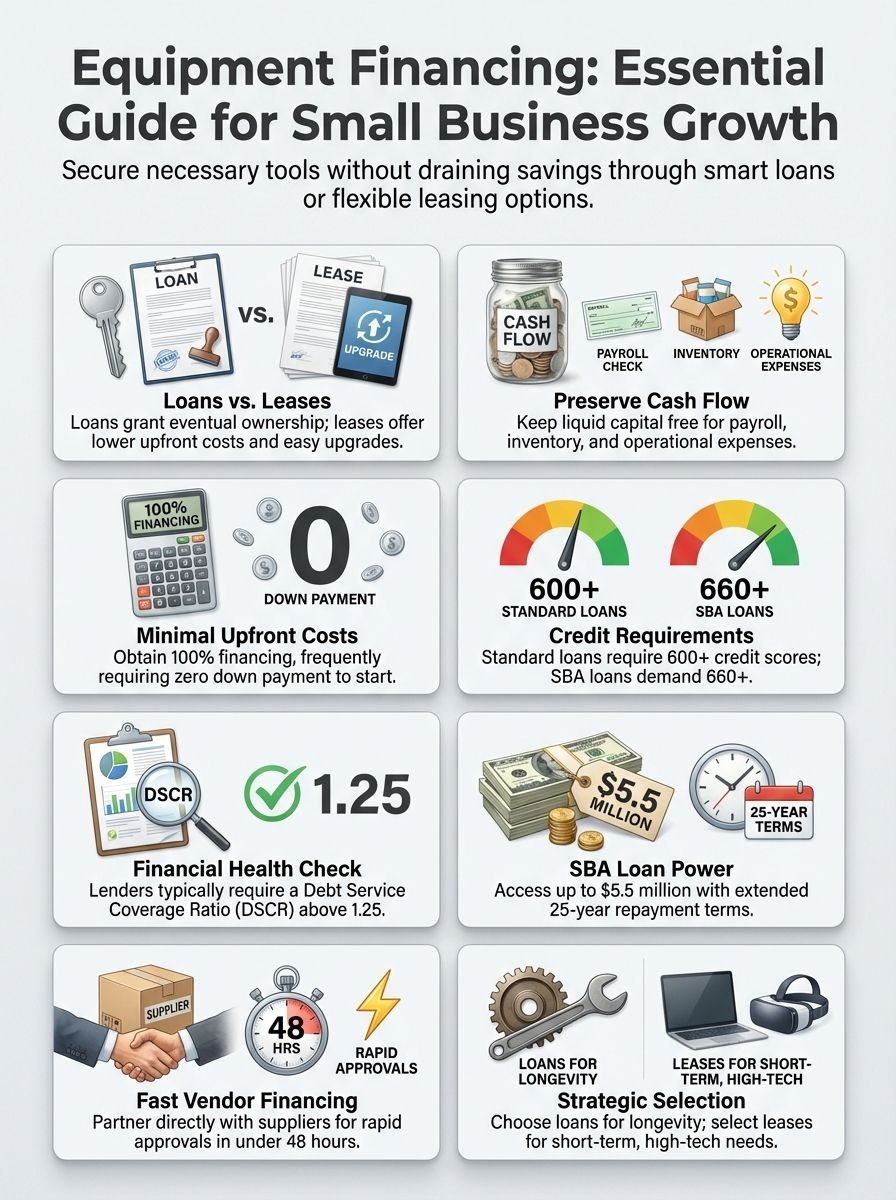
- Equipment financing helps small businesses get tools without upfront costs. Loans often cover 80-100% of equipment expenses, while leasing skips down payments entirely.
- A credit score of at least 600 can qualify businesses for loans or leases. SBA CDC/504 loans require a higher score (660) and offer long terms up to 25 years with low interest rates.
- Leasing is ideal for tech-heavy industries needing frequent upgrades. Businesses can return, renew, or buy the equipment after lease terms end while enjoying tax deductions like IRS Section 179.
- Vendor financing works directly with suppliers and offers quick approvals within 1–2 days. It provides perks like no collateral requirements and promotional discounts.
- Medical practices benefit from specialized leasing companies like National Funding and DirectMed Parts & Equipment. These firms provide fast approvals, flexible plans, and access to essential tools like MRI machines or exam tables.
Types of Equipment Financing Options
Finding the right way to pay for equipment isn’t one-size-fits-all. Explore choices that fit your needs and help grow your business faster.
Equipment Loans: Ownership After Repayment
Borrowing through an equipment loan gives you full ownership of the asset once all payments are made. Most loans cover 80-90% of the equipment’s cost, leaving a small down payment requirement.
This structure is great for businesses needing long-term use of machinery, vehicles, or tools.
The loan is secured by the purchased item itself as collateral. Fixed interest rates make budgeting simpler. Repayment terms often range up to 10 years, but SBA 504 loans can stretch to 25 years for eligible borrowers.
A credit score as low as 600 and at least one year in business can get you approved quickly, sometimes within two days!
Equipment Leasing: Flexible Terms and Options
Equipment leases offer flexible payment terms. Businesses can choose monthly, quarterly, or even annual payments. Approval is also quick, often within 1 to 2 days. Many agreements require no down payment, which helps maintain cash flow.
Leases work well for businesses needing frequent upgrades. For example, tech companies benefit from replacing equipment as technology evolves rapidly. Leases may also include tax perks like deductions under IRS Section 179.
At the end of the term, businesses can buy the equipment, renew the lease, or return it without hassle.
Benefits of Equipment Financing for Small Businesses
Getting the right equipment can breathe new life into your business. Equipment financing makes it easier to keep cash on hand while still getting what you need.
Preserving Cash Flow for Other Expenses
Equipment financing lets businesses save cash for other needs. Low or no down payments keep funds available for payroll, rent, or inventory. Spreading payments over years reduces the strain on monthly budgets.
Flexible plans like quarterly or seasonal schedules fit businesses with uneven revenue cycles.
Using equipment as collateral avoids tying up large capital upfront. Full financing options mean no need to drain savings accounts. This flexibility helps small business owners focus on growth while staying financially stable.
Accessing High-Value Equipment Without Upfront Costs
Small businesses can get high-value equipment without paying upfront. Equipment financing often covers 100% of the cost. Leasing is another option, which usually skips down payments entirely.
With leasing or loans, you only need to manage monthly payments instead of a large one-time fee.
Think about construction machinery, medical tools, or computers that might otherwise be out of reach. Even with limited cash reserves, businesses can secure what they need fast. Approval can take just 24 hours; funds may follow in two business days.
This access allows small companies to keep operating smoothly while saving their cash for other essential expenses.
Managing Equipment Lifecycles Efficiently
Match your financing term to the equipment’s lifespan. A loan is better for gear lasting over three years, while a lease suits short-term needs or frequent upgrades. Leasing works well in industries like tech or healthcare, where tools quickly become outdated.
Regular payments help plan budgets and avoid surprises. Updating equipment through leasing allows easy returns or renewals when contracts end. Businesses scaling up can buy more tools gradually with predictable costs, keeping operations smooth and cash flow steady.
How to Qualify for Equipment Financing
Lenders want to see a strong financial track record. Show that your business can handle payments without breaking the bank.
Credit History Requirements
A credit score of 600 is the minimum for most equipment financing loans. SBA CDC/504 loans demand a higher score of at least 660, along with two or more years in business. Business credit cards often call for strong credit profiles and can provide up to $100,000 for equipment purchases.
Lower scores may still qualify but come with higher interest rates, sometimes reaching up to 36%. Lenders also expect proof of steady revenue and financial health. Many require a personal guarantee, adding an extra layer of security for them when offering funding options like small business lines of credit or loans.
Debt Service Coverage and Financial Health
Lenders assess debt service coverage ratios (DSCR) to see if you can handle monthly payments. A DSCR above 1 shows your business earns enough to cover its debts. For example, a ratio of 1.25 means for every dollar of debt, your company generates $1.25 in income.
Strong financial health matters too. Lenders review bank statements and tax returns from the last 1-3 years. They may also look at cash flow projections to confirm stable revenue streams.
Businesses earning over $200,000 annually with steady income have an edge in qualifying for equipment financing options without large down payments.
Choosing Between an Equipment Loan and Lease
Buying equipment with a loan allows you to own it after all payments are made. This is a good option for tools or machines used for over three years. Loans may require a down payment, sometimes 20% or more, though some lenders provide full financing options.
Short-term loans come with higher monthly costs but save money on interest in total. Long-term loans reduce monthly payments but result in more interest over time.
Leasing equipment is preferable if you upgrade regularly or only need the gear for a short time. Lease agreements tend to be more expensive in the long term, but they don’t demand large upfront payments.
Payments may also qualify as tax-deductible under IRS Section 179 rules. Leasing is a practical choice for tech-heavy businesses that require frequent updates without significant investments upfront.
Assess your cash flow and business plan to determine the best option for your situation!
SBA Loans for Small Business Equipment
SBA CDC/504 loans can help small businesses buy big-ticket equipment. Loans go up to $5.5 million and last as long as 25 years. These loans often cover 100% of the equipment cost, which means no large down payments upfront.
To qualify, a business must meet key conditions. Owners need at least a 660 credit score, two years in business, and $200,000 or more in yearly revenue. Approval can take up to eight weeks but offers lower interest rates and longer terms than standard loans.
This makes them perfect for buying machinery with a long life span while keeping costs manageable over time.
Vendor Financing: Partnering Directly with Suppliers
Vendor financing lets businesses work directly with suppliers to buy equipment. Suppliers often handle approval and funding, making the process smooth. Some vendors offer full financing, which means no down payment is needed.
This option can save money upfront.
Equipment may serve as collateral, simplifying approval even for small businesses or startups. Approval times are quick, sometimes within 24–48 hours. Businesses may also get special discounts or promotions through these deals.
Vendor financing is common for machinery, technology, and other industry-specific tools that companies need to grow quickly.
Top Medical Equipment Leasing Companies
Medical equipment leasing has become a game changer for clinics and healthcare providers. Leasing companies help practices upgrade technology quickly, avoid high upfront costs, and keep operations smooth. Below is a list of top companies specializing in medical equipment leasing:
| Leasing Company | Key Features | Equipment Options |
|---|---|---|
| National Funding |
|
|
| eLease |
|
|
| DirectMed Parts & Equipment |
|
|
| Horizon Keystone Financial |
|
|
| Crest Capital |
|
|
These companies cater to both small and large medical practices. Each offers benefits like tax savings, quick approvals, and flexible terms. Practices looking to grow fast or upgrade often should weigh each company’s options carefully.
Conclusion
Equipment financing can be a game-changer. It helps businesses get the tools they need without emptying their wallets upfront. Whether you’re aiming to own or lease equipment, there’s an option for every business size and type.
With careful planning and smart choices, your business can grow, stay competitive, and keep cash flow steady. Start exploring what works best for your needs today!
FAQs
1. What is equipment financing, and how does it work?
Equipment financing is a type of business loan that helps companies purchase the equipment they need. The lender provides funds to buy or lease the equipment, which often serves as collateral for the loan.
2. Is equipment financing right for my small business?
If your business needs essential tools but doesn’t have enough cash to buy them outright, equipment financing can be a good option. It works well for businesses in industries like construction or food service where specific machinery is crucial.
3. What types of loans are available for purchasing equipment?
There are many options, including secured loans, operating leases, and business lines of credit. Some lenders also offer specialized products like small business equipment loans tailored to unique needs.
4. Can I get approved if my credit isn’t great?
Yes, some providers offer financing solutions specifically designed for business owners with bad credit. However, these may come with higher interest rates or stricter terms.
5. Should I lease or buy when it comes to new equipment?
Leasing allows you to use the equipment without owning it outright; this can help manage costs if you only need it temporarily or want flexibility at the end of the term. Buying gives full ownership but requires more upfront capital.
6. Are there tax benefits tied to using an equipment loan?
Yes! Section 179 depreciation deduction lets businesses write off part of their financed purchases on taxes in certain cases; consult your accountant about eligibility based on current IRS rules and your specific situation.
