
Can’t afford new equipment for your business? You’re not alone, as many small businesses face this challenge every day. The good news is, there are financing options that can help you get the tools and equipment you need without breaking the bank.
Stick around to learn how these solutions can make a big difference!
Key Takeaways
- Equipment financing helps small businesses afford tools and machines without upfront costs. Options include loans, leasing, or SBA programs like the 7(a) loan for large purchases.
- SBA loans offer low-interest rates but take time to get approved. In 2024, over 70,000 SBA 7(a) loans were issued with competitive terms.
- Leasing is good for short-term needs or fast-changing items like tech, while buying suits long-term use since you own it after payments.
- Business credit cards provide quick funds for smaller equipment but have high interest rates up to 35% APR based on credit scores. Timely payments build business credit.
- Crowdfunding and angel investors are creative funding methods but may require giving up equity in your business or waiting longer to raise needed funds.
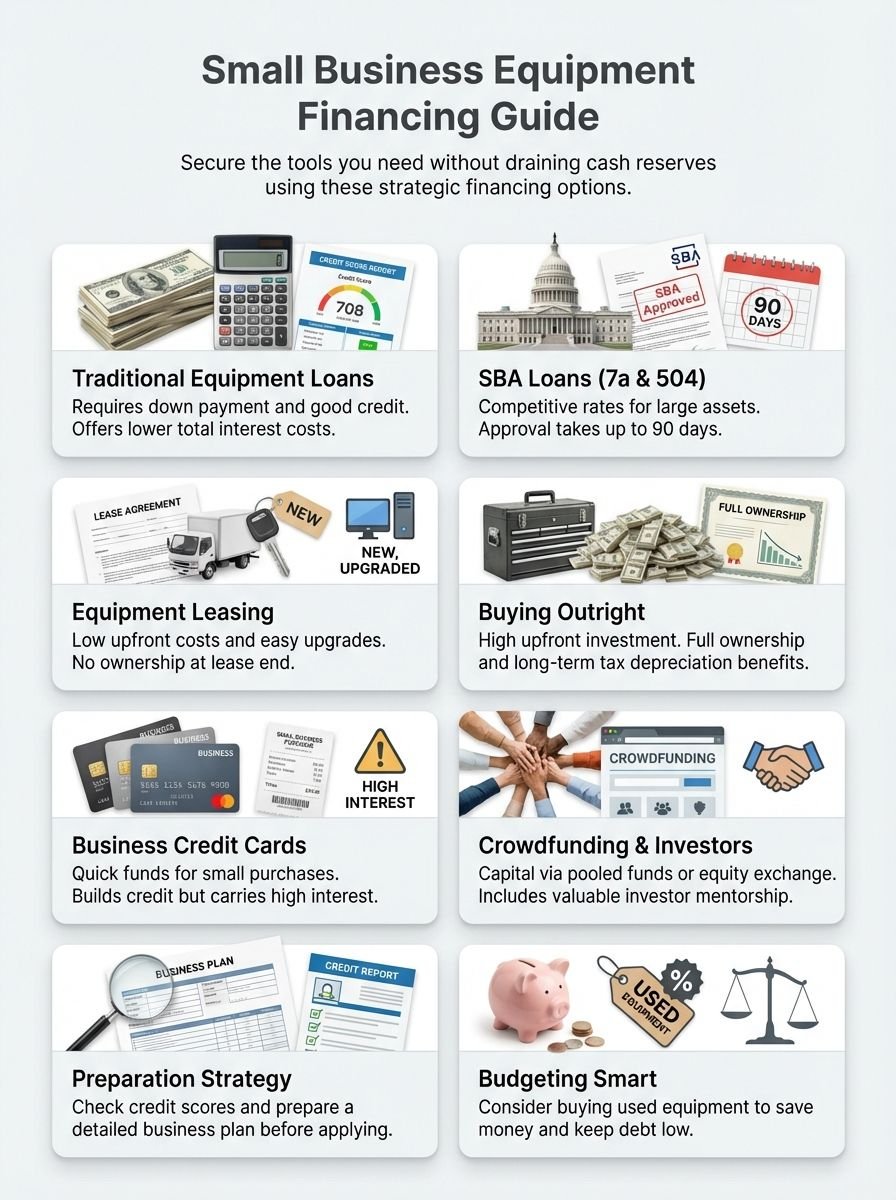
Equipment Financing Options to Consider
Getting the right equipment can feel like climbing a steep hill, but there are ways to make it easier. Explore various financing options to find one that fits your budget and goals.
Traditional Equipment Loans
Traditional lenders often require a down payment before approving an equipment loan. This upfront cost, though sometimes steep, can lower your total interest. Monthly payments follow, making it easier to manage cash flow for most business owners.
Good credit improves your chances of approval and helps secure better terms. A bank you’ve worked with before may give you quicker approval. Missing payments could lead to repossession or damage your credit score.
Shop around for the best rates; sellers’ financing isn’t always the cheapest option.
Timely repayment isn’t just smart—it’s vital for protecting your business assets.
SBA Loans for Small Businesses
SBA loans can help small businesses afford equipment. The 7(a) loan is a common option and works for costly purchases like machines or vehicles. It offers good rates, but approval takes time, often up to 90 days.
Businesses must try other funding options first before applying.
Another choice, the SBA 504 loan, focuses on fixed assets such as construction tools or big machinery. For less expensive needs, SBA microloans provide up to $50,000. In fiscal year 2024 alone, over 70,000 of these loans were approved under the 7(a) program with competitive terms that are hard to beat if you qualify.
Equipment Leasing vs. Buying
Equipment costs can feel like a mountain to climb. Leasing and buying both have their perks and pitfalls. Here’s a quick breakdown to help you decide what’s right for your small business.
| Factor | Leasing | Buying |
|---|---|---|
| Ownership | No ownership. You return equipment at the lease’s end. | You own the equipment outright once paid in full. |
| Cost | Lower monthly payments but no residual value. | High upfront costs but full value of the equipment. |
| Flexibility | Easier to upgrade to newer models as leases end. | Limited unless you sell and repurchase new equipment. |
| Duration | Short-term (Operating) or long-term (Capital) leases available. | Permanently owned unless resold or scrapped. |
| Tax Benefits | Capital leases may allow deductions for depreciation and interest. | Depreciation can be claimed over time on owned equipment. |
| Maintenance | Often included in lease agreements but beware of fees for damages. | You bear full responsibility for upkeep and repairs. |
| Initial Payment | Low or no down payment required. | Typically requires significant upfront investment. |
| Used Equipment | Usually not an option in leasing contracts. | Buying pre-owned equipment can lower costs. |
Choosing between leasing and buying boils down to your business’s budget and long-term needs.
Alternative Financing Methods
Other ways to get money for equipment can be quick and creative. They suit different needs, budgets, and business stages.
Business Credit Cards
Business credit cards offer quick access to funds for business equipment needs. They have variable interest rates ranging from 18% to 35% APR, depending on your credit score. Approval is easier than traditional loans if your personal credit score is above 680.
Credit cards can help build strong business credit when payments are made on time. Some cards even come with rewards or a 0% introductory APR period, saving money upfront. The catch? Most have lower limits compared to other types of financing, making them best for smaller purchases rather than major equipment buys.
Good credit opens doors; missed payments slam them shut.
Crowdfunding and Angel Investors
Crowdfunding helps raise money by pooling small funds from many people online. There are three types: donation, reward, and equity. Donation crowdfunding collects money with no strings attached.
Reward-based offers perks like free products for supporters. Equity crowdfunding gives a piece of your business to investors in exchange for funding. Campaigns need clear goals and strong marketing to succeed.
But they can be slow, as funds often release only after hitting the target amount.
Angel investors provide capital in exchange for business equity or ownership stakes. They bring more than just cash; their mentorship and contacts can help your business grow fast.
This method works well for early-stage businesses needing quick guidance and resources but may require giving up partial control of your company. Keep in mind that both methods take time to secure funding compared to other options like loans or lines of credit!
Tips for Choosing the Right Financing Option
Choosing the right way to finance equipment can feel like a big task. Breaking it into simple steps makes the decision easier.
- Check your credit score. Your credit, both business and personal, plays a big role in loan approval. Pay off debts and lower credit card balances to improve your chances of getting approved.
- Know how long you’ll need the equipment. For short-term use, leasing equipment may make sense for your business. If it’s something you’ll use for years, buying might be better.
- Create a clear and detailed business plan. Include tax returns, revenue forecasts, and a list of equipment with price estimates. Lenders want to see you’re serious and prepared.
- Compare several lenders before choosing one. Different banks, credit unions, or online lenders offer various rates and terms for small business loans or equipment leases.
- Think about speed if time is tight. If you need the equipment fast, online lenders often provide quick decisions compared to traditional banks.
- Review all fees carefully before signing anything. Look out for hidden costs on interest rates or penalties for late payments.
- Ask how financing affects taxes or deductions for your business accounting needs. Some leases offer benefits at the end of the term; check if that applies to yours.
- Match equipment cost to your financial resources realistically. Don’t borrow money beyond what your balance sheet can handle comfortably.
- See if used equipment fits your needs instead of purchasing brand-new items outright with cash or loans; this saves money upfront while keeping debt low.
- Always fill out applications completely with required details like payment history or collateral information to avoid unnecessary delays in approval!
Restarting and Growing Your Business with the Right Equipment Financing
Getting the right financing can breathe life back into your small business. With an equipment loan, you can buy the tools you need without draining your cash reserves. For example, banks and fintech lenders offer flexible term loans or lines of credit to help with expensive purchases like machinery or vehicles.
Investing in proper business equipment boosts growth. Don’t cut corners on quality; reliable tools keep operations smooth. Equipment leasing is a smart choice for seasonal businesses since it spreads costs over time and provides tax deductions.
In 2025, about 59% of firms applied for funding, showing how critical it is to get what you need to stay competitive. Keep up with demand by choosing financing that fits your budget and goals!
Frequently Asked Questions About Equipment Financing
Equipment financing can feel tricky, but it helps businesses grow. Here are common questions asked and clear answers to help you out.
- What is equipment financing?
It’s a way for businesses to get needed tools or machines without paying upfront. You repay in monthly payments while using the equipment. - What credit score is required?
Some lenders accept high 500 scores, but better rates come with higher scores. Good personal credit opens more options, like lower interest rates or flexible terms. - How much does it cost?
Interest rates depend on your credit and the lender. Bank loans can start at 7.31%, while online lenders may go up to 99% for bad credit. The rate matches risk levels. - Can I still qualify with bad credit?
Yes! Lenders often use your equipment as collateral, lowering their risk. This means even businesses with poor credit may get approved. - Is buying better than leasing?
Leasing usually works short-term if cash flow is tight or for equipment that updates fast, like tech items. Buying suits long-term needs since you own it outright after payments. - Are SBA loans good options?
SBA loans are great for small business owners seeking low-interest rates and long terms, but they take time to process and require proof you tried other funding first. - Do I need a down payment?
This depends on the lender and loan type. Some demand upfront costs; others don’t if your equipment holds enough value as collateral. - Are used tools eligible?
Yes! Purchasing used equipment saves money and is often covered in financing plans, so check terms before applying. - How do payments work?
Payments match the lifespan of what you finance; for example, a three-year loan fits a machine lasting three years to spread costs evenly over its use period. - What happens at the lease end?
With operating leases, return the item unless you choose to buy it then—options vary by contract terms set early on with your creditor.
Conclusion
Getting the right tools for your business doesn’t have to be stressful. With so many financing options, you can find one that works for your needs and budget. Take time to compare choices like loans, leasing, or credit lines.
The right choice today can help grow your business tomorrow. Don’t let expensive equipment hold you back!
For more insights on revitalizing and expanding your business with the appropriate financing strategies, explore our detailed guide here.
FAQs
1. What is equipment financing, and how can it help my small business?
Equipment financing lets you borrow money to buy the tools or machinery your business needs. It helps you get expensive equipment without draining your working capital.
2. Can I rent equipment instead of buying it?
Yes, renting is an option if purchasing isn’t feasible. Renting allows flexibility, but keep in mind that you won’t own the equipment at the end of the lease.
3. How do I qualify for a business equipment loan?
Lenders typically look at factors like your time in business, credit risk, revenue history, and whether you can offer collateral to secure the loan.
4. Are there different types of financing available for new businesses?
Yes! Options include a Small Business Administration loan, revenue-based financing, or even a line of credit depending on what works best for your type of business.
5. What happens if I default on my loan payments?
Defaulting may result in losing any collateral tied to the loan or damage to your credit score. Always consider repayment terms carefully before committing.
6. Are there tax benefits when using financing to purchase equipment?
Often yes! Many purchases qualify as deductible expenses under U.S. tax laws which could reduce overall costs while helping grow your business efficiently over time!
