
Starting a restaurant is exciting but costly. Buying kitchen equipment upfront drains your cash flow fast. Luckily, restaurant equipment financing for startups can ease the burden by spreading out costs over time.
Ready to learn how to keep more money in your pocket? Keep reading!
Key Takeaways
- Equipment financing helps restaurant startups spread costs and save cash flow. Loans or leases may go up to $250,000, even for credit scores under 650 if income is steady.
- Many lenders need six months of business history and at least $10,000 in monthly revenue for approval. Some options offer fast funding within 24 hours.
- Financing offers tax benefits through Section 179. Lease payments can be fully deductible, saving money during tax season.
- SBA loans provide long-term options (10–30 years), while lines of credit cover short terms (6–24 months). Platforms like Lendio simplify comparisons among multiple lenders.
- At the end of a lease term, you can return equipment or upgrade without extra fees—helping restaurants stay updated with the latest tools.
Understanding Equipment Financing for Restaurant Startups
Equipment financing helps restaurant owners get the tools they need without paying large sums upfront. Instead of buying, you can lease or finance ovens, stoves, refrigerators, and more.
Loans and leasing plans go up to $250,000 for those with good credit scores. Some options work even if your score is lower than 650 as long as your eatery shows steady income.
Banks, specialized lenders, and merchant cash providers often offer financing solutions. Many require six months in business and at least $10,000 in monthly revenue to apply. Flat-rate monthly payments make it easier to manage costs while keeping your working capital free for other expenses.
As one expert puts it:.
Financing allows startups to grow without draining their budget.
Benefits of Equipment Financing for New Restaurants
Starting a restaurant often comes with high costs. Equipment financing helps spread these expenses over time, making it easier for small businesses to manage cash flow. Instead of emptying your savings on large upfront payments, you can use that capital for other needs like buying food or paying staff.
Options like leasing may not even require a down payment or collateral.
This type of financing also offers tax benefits through Section 179. Lease payments could be up to 100% deductible, which lowers taxable income and saves money during tax season. Business owners with limited credit can still access funding by borrowing against assets.
Another big plus? At the end of the lease term, you can return items or upgrade to newer equipment without extra costs.
Steps to Secure Equipment Financing Easily
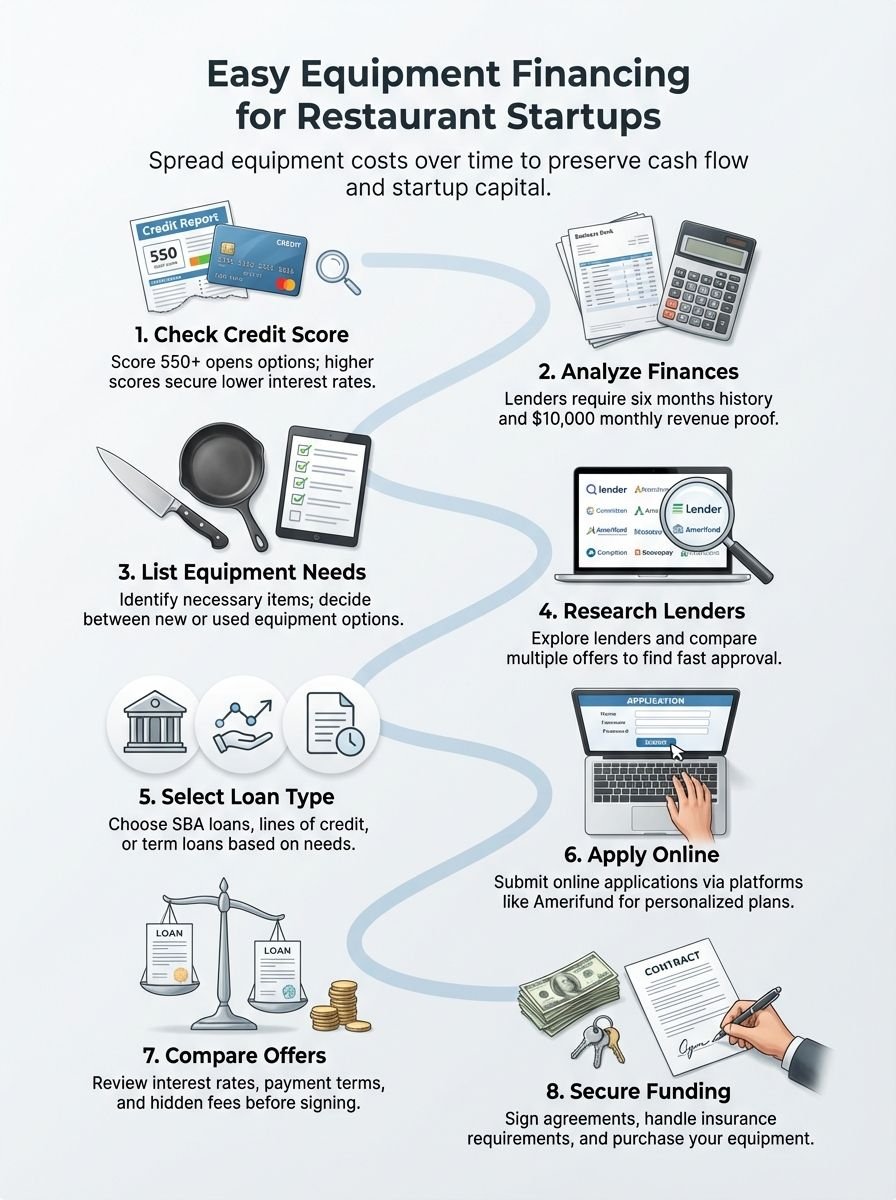
Getting equipment financing for your restaurant doesn’t have to be hard. Follow these simple steps to get the funding you need quickly.
- Check Your Credit Score
A credit score of 550 or higher can open many financing options. Some lenders might work with lower scores, but better credit often means lower interest rates. - Analyze Your Business Finances
Show at least six months of business history and $10,000 in monthly revenue. Lenders will assess your income to understand if you can handle the loan. - Know What Equipment You Need
Make a list of all necessary items, like commercial kitchen equipment or coffee machines. Decide if you want new or used equipment. - Research Financing Plans
Explore lenders like Lendio, who partner with over 75 financial institutions. Their process compares multiple offers fast and might approve funding within 24 hours. - Choose a Loan Type
Consider SBA loans for longer terms (10–30 years) or lines of credit for flexibility (6–24 months). Term loans are another option with up to $2 million in funds available. - Complete the Application Process
Fill out an application online through platforms like Amerifund or Lendio. These companies guide you through while creating personalized plans. - Evaluate Offers Carefully
Compare interest rates, payment terms, and hidden fees before deciding on a deal that fits your needs and budget best. - Finalize and Secure Funds
Once approved, sign agreements, meet requirements like insurance fees, and purchase the equipment you need to grow your business!
https://www.youtube.com/watch?v=YU1TF8hYTYY
Conclusion
Finding the right financing can make opening your dream restaurant much easier. With flexible options like leasing, you can get the equipment you need while keeping cash in hand for day-to-day costs.
Even with bad credit or a new business, there are solutions that fit your budget. Take action today and explore what works best for your goals. Your restaurant journey starts with smart choices!
For an in-depth comparison between equipment finance agreements and traditional loans, click here to learn more.
FAQs
1. What is restaurant equipment financing and leasing?
Restaurant equipment financing and leasing helps startups get the tools they need, like kitchen appliances or coffee machines, without paying the full price upfront. You can spread payments over time to manage costs better.
2. How does equipment leasing work for restaurants?
Leasing lets you use new or refurbished pieces of equipment by paying monthly instead of buying outright. At the end of your lease, you may have options like purchasing the item at market value or returning it to the financier.
3. What types of business loans are available for restaurant startups?
Startup companies in foodservice can choose from various funding options such as bank loans, lines of credit, or specific restaurant equipment financing solutions tailored to their needs. Each option has different terms and interest rates based on factors like collateral and credit history.
4. Can I finance my restaurant’s hard assets with bad credit?
Yes, some creditors offer flexible terms even if your credit score isn’t perfect; however, higher interest rates might apply. Providing collateral could help secure better rates for financing your equipment.
5. Are there tax benefits when using financing for restaurant equipment purchases?
Yes! Financing often allows write-offs through tax deductions since leased items are considered operational expenses rather than owned assets under flat tax rules.
6. Why should a startup consider leasing instead of buying kitchen and restaurant gear?
Leasing keeps more cash in hand while helping growing businesses access an array of essential tools quickly—whether it’s walk-in freezers or food truck upgrades—all without covering the total cost upfront!
