
Losing cash flow can feel like you’re stuck in quicksand, sinking with no way out. Money troubles are common, but they don’t have to last forever. This guide on how to rebuild cash flow after loss will give you clear strategies to bounce back.
Keep reading—you’ve got this!
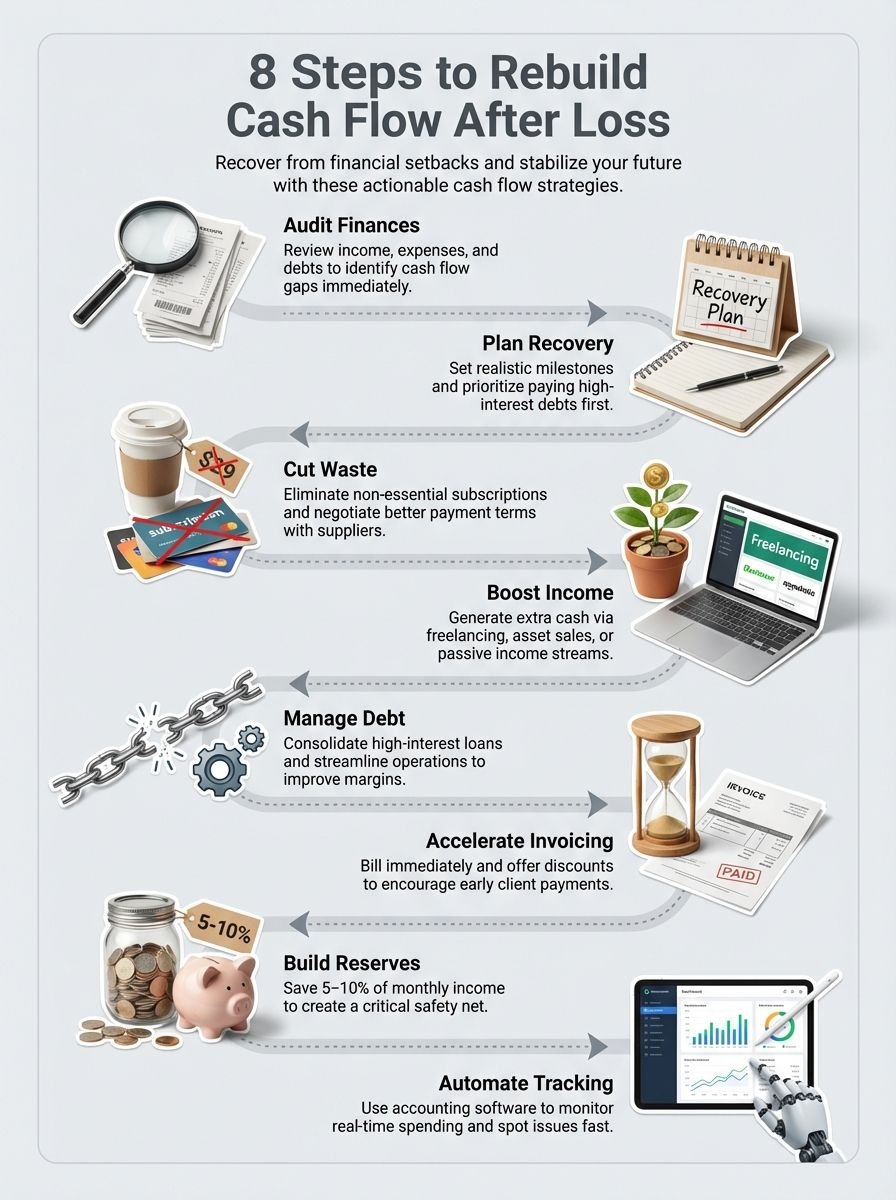
Key Takeaways
- Review income and expenses. Cut unnecessary costs like unused subscriptions or excess inventory to free up cash quickly.
- Set clear financial goals. Focus on paying urgent bills and high-interest debts first to protect key assets like your home or car.
- Explore extra income options, such as freelance work, part-time jobs, or renting out assets to improve cash flow fast.
- Use budgeting tools or apps to track spending and manage money better. Automate processes for efficiency and reduce errors.
- Build an emergency fund with 5–10% of your monthly income to prepare for unexpected expenses like medical bills or repairs.
Assess Your Financial Situation
Take a close look at your money. Spot where it’s coming in and slipping away.
https://www.youtube.com/watch?v=DShnAeHd4BU
Review your current income, expenses, and outstanding debts.
Managing cash flow starts with knowing where your money goes. Look closely at your income, expenses, and debts to find areas to improve.
- List all sources of income, including salary, side jobs, or investment returns. Know exactly how much money comes in each month.
- Write down every expense you have. Separate fixed ones like rent and variable ones like groceries or utilities.
- Check for subscriptions or services you rarely use but still pay for regularly. Cancel them to save cash quickly.
- Review credit card bills to see spending patterns or hidden charges that might add up over time.
- Record all outstanding debts such as loans, mortgages, or overdue bills on a single list for clarity.
- Prioritize high-interest debt first because it costs the most over time if left unpaid.
- Verify payment dates for liabilities like accounts payable or bills due soon to avoid late fees.
- Compare your total expenses against your monthly income on a basic cash flow statement by hand or using software tools.
- Track delayed receivables if unpaid invoices are causing problems with paying suppliers or employees.
- Use this data to spot gaps where cash flow is restricted so you can act quickly.
Having clear numbers helps you see the bigger picture and plan better steps ahead!
Identify gaps where cash flow is constrained.
Look at the timing of your receivables and payables. If payments from customers come in late, but bills are due sooner, cash flow issues will arise. This mismatch can choke working capital, leaving little for business operations or unexpected expenses.
Excess inventory is another red flag. Stock sitting on shelves ties up money that could be used elsewhere. Review your inventory management often to free up this trapped cash. High fixed costs or unnecessary spending also squeeze finances tighter than a vice grip—cutting these can provide breathing room fast.
Create a Recovery Plan
Set clear goals to track your money progress. Focus on what matters most, like urgent bills or high-interest debts.
Set specific, measurable, and realistic financial goals.
Break big goals into smaller steps. Aim to save 5–10% of your monthly profits for reserves. Use clear numbers, like saving $500 in three months or reducing debt by $1,000 in six months.
Track progress with simple tools like budgeting apps or spreadsheets.
Focus on critical needs first. If bills are overdue, plan payments over weeks instead of all at once. Set milestones you can measure, such as increasing cash flow by 20% this quarter or spending five fewer hours per week managing finances manually.
A goal without a plan is just a wish. Make sure every financial target comes with actionable steps and deadlines!
Prioritize urgent financial needs.
Focus on paying secured debts first. This protects important assets, like your home or car. Missing these payments could lead to loss of property, which adds more stress.
Create a list of immediate needs. Cover essentials like rent, utilities, and insurance bills before less critical costs. Negotiate payment plans with creditors that fit your cash flow.
Small steps now prevent bigger headaches later!
Reduce Unnecessary Expenses
Cutting down on wasteful spending can save you a good chunk of cash. Small changes, like trimming subscriptions or renegotiating bills, add up fast.
Identify and eliminate non-essential spending.
Review every expense on your balance sheet. Focus only on costs tied directly to revenue or business growth. Reduce spending on things like subscriptions, unused software, or rarely used equipment.
Small cuts across categories can free up cash quickly.
Regularly audit inventory and sell underperforming stock at a discount if needed. Track where money is going using budgeting tools or apps. Flexible budgets help you stay lean while aligning with core goals.
Negotiate with suppliers or creditors for better terms.
Talk to your suppliers about extending payment terms. Many are willing to offer 30, 60, or even 90-day windows instead of requiring upfront payments. This keeps more cash in your pocket for daily operations.
Ask creditors if they will lower interest rates or restructure debt. Consolidating high-interest loans into one with a lower rate can cut monthly costs fast. Some suppliers may also give discounts for early payments, so check if that fits your budget strategy.
Explore Additional Income Streams
Extra income can be your golden ticket to better cash flow. Use what you know or learn new tricks to bring in more money fast.
Consider freelance work, part-time jobs, or passive income opportunities.
Adding extra income can quickly help improve cash flow. Flexible options exist to fit different skills and schedules.
- Take up freelancing in areas like writing, graphic design, or coding. Platforms like Upwork or Fiverr connect freelancers with clients globally.
- Pick a part-time job for steady paychecks. Retail, food services, or delivery apps like DoorDash offer quick opportunities.
- Use passive income ideas to grow your wealth. Invest in real estate rentals or private lending for returns over time.
- Create subscription-based products or services. For example, offer online courses or membership plans with recurring billing.
- Sell skills through workshops or certifications. Teaching others can bring direct earnings while boosting reputation.
- Rent out unused assets such as equipment, vehicles, or even parking spaces to generate added cash flow.
- Try gig economy roles like ridesharing with Uber or task-based services on TaskRabbit for immediate payouts.
- Explore digital product sales like ebooks, templates, or courses that continue earning after the initial setup work is done.
- Experiment with securities investments such as dividend-paying stocks for regular passive income streams without daily effort.
- Look at side businesses like dropshipping where small upfront costs allow scaled growth over time without large risks involved.
Leverage skills for higher-paying roles or career advancement.
Sharpening your skills can boost income and open career doors. Take advantage of workshops or courses to improve expertise in high-demand industries. Jobs like medical billing, accounting, or marketing often offer better pay with advanced knowledge.
Networking helps too. Join professional groups on platforms like LinkedIn to find mentors or opportunities. Many business owners need specialists who solve problems fast. Highlight achievements and negotiate salaries during interviews for higher-paying roles.
How to Rebuild Your Business After Debt
Focus on paying off high-interest debts first. Consolidate these into one manageable loan if possible, or refinance for lower rates. Negotiate payment terms with creditors to ease monthly cash flow.
Protect key business assets by prioritizing secured debts like equipment loans or mortgages.
Streamline operations to save costs and build stability. Use lean manufacturing principles to reduce waste without cutting quality. Strengthen financial controls by separating duties in your team, scheduling audits, and tracking restricted funds closely.
Set clear goals for revenue growth through better customer acquisition strategies or new pricing models that boost gross profit margins.
Strengthen Your Invoicing and Payment Process
Keep cash flowing by staying on top of your billing process. Get paid faster by sending clear invoices and following up quickly.
Send invoices promptly and follow up on overdue payments.
Send invoices right after completing a job or delivering a product. Quick invoicing speeds up accounts receivable and strengthens cash flow management. Late payments can disrupt payroll, bill payments, or your business’s credit score.
Use electronic payment options to make paying easier for clients.
Track overdue balances with accounting tools like QuickBooks or FreshBooks. These systems help you spot unpaid bills fast and let you follow up without delay. Schedule invoice reviews often to stay on top of outstanding debts.
Consider offering discounts for early payments to encourage quicker results from customers who owe money.
Offer incentives for early payments from clients or customers.
Offer small discounts for paying invoices early. For example, give a 2% discount if payment is made within 10 days. This boosts cash flow and motivates clients to pay faster.
Use digital payment options like credit card portals or apps. Faster transactions mean less waiting on funds. Track results using cash flow metrics, then tweak the discount amounts based on customer response.
Build an Emergency Fund
Life throws curveballs, often when you least expect them. Stashing away a small chunk of cash now can save you big headaches later.
Allocate a portion of your income to create a financial safety net.
Set aside 5–10% of your monthly income to start building an emergency fund. Begin with a goal of $500–$1,000 for quick coverage of unexpected costs, like car repairs or medical bills.
As your finances improve, aim for three to six months’ worth of essential expenses.
Open a separate bank account just for this purpose. Use windfalls like tax refunds or bonuses to grow the fund faster. This keeps money out of reach and reduces spending temptations.
An emergency fund acts as a life raft during cash flow issues or sudden crises. Keep adjusting contributions if your income changes over time.
Use Technology to Manage Cash Flow
Smart tools can track your expenses and show where the money flows. They help you spot problems fast, so you can act quickly.
Implement expense tracking and budgeting tools for better oversight.
Track every dollar you spend using reliable accounting software. Tools like these make creating realistic budgets easier. For example, apps can categorize expenses, show trends in spending habits, and highlight where costs are too high.
Set alerts for overdue invoices and payment deadlines to stay on top of cash flow. Automating your budgeting process saves time, reduces errors, and improves oversight. Cloud-based systems also provide access to up-to-date financial data anytime, helping you make smarter business decisions quickly.
Conclusion
Rebuilding cash flow takes time, effort, and smart choices. Start small by cutting wasteful costs and boosting income streams. Use tools to monitor spending and plan better. Build a safety net for future bumps in the road.
Stay focused on your goals, and progress will follow step by step!
For more detailed strategies on revitalizing your business financials, check out our comprehensive guide How to Rebuild Your Business After Debt.
FAQs
1. What are some practical steps to rebuild cash flow after a financial loss?
Focus on your current financial position by reviewing cash flow statements and profit and loss statements. Identify unnecessary business expenses, cut spending where possible, and create a repayment plan for any outstanding debt.
2. How can businesses improve their financial stability during tough times?
Strengthen your core business by analyzing key performance indicators, diversifying revenue streams, and improving market liquidity through better financial management practices like offering discounts to customers or outsourcing non-essential tasks.
3. What role does a financial adviser play in rebuilding cash flow?
A financial adviser can help you assess areas of your business that need improvement, develop strategies for long-term stability, and guide you in managing liabilities such as loans or credit history issues.
4. How can businesses prevent future challenges with cash flow problems?
Build strong cash savings for unexpected crises, maintain updated financial systems, pay bills on time to avoid penalties, and monitor external factors like market volatility or supply chain disruptions that could impact profitability.
5. Can better habits improve personal well-being while recovering from a loss?
Yes! Managing stress is crucial when dealing with finances. Focus on mental health by creating clear plans for coping with challenges while maintaining balance between work life and retirement goals.
6. Are there ways to generate revenue quickly when facing low liquidity?
Yes! Attract new customers through targeted marketing efforts using market segmentation techniques or offer limited-time discounts to boost sales fast without overextending resources like equity financing options or contracts for difference deals.
