
Buying equipment can feel like a big hurdle for many business owners. Not every company has the cash to cover these hefty costs upfront. That’s where learning about the types of equipment financing can be a game-changer.
Stick around, and we’ll break it all down to help you work smarter, not harder!
Key Takeaways
- Equipment loans help businesses own tools with fixed interest rates and terms up to 10 years. Businesses need at least a 600 credit score and one year in operation for approval.
- Equipment leases allow using gear without buying upfront. Operating leases suit short-term needs, while capital leases work for long-term ownership goals.
- Section 179 allows deducting up to $1.25 million in equipment costs by 2025, helping reduce taxes and save money.
- TRAC leases are great for semi-truck financing with lower payments based on future truck value. Sale-leaseback deals free cash while still using the trucks.
- Choosing the right lender depends on credit history, business size, and funding needs—Tier A lenders have stricter terms but lower risk options.
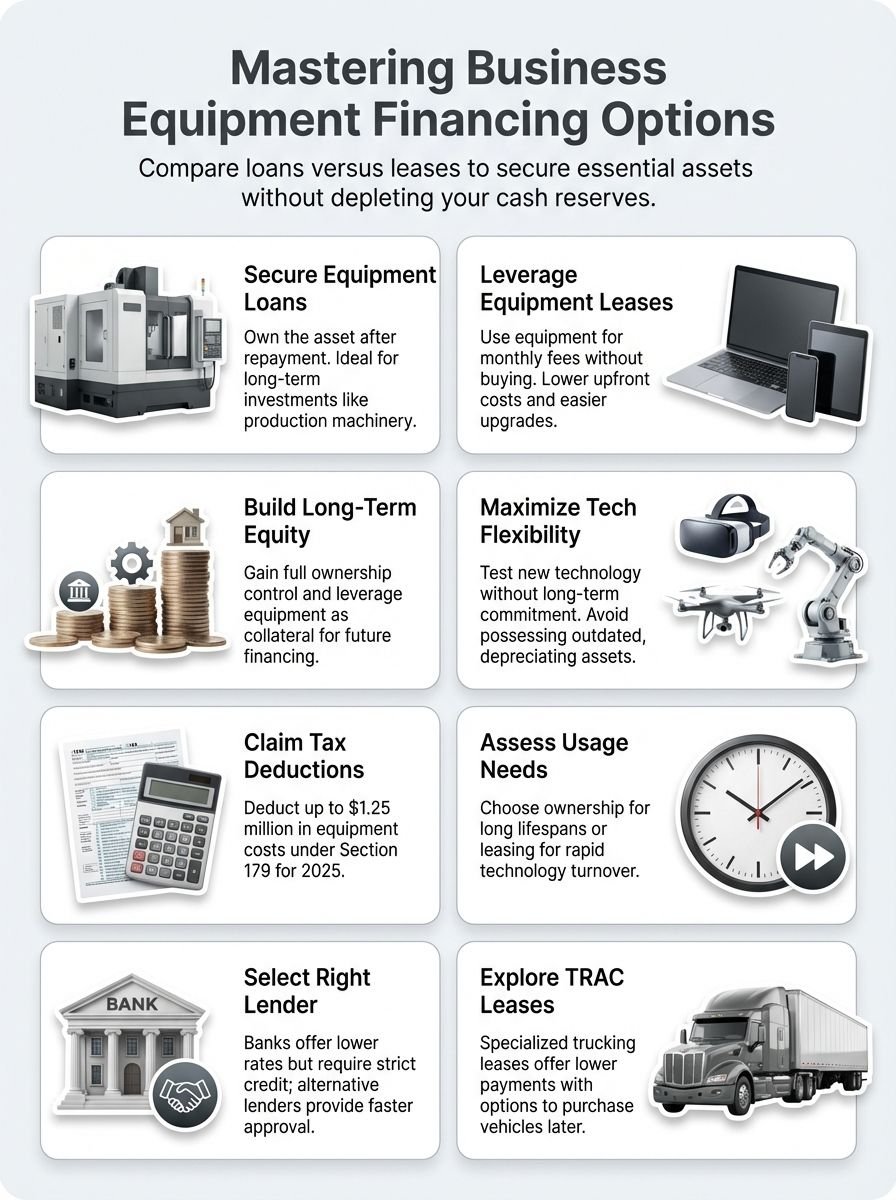
Key Types of Equipment Financing
Choosing the right financing can make or break your business. Some options focus on owning equipment, while others let you use it for a set time.
Equipment Loans: Ownership-focused financing with collateral-based terms.
An equipment loan helps businesses buy equipment outright. The company owns the asset after repaying the loan. These loans often come with fixed interest rates and clear repayment schedules, making planning easier.
The equipment serves as collateral, lowering risk for lenders. Businesses can finance up to 100% of the cost, with terms ranging from 36 months to 10 years. With a credit score of at least 600 and one year in business, approval is quick—sometimes within 24 hours! Banks may prefer strong credit histories, while non-bank lenders are more flexible.
This option works well for costly assets like production machines or medical tools worth millions.
With ownership comes control over your investment.
Equipment Leases: Usage-focused options like operating leases and capital leases.
Equipment leases let businesses use equipment without buying it upfront. The leasing company owns the equipment during the lease term, while the business pays monthly fees. Operating leases work well for short-term needs or items that lose value quickly, like computers or medical tools.
They also keep costs off balance sheets and often offer lower payments.
Capital leases are better if you want to own the equipment at the end of your lease. These work for long-term investments like heavy machinery or vehicles with lasting value. Some lenders even cover installation, software, training, and delivery in these deals.
Options like TRAC leases allow lower payments by using estimated future values for vehicles or large assets. Businesses needing frequent tech upgrades often stick with operating agreements to avoid outdated goods cluttering their office spaces!
Advantages of Equipment Loans
Equipment loans let you own valuable tools without paying the full price upfront. They can help businesses grow while keeping cash flow steady.
Asset Ownership and Long-term Investment Benefits.
Owning equipment builds long-term value for your business. Once the loan is paid off, the equipment becomes an asset. This can improve your balance sheet and boost financial standing.
Businesses can claim depreciation and deduct up to $1.25 million under Section 179 by 2025.
Ownership adds flexibility too. You avoid lease restrictions on how you use or modify gear. Equipment with lasting value also works as collateral for future loans or boosts cash flow when resold later.
These benefits make ownership-focused financing a smart move for assets used over time or holding their worth.
Benefits of Equipment Leasing
Leasing equipment keeps costs low upfront, letting you focus on growth—keep reading to uncover more perks!
Flexible Upgrades and Lower Initial Costs.
Upgrading equipment doesn’t have to break the bank. Leasing allows businesses to switch to newer technology with ease. Many lease agreements include options for upgrades or replacements during the term, keeping companies ahead of the curve.
This is especially helpful in fields like medical equipment or production tools where innovation happens fast.
Leases often require no down payment, making them perfect for businesses short on capital. Monthly payments are usually lower than loan installments too, lowering financial pressure.
Some arrangements even cover extra costs such as software, maintenance, or delivery fees. As one business owner said:.
“Leasing let us test new equipment without committing long-term.”
Evaluating Business Needs for Financing Options
Assess how long you’ll need the equipment. Short-term use may favor leasing, while ownership makes sense for items with a longer lifespan. Consider future upgrades too. Equipment that needs frequent updates, like electronics, often works better with flexible lease contracts.
Review your budget and credit history. A business loan may require at least a year in operation and a 600+ credit score. Lines of credit or business credit cards can help smaller purchases but come with higher rates, sometimes reaching 36%.
Also, note if seasonal income affects your ability to repay on time; choose payment terms that fit this pattern.
Tax Implications and Financial Considerations
Section 179 allows businesses to deduct up to $1.25 million in equipment costs for the tax year 2025. This can lower taxable income and free up cash for other needs. Depreciation also adds value, as deductions may exceed loan principal amounts over time.
Operating leases often keep the debt off your balance sheet. This might make financial ratios look better on paper. Sale-leaseback options can provide quick capital while carrying unique tax rules.
Always consult a tax expert to handle complex conditions like regulatory compliance or warranty requirements on financed equipment.
Choosing the Right Lender for Your Business
Pick a lender that matches your business needs. Traditional lenders, like banks, often require good credit and collateral for equipment loans. Wingspire Capital offers funding without mandatory collateral for mid-sized businesses with $100 million in annual revenue and at least $10 million in EBITDA.
Their flexible terms benefit companies planning large purchases or complex CapEx projects.
Check the lender’s credit rating tier before signing any agreement. Tier A lenders have higher ratings from agencies like Fitch and S&P, meaning lower risks but stricter conditions.
Companies with weaker credit may work better with Tier B or C options offering more lenient terms. Always ask for clear details on loan rates, repayment periods, and required documents to avoid surprises later.
Frequently Asked Questions About Equipment Financing
Some wonder if equipment financing works for both new and used items. Yes, it does! Businesses can finance either type of equipment, often saving money with used options. Loans are often approved quickly, sometimes in just two business days.
Questions about tax benefits come up too. Section 179 allows deductions for financed equipment but has exceptions. Leasing may also cover soft costs like installation or training, which can keep upfront expenses lower than buying outright.
Always check the loan terms to find the best fit for your needs!
Special Focus: Easy Semi-Truck Financing Options
TRAC leases fit commercial trucking like a glove. They offer lower monthly payments based on the truck’s expected value at lease end. Truckers can buy the semi-truck when the lease ends if they want to keep it.
Sale-leaseback deals let businesses sell trucks but still use them by leasing them back. This frees up cash fast for other needs. Used semi-truck financing is also common, helping small fleets expand without breaking the bank.
Many lenders cover everything, such as installation and delivery costs, often financing 100%. Approval can happen in just 1–2 days, speeding things up for busy owners.
Conclusion
Finding the right equipment financing can transform your business. Whether you opt for a loan or lease, both options offer clear benefits. Focus on what fits your needs today and supports growth tomorrow.
The right lender will make all the difference too, so choose wisely. Your next big move could start with smart financing!
For more information on how to streamline your fleet operations with affordable solutions, visit our easy semi-truck financing options.
FAQs
1. What is equipment financing, and how does it work?
Equipment financing helps businesses fund the purchase of tools, machinery, or other business equipment they need. A lender provides funding that is repaid over time with interest, often using the equipment as collateral for the loan.
2. What are the different types of equipment financing options available?
Businesses can choose from loans or leases to finance their equipment needs. Options include secured loans, unsecured debt, an equipment line of credit, SBA 504 Loans for small businesses, and Section 179 depreciation benefits when purchasing certain items like furniture or production tools.
3. Should I lease or buy my business equipment?
Leasing allows lower upfront costs with regular lease payments but requires returning the item at the end of the lease term unless you purchase it later. Buying through a loan gives ownership but may require higher initial investment depending on interest rates and loan terms.
4. Can startups qualify for commercial equipment financing?
Yes! Startups can access specific forms of funding such as microcredit programs or Small Business Administration-backed loans if they meet underwriting requirements like credit risk evaluation and providing sufficient collateral.
5. How do interest rates differ between secured and unsecured loans?
Secured loans usually have lower interest rates because they are backed by collateral like real estate or large machines used in your operations; unsecured debt typically has higher rates due to greater risks to creditors.
6. Are there tax benefits tied to business equipment purchases?
Yes! Under Section 179 depreciation deduction rules in corporate finance law, companies may deduct part (or all) costs related directly toward qualifying assets purchased during active fiscal periods reducing overall liabilities significantly
