
Buying a dump truck for your business can feel overwhelming, especially if you’re unsure about credit score requirements. Many lenders have specific credit score rules for financing dump trucks, and they vary widely.
This guide will explain what credit score is needed to buy a dump truck and how you can improve your chances of approval. Keep reading to learn simple tips that can help you get the best financing option!
Key Takeaways
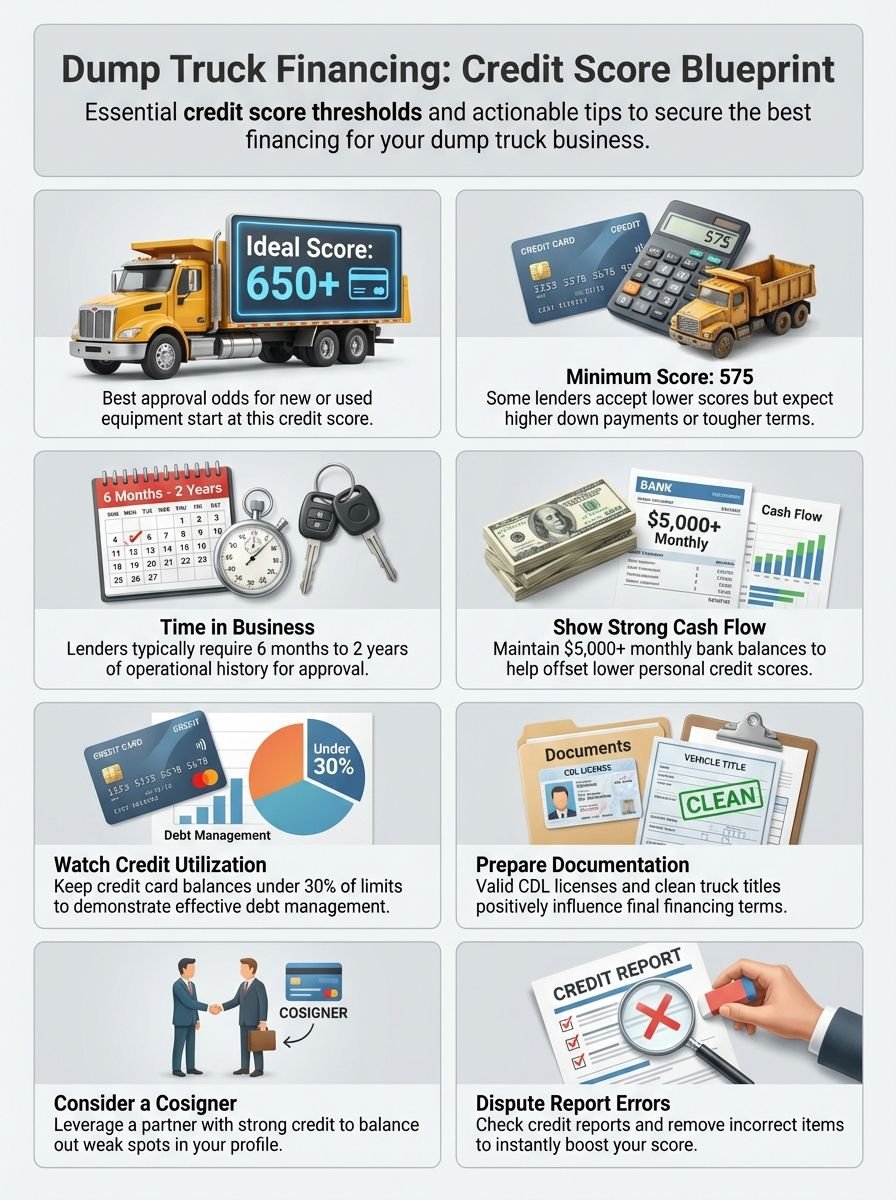
- A credit score of 650 or higher improves chances for dump truck financing, but some lenders accept scores as low as 575.
- Companies like Balboa Capital require a minimum score of 620 but may need collateral. TruckLenders USA requests a score of 650 plus $5,000+ monthly bank balances and two years in business.
- Lenders also look at time in business (6 months to 2 years) and steady revenue when approving loans, which can offset lower credit scores.
- Improve your credit by paying bills on time, lowering card balances under 30%, fixing errors on reports, and avoiding too many new accounts.
- Using a cosigner with good credit or choosing pre-qualification checks can help you secure better financing terms without damaging your score further.
Understanding the Credit Score Requirements for Dump Truck Financing
A credit score of 650 or higher gives you good chances for dump truck financing. Many lenders, like Topmark Financing and Clear Path Financing, set this bar to approve loans for new or used equipment.
Some companies need even less. For example, National Funding works with scores as low as 575.
If your score is at least 640, Commercial Fleet Financing might approve you.
accepts borrowers with a minimum score of 620 but often requires hard collateral. TruckLenders USA needs a strong score of 650 plus two years in business and $5,000+ monthly bank balances.
Lower scores may still get approval but expect higher down payments or tougher terms from loan providers.
Factors That Influence Credit Score Thresholds for Approval
Lenders often look for strong payment history when deciding on truck financing. Missed payments can lower your approval chances. Some lenders, like Clear Path Financing, focus more on the truck’s value than just your credit score.
Time in business also matters. Many lenders require at least 6 months to 2 years of operation before approving a dump truck loan. Higher annual revenue or regular monthly bank balances, such as $5,000 with TruckLenders USA, may offset a lower personal credit score too.
How to Improve Your Credit Score for Better Financing Options
A good credit score opens doors to better dump truck financing options. If yours needs work, here’s how to boost it step by step.
- Pay bills on time. Late payments hurt scores fast. Set reminders or auto-pay for consistent results.
- Reduce credit card balances. Aim to use less than 30% of your limit. This shows creditors you manage debt well.
- Check your credit report for errors. Mistakes can drag down scores unfairly. Dispute any incorrect items with the credit bureau.
- Avoid opening too many new accounts at once. Each application adds a hard inquiry, which can lower scores temporarily.
- Keep older accounts open, even if unused. Long-standing credit history helps show reliability over time.
- Build business revenue and keep strong cash flow records. Lenders like steady income and healthy bank statements during financing reviews.
- Use a cosigner with good credit, if possible. Their strong score can balance out weak spots on your profile.
- Pay off small debts quickly where possible, like personal loans or small card balances, to free up monthly cash flow for loan payments.
- Work with companies offering pre-qualification checks without hurting your score through soft pulls before applying officially.
- Focus on gathering proper documents, like CDL licenses and clean truck titles, as they also influence financing terms positively alongside your score.
Take these steps seriously to get closer to better dump truck financing opportunities!https://www.youtube.com/watch?v=KeDHGr5MDxE
Conclusion
Getting dump truck financing doesn’t have to be tricky. Your credit score plays a huge role, but it’s not the only factor lenders check. Even with bad credit, there are options out there for you.
Focus on improving your score and showing stable income. With the right lender, you’ll be driving that dump truck in no time!
For more information on financing options, check out our guide on the best commercial truck financing without a credit check.
FAQs
1. What credit score is needed to finance a dump truck?
A credit score of 600 or higher is often preferred by lenders for dump truck financing. However, some companies work with bad credit or startups if other factors, like strong revenue or collateral, are in place.
2. Can I get dump truck financing with bad credit?
Yes, you can still qualify for financing even with bad credit. Some lenders specialize in working with borrowers who have poor credit histories but may require a larger down payment or higher interest rates.
3. What documents do I need to apply for commercial vehicle financing?
You typically need financial statements, tax returns, proof of business income (if applicable), and details about the dump truck you’re purchasing. A solid business plan can also help your application stand out.
4. How does equipment loan repayment work for a used dump truck?
Repayment terms vary based on the lender and loan amount but usually involve fixed monthly payments over several years. Many lenders offer flexible payment options tailored to trucking businesses.
5. Do startup companies qualify for dump truck loans?
Yes, startups can qualify if they show potential through their business plan and financial projections. Lenders may also look at soft collateral or six months in business as indicators of reliability.
6. Are there specific requirements for owner-operators looking to lease new trucks?
Owner-operators generally need a valid commercial driver’s license (CDL) and proof of steady income from trucking jobs to secure leases on new vehicles like dump trucks or trailers in the United States trucking industry.
