
Struggling to figure out how to replace old machinery without money? You’re not alone. Machinery can be one of the most expensive investments for businesses, especially farms. This guide will show you smart financing options and strategies to make upgrades possible while protecting your cash flow.
Keep reading to discover affordable solutions!
Key Takeaways
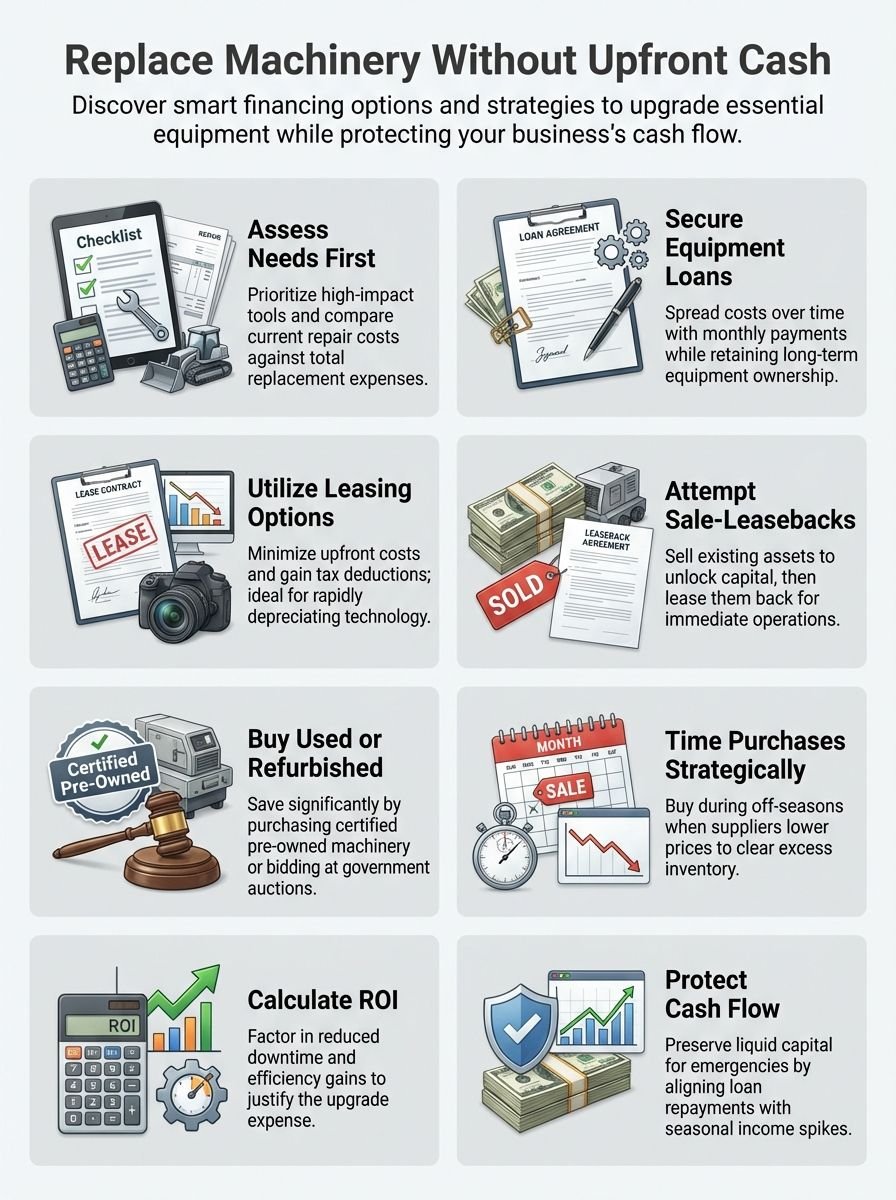
- Financing options like equipment loans, leasing, and sale-leaseback agreements help businesses upgrade machinery without upfront cash.
- Used or refurbished equipment is a cost-effective alternative to new purchases. Auctions and government surplus sales offer affordable deals.
- Timing upgrades during low-demand periods reduces costs as suppliers may offer discounts, free shipping, or extended warranties.
- Financing spreads costs over time, protecting cash flow for daily operations and emergencies while offering potential tax benefits.
- Loans or leases align payments with income patterns (e.g., seasonal earnings), making repayments more manageable for businesses like farms.
Assessing Equipment Needs and Prioritization
Upgrading expensive equipment is not just about buying shiny new machines. Smart businesses study their needs and plan carefully to avoid wasting money.
- Evaluate outdated or broken machinery causing delays or downtime. Track patterns in breakdowns for precise analysis.
- Identify which equipment affects productivity most. Prioritize these over smaller, less essential tools.
- Calculate repair costs versus replacement expenses over time. Resulting data informs whether fixing old farm machinery saves more than replacing it outright.
- Check the lifespan of each piece of equipment to avoid costly repairs by trading at the right time before value drops too low.
- Use maintenance records to judge whether scheduled upkeep can extend machine life for another year without major expenses or disruptions.
- Look into market value for used heavy equipment options as cost-effective alternatives to brand-new purchases.
- Perform ROI analysis factoring downtime, operating expenses, and potential efficiency gains from modern machinery upgrades.
Exploring Equipment Financing Options
Upgrading equipment can feel overwhelming when funds are tight, but smart financing can bridge the gap. From loans to creative agreements, there’s a path that fits your needs and budget.
Equipment Loans
Equipment loans help businesses buy new machinery quickly. These loans work well if the equipment keeps its value over time. Lenders may require a down payment, so be prepared to spend some cash upfront.
Interest and fees add to the total cost, but monthly payments spread it out, making purchases more manageable.
Some lenders offer competitive interest rates based on your credit score. A higher credit score lowers costs. Businesses can use this option for farm equipment or manufacturing tools without hurting their cash flow.
Avoid deals with hidden charges like delivery fees or maintenance costs that could strain your budget later.
Spreading costs over time can keep funds available for other business operations.
Equipment Leasing
Leasing offers a smart way to replace machinery without draining cash. It’s perfect for equipment that loses value quickly or needs frequent upgrades, like tech tools or farm gear.
Many leasing options require little money down and provide fixed monthly payments, helping manage cash flow better. Businesses can access the latest technology while keeping financial resources intact.
Some leases even work for those with shaky credit histories. Operating leases are great if you don’t plan to own the asset later, while capital leases let you buy it at the lease’s end.
Leasing is tax-friendly too—the interest paid often counts as a deduction. For small businesses needing flexibility, it’s an affordable choice that saves upfront costs.
Sale-Leaseback Agreements
Sale-leaseback agreements let businesses replace machinery without using cash upfront. You sell your equipment to a buyer, then lease it back for use. This option frees up money tied in assets while still keeping the needed equipment for operations.
These deals often come with extras like free shipping or maintenance packages, cutting extra costs. Businesses also gain flexibility and maintain financial stability by avoiding large purchases that drain cash reserves.
It’s a practical choice if you can’t afford new equipment outright but need upgrades now.
Food Trailer Sale Financing
Food trailer sale financing allows businesses to replace old trailers without paying a lump sum upfront. This option breaks costs into manageable payments, which works well for companies with irregular cash flow.
Flexible plans can match seasonal income patterns, reducing financial pressure during slower months.
Traditional lenders and specialized finance programs often offer competitive rates for food trailers. Some contracts include tax benefits or let you buy the trailer at fair market value after the lease ends.
Whether you’re upgrading equipment or starting fresh, this approach helps maintain cash flow while acquiring key tools for your business.
Leveraging Cost-Effective Alternatives
Upgrading doesn’t always mean breaking the bank. Smart choices can offer big savings while keeping your operations running smoothly.
Buying Used or Refurbished Equipment
Used equipment often costs much less than new. Pre-owned machines, like trucks or computers, can perform nearly as well with the right checks. Look for inspection reports and service records before buying.
Many sellers offer warranties on refurbished items to ensure reliability.
Auctions are great places to find affordable options. Government agencies sell slightly used or surplus gear through sites like GovDeals.com or USA.gov. Focus on durable models with proven performance to avoid high replacement costs later.
Timing Upgrades Strategically
Plan improvements during periods of reduced sales when equipment prices tend to decrease. Suppliers may reduce costs to clear inventory, providing businesses an opportunity to save money.
Monitor market liquidity and negotiate for benefits like free shipping or extended warranties. These advantages can reduce total expenses.
Anticipating future needs helps prevent rushed purchases. Assess downtime, overtime, and production delays to determine the optimal time for replacements. Trading is another effective approach; it reduces expenses while disposing of outdated machinery.
Over 65% of Fortune 500 companies utilize trade exchanges, demonstrating its effectiveness in managing significant purchases without incurring additional debt.
Benefits of Financing Over Paying Cash
Financing protects your cash flow. Paying cash for expensive equipment can drain your funds quickly. Instead, loans or leases allow you to spread costs over time while keeping money in the bank for daily operations or emergencies.
This approach helps businesses maintain stability without cutting into essential funds.
It also aligns payments with income patterns. For example, farms that earn more during harvest seasons can schedule repayments when cash is higher. Financing often covers extras like training and software upgrades too, boosting automation and operational efficiency without upfront strain.
Plus, financed costs may be tax-deductible, lowering total expenses further compared to paying outright.
Conclusion: Modernizing Machinery Without Financial Strain
Upgrading machinery doesn’t have to drain your wallet. Smart financing options, like leases or loans, can keep cash flow steady while you get what you need. Timing upgrades wisely or buying used equipment saves money too.
With careful planning, businesses can grow without breaking the bank. Keep moving forward without the financial bumps!
Discover how to efficiently upgrade your mobile culinary business with our exclusive food trailer sale financing options.
FAQs
1. How can I replace old machinery without money upfront?
You can explore financing offers, such as a line of credit or equipment loans, to acquire new or used machinery without cutting into your funds immediately.
2. Is it better to buy used equipment instead of new for upgrades?
Buying used equipment is often more affordable and can reduce financial strain. Just make sure the machinery has a warranty and meets performance standards.
3. What are some strategies to maintain cash flow while upgrading equipment?
Businesses can prefer to finance machinery, spread payments over time, or postpone major purchases until cash income is higher. This helps avoid disrupting cash flow.
4. Are there tax benefits when replacing machinery?
Yes, many equipment purchases are tax-deductible under certain conditions. Consult with a corporate finance expert to understand how depreciation applies in your case.
5. Can financing help me upgrade equipment each year without hurting my budget?
Financing options allow businesses to affordably replace one or two pieces annually while maintaining financial stability and avoiding large upfront costs.
6. What should I consider before applying for machinery financing?
Review factors like pricing, funding terms, application process simplicity, and creditor reputation. Knowledge about forecasting future needs also helps you choose the right option without compromising long-term goals.
