
Buying heavy equipment can feel like a mountain to climb for contractors. These machines come with high price tags, but heavy equipment financing offers a way to spread the cost over time.
In this blog, you’ll learn how contractors afford heavy equipment without draining their cash or stopping work. Keep reading to find smart solutions that fit your business needs!
Key Takeaways
- Contractors use equipment loans, leasing, or rent-to-own programs to afford heavy machinery. Loans offer ownership after repayment, while leases and rent-to-own provide flexibility.
- Good credit scores (above 700) improve chances for better financing terms. Lenders also check cash flow history and require strong paperwork like tax returns and income statements.
- New equipment has lower interest rates but costs more upfront. Used machinery saves money initially but may have higher repair expenses over time.
- To secure the best terms, compare lenders, keep financial records updated, and match payments with busy revenue cycles for smoother cash flow management.
- Avoid common mistakes like ignoring total costs, rushing applications without full documents, or choosing short-term solutions when long-term ones suit better needs.
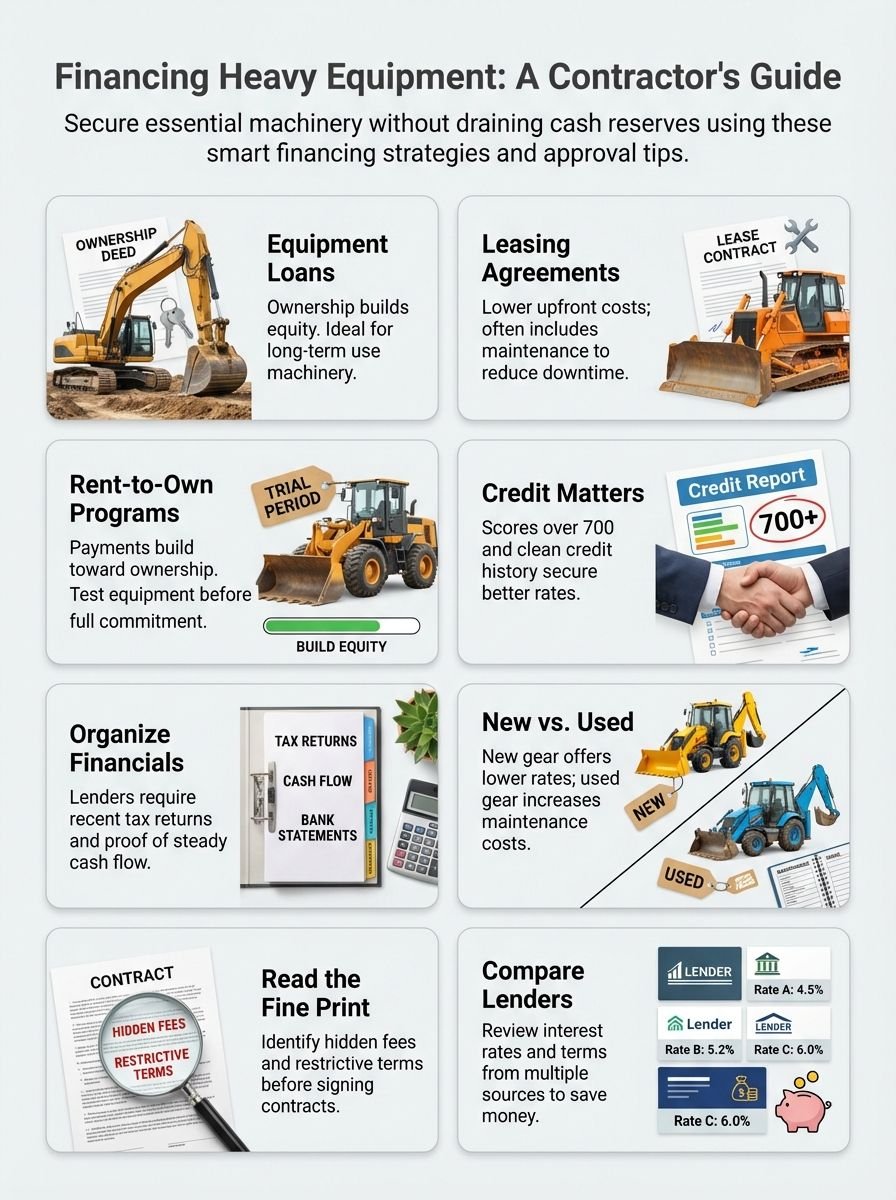
Key Financing Options for Heavy Equipment
Contractors have several ways to pay for big machines without breaking the bank. Each option comes with its own costs, benefits, and risks.
Equipment Loans
Equipment loans help construction companies buy expensive machinery, like excavators or bulldozers, without paying the full price upfront. The equipment itself serves as collateral for the loan, which lowers risk for lenders.
Repayment terms range from 1 to 7 years and often include fixed interest rates. This makes monthly payments predictable and easier on cash flow.
A down payment is usually needed, but once paid off, you fully own the equipment. Ownership builds equity that may help secure future financing. Plus, interest and depreciation make way for potential tax deductions.
These loans work best for gear with a long useful life since it stays productive even after repayment ends.
Leasing Agreements
Leasing allows construction firms to use heavy equipment without buying it. It requires lower upfront costs, which helps businesses conserve cash flow or working capital. Operating leases are short-term agreements where you return the equipment at the end of the lease period.
On the other hand, capital leases let you eventually own the asset after completing payments.
Many leasing agreements include maintenance services. This reduces downtime and eliminates repair expenses for business owners. Leasing is ideal for machinery like trucks or cranes that may become outdated quickly due to advancing technology.
While renting offers flexibility, long-term payments can add up, making it more expensive than purchasing. Some contracts also come with restrictive terms, limiting your options during projects or upgrades.
Rent-to-Own Programs
Rent-to-own programs let businesses use heavy machinery while spreading out the cost. Companies make fixed payments over time, which helps with financial planning. At the end of the term, ownership transfers to them, much like a capital lease.
This option works well for managing high costs or unexpected equipment needs without draining cash reserves.
The equipment acts as collateral during the agreement, lowering risks for lenders. Some programs may require an upfront payment before starting. Payments are predictable and keep cash flow steady.
Rent-to-own is a smart way to get vital construction equipment without paying full price at once, allowing contractors to stay productive on job sites.
Factors That Affect Financing Approval
A good credit score can open doors to equipment financing. Lenders rely heavily on this number to decide if you’re a safe bet for a loan or lease. Scores above 700 often earn better rates and terms, while lower scores face higher costs or rejection.
Keeping your personal and business credit clean is key here. For example, paying bills on time boosts your trustworthiness in the eyes of creditors.
Lenders also review financial records like tax returns and bank statements from the past two to three years. They want proof that cash flow can handle loan payments without straining payroll or other expenses.
Offering collateral like another piece of machinery reduces their risk too. > “Strong paperwork shows lenders you’re serious about repayment.” Equipment resale value matters as well; newer tools hold value longer, giving creditors more security against losses if you default.
Choosing Between New and Used Equipment Financing
New equipment often brings lower interest rates and longer loan terms. Lenders see it as less risky since it holds its value longer. It also comes with the latest technology, boosting productivity and reducing operating costs.
For example, a new crane can last decades with proper care, making it a long-term investment.
Used equipment might seem cheaper upfront but may cost more in the long run. Higher repair and maintenance costs add up quickly. Lenders often limit financing amounts or charge higher rates for older machinery due to depreciation risks.
Consider how much you’ll use the equipment and its lifespan before deciding which option fits your needs best.
Tips for Securing the Best Financing Terms
Getting the best financing terms takes planning and strategy. Follow these steps to improve your chances and save money on heavy equipment financing.
- Keep financial records updated. Lenders want proof your business is stable. Show them recent balance sheets, income statements, and credit reports.
- Build a strong credit history. Pay bills on time and keep debts low to boost your credit score. A good score increases loan approvals.
- Create a solid business plan. Explain how the equipment will help operations and increase revenue. Lenders need assurance their money is safe.
- Compare multiple lenders. Check interest rates, fees, and loan terms from different sources like banks or vendors specializing in construction equipment finance.
- Offer extra collateral if needed. Providing assets beyond the equipment can lead to better loan terms or lower interest rates.
- Prepare all necessary documents early. Have tax returns, proof of income, insurance paperwork, and detailed equipment quotes ready for lenders.
- Match payments with revenue cycles. Align repayments with busy seasons to manage cash flow better during slow periods.
- Build relationships with lenders over time. Trusted partners may offer better deals or advice customized to your needs in future projects.
- Avoid rushing into agreements without reading terms carefully first; hidden fees can hurt profits long-term if ignored upfront!
- Research used versus new options thoroughly beforehand—choosing wisely could reduce total costs while meeting project goals effectively!
Common Mistakes to Avoid in Equipment Financing
Financing equipment can be tricky. Small mistakes may lead to big headaches and extra costs. Avoid these common errors:
- Ignoring total costs. Many focus only on the monthly payment. They forget about hidden fees, maintenance, repairs, and taxes.
- Skipping loan or lease reviews. Some contracts have terms that hurt cash flow long-term. Always review every line carefully before signing.
- Taking on excessive debt. Borrowing too much can damage your credit score and limit future business financing options.
- Overlooking obsolescence risks. Machines lose value over time. Buying the latest model isn’t always smart if it’ll become useless soon.
- Rushing applications without documentation. Incomplete forms delay approvals or get denied entirely.
- Choosing the wrong financing option for needs. Leasing works for short-term projects but is costly for long use equipment like cranes.
- Forgetting market value at the end of use or lease term can affect expected savings versus current costs with commercial construction machines.
- Paying in full upfront by cash drains capital reserves needed for payroll, inventory, or other construction projects later on.
- Selecting fixed interest loans without comparing terms from multiple brokers limits better rates available elsewhere to fund equipment purchases fast.
- Neglecting to renew leases timely leads to penalties while still needing a functioning piece of machinery quickly under new arrangements!
Conclusion
Owning heavy equipment can feel like a big mountain to climb, but financing makes it manageable. With the right plan, you can pay for equipment without hurting your cash flow. Loans, leases, and other options give businesses flexibility while keeping operations efficient.
Think smart about costs and terms to make the best choice for your company’s growth. By planning well, that shiny new crane or loader could be working hard for you in no time!
FAQs
1. How do contractors finance construction equipment?
Contractors use options like business loans, equipment leases, hire purchase agreements, or asset-based lending to pay for heavy machinery. These financing solutions help spread significant costs over time.
2. What is the total cost of ownership for heavy equipment?
The total cost includes more than just the price you pay upfront. It factors in maintenance, insurance, fuel expenses, and potential repairs during the life of the loan or lease.
3. Should I buy or rent my construction equipment?
It depends on your needs and cash flow management strategy. Renting works if you need a piece of equipment short-term; buying makes sense if it will stay productive for many years in your company’s operations.
4. Can I use collateral to get heavy construction financing?
Yes, many lenders require collateral when offering loans for expensive items like cranes or bulldozers. The equipment itself is often used as collateral to secure funding and reduce credit risk.
5. Are there unsecured debt options available for contractors?
Unsecured loans are available but may come with higher interest rates due to increased credit risk for lenders since no assets back these loans.
6. What should I review before signing a loan or lease agreement?
Always check terms like fixed interest rates, repayment timelines, fair market value clauses at lease renewal points, and how payments might affect your cash flow over time in business operations.
