
Buying machinery can feel overwhelming, especially when you don’t have the cash upfront. Did you know equipment financing lets businesses get what they need without a big payment first? In this guide, you’ll explore simple ways to finance tools, machines, or even heavy equipment without draining your wallet.
Ready to learn how to buy machinery without upfront cost?
Key Takeaways
- Equipment financing helps businesses buy machinery without large upfront payments. Options include operating leases, finance leases, and zero-down loans.
- Operating leases are best for short-term use, while finance leases work for ownership over time. Zero-down loans require strong credit but provide immediate ownership.
- Financing offers tax benefits like deductions on interest, depreciation, or lease payments under Section 179. Businesses save money while spreading costs over time.
- Avoid mistakes like ignoring total ownership costs, skipping lease details, or overlooking resale value when choosing a financing option.
- Comparing lenders ensures better rates and terms. Vendors may offer flexible repayment plans to fit seasonal or irregular cash flows during growth or recovery periods.
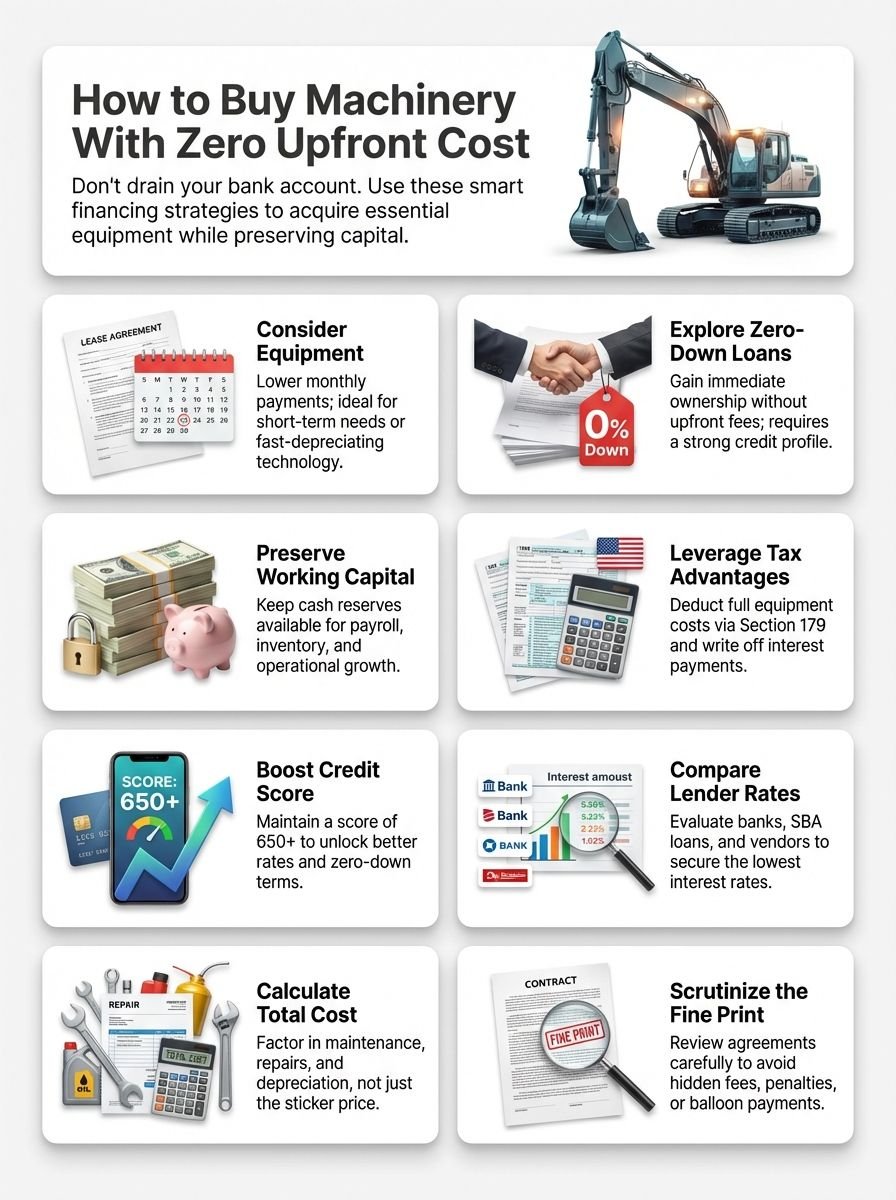
Equipment Financing Options
Buying machinery doesn’t mean emptying your bank account. Smart financing options can help you get the tools your business needs without upfront expenses.
Leasing: Operating Lease vs. Finance Lease
Leasing machinery is a smart way to save cash while staying productive. Two major types of equipment leases exist: operating leases and finance leases. Each serves a different purpose, offering businesses flexibility based on needs.
| Feature | Operating Lease | Finance Lease |
|---|---|---|
| Purpose | Temporary use of equipment | Ownership over time |
| Ownership | No ownership; equipment is returned | Ownership transfers after lease ends |
| Payment Structure | Lower monthly payments | Higher monthly payments but builds equity |
| Term Length | Short-term, typically 1-3 years | Long-term, often matching equipment lifespan |
| Tax Benefits | Payments may be fully deductible | Depreciation and interest may be deductible |
| Balance Sheet Impact | Off-balance-sheet financing, reducing liabilities | Recorded as an asset and liability |
| End-of-Lease Options | Return, renew, or purchase at FMV | Own by paying a nominal fee |
| Best For | Fast-depreciating or short-term equipment | Critical, long-term use machinery |
| Restrictions | May include usage limits (e.g., hours, miles) | Fewer restrictions on equipment use |
| Example | Leasing a CASE CE Wheel Loader for a construction project | Leasing a CASE IH Farmall tractor for long-term farming |
Choosing between the two boils down to what fits your goals. Do you need flexibility, or do you want to commit to ownership? Each path offers its own set of perks!
Equipment Financing Loans: Zero-Down Payment Options
Equipment financing loans can make machinery more affordable without requiring a big chunk of money upfront. Some loans even offer zero-down payment options, especially for businesses with strong credit. Below is a quick breakdown of financing features and how such options can work for you:
| Feature | Details |
|---|---|
| Ownership | You own the equipment immediately. The machinery acts as collateral. |
| Down Payment | Down payments typically range between 10%–20%. Zero-down options are available with solid credit scores. |
| Interest Rates | Fixed rates are common. They make monthly payments predictable. |
| Loan Terms | Terms usually range from 24 to 60 months for traditional loans. SBA 504 loans can go up to 25 years. |
| Tax Deductions | Interest payments are often deductible. The equipment’s depreciation can also reduce taxable income. |
| Credit Requirements | A strong credit score boosts approval chances. Detailed financial records also help. |
| Risks | Missed payments can lead to repossession. Solid planning avoids this problem. |
| Example | A bakery buys a $50,000 oven with zero down. With a 5-year term and 6% interest, monthly payments would be about $966. |
Zero-down financing isn’t just about saving cash upfront. It’s about flexibility. Businesses often prefer this route to keep cash flow steady, especially during growth.
Benefits of Financing Machinery
Financing machinery helps keep more cash in your pocket, letting you manage other costs like payroll or inventory. It can also open doors to financial perks that help businesses grow smarter.
Preserve Cash Flow and Budget Flexibility
Leasing equipment allows businesses to avoid large upfront costs. This keeps more cash available for payroll, marketing, or expanding operations. Options like rent-to-own programs also give companies flexibility to test machinery before purchasing.
Monthly payments for leases or loans are steady and predictable. These fit well into most budgets without straining finances. Operating leases often count as expenses instead of debts, which helps maintain a healthy balance sheet too.
“Smart investments keep your business thriving while protecting your wallet.”
Potential Tax Advantages for Businesses
Buying machinery with financing may reduce taxes. Section 179 allows businesses to deduct the full cost of financed equipment in the year it starts working. This helps lower taxable income and provides upfront savings.
Depreciation on financed equipment also reduces tax liability over time, giving long-term benefits.
Interest paid on an equipment loan is often tax-deductible too. Operating lease payments typically count as business expenses, which can further cut taxes. Upgrading to energy-efficient machinery might qualify for future tax credits or low-interest loans starting in 2025.
Trade-ins can bring extra opportunities for smart tax planning while replacing outdated equipment efficiently.
Tips for Securing Equipment Financing
Get your finances in shape and plan ahead. Shop around like you’re hunting for the best deal on new tires—compare lenders, rates, and terms to fit your business needs.
Improve Credit Score and Financial Stability
Boost your credit score by paying bills on time and reducing debt. Lenders often prefer businesses with scores of 650 or higher. A strong credit report can also unlock zero-down payment options for equipment financing loans.
Maintain updated tax returns and accurate financial records to show financial stability. Offering collateral, such as business assets, can improve loan terms too. New companies may find leasing easier than securing a loan due to limited credit history.
Always check for errors in credit reports and fix them promptly to better your chances of approval.
Compare Lenders and Terms for Best Rates
Apply to several finance companies or banks. Each lender offers different rates, terms, and conditions for equipment financing. Traditional bank loans might have lower interest rates but stricter credit score requirements.
SBA loans work well for large purchases if your business is established.
Vendor financing can be faster but may charge higher rates compared to third-party lenders. Review total costs like interest, fees, and residual values before choosing a financing method.
Some lenders offer plans for used equipment, which reduces expenses. Seasonal or balloon payment options could help with cash flow during slow periods in your operations.
Mistakes to Avoid When Financing Machinery
Financing machinery can save your business money. But a few common mistakes can lead to wasted funds or poor decisions.
- Ignoring the total cost of ownership
Only focusing on the price of the equipment is risky. Maintenance, repairs, and depreciation add up fast and hurt your ROI. Always calculate these expenses before choosing a financing option. - Skipping lease agreement details
Leases often include hidden fees or strict terms. Not reviewing them carefully might bring unwanted surprises like penalties for overuse or high-end costs later. Read every term with care before signing. - Forgetting about resale value
Some equipment loses value faster than others. Failing to consider its trade-in or resale worth may lower financial benefits in the long run. Pick machinery that holds value better over time. - Choosing the wrong financing method
Loans and leases serve different purposes but don’t always fit every cash flow plan. Picking the wrong one could clash with your budget goals, hurting future business growth. - Overlooking lender options
Settling for higher interest rates hurts businesses with tight budgets. Comparing lenders helps secure more favorable terms and keeps borrowing affordable. - Missing tax benefit opportunities
Many financing strategies offer tax advantages that boost savings, yet some skip consulting experts for advice here! Speak with a tax professional to maximize these potential perks. - Forgetting end-of-term plans
Some loans or leases have balloon payments at the end, which can drain cash unexpectedly if unplanned for! Always check buyout clauses to plan correctly before finalizing deals!
Reviving a Struggling Business Through Equipment Financing
Struggling businesses can use equipment finance to get the tools they need without a large upfront cost. Many companies, like ASCO Equipment, offer flexible financing terms to fit cash flow needs.
Seasonal or balloon payments help manage irregular income periods, giving businesses breathing room during recovery. Deferred payment programs provide immediate access to machinery, letting operations continue without waiting for funds.
Upgrading outdated machinery through trade-in programs reduces costs and minimizes downtime, boosting productivity right away.
New technology helps improve efficiency fast. Better tools mean faster processes and fewer breakdowns, which can save money in the long run. Heavy equipment financing also frees up working capital for other business expenses like payroll or marketing efforts.
Businesses that stay competitive often recover quicker because advanced tools allow them to meet demand effectively. With vendors willing to create manageable repayment plans and offer lower interest rates on loans or leases, struggling firms have a lifeline toward stability again with minimal financial strain upfront.
Conclusion
Buying machinery without paying upfront is possible with smart financing options. Leasing or loans can help you get the tools your business needs without draining cash flow. It’s a way to grow while managing costs better.
Focus on comparing offers, keeping strong credit, and planning repayments well. With the right steps, upgrading equipment becomes an achievable goal for any business!
For more insights on how equipment financing can be a game-changer for your business, visit our detailed guide here.
FAQs
1. What is equipment financing, and how does it work?
Equipment financing allows businesses to buy machinery or equipment without paying the full cost upfront. Instead, you repay the loan or lease in smaller amounts over time, often with fixed interest rates.
2. Can I finance both new and used equipment?
Yes, many financial institutions provide funding options for both new and used machinery. This helps businesses acquire essential equipment based on their specific needs.
3. What are the advantages of leasing instead of buying equipment outright?
Leasing can lower upfront costs and turn a large payment into manageable operating expenses. It also lets you upgrade outdated machinery when needed without committing to long-term ownership.
4. Do I need collateral to finance heavy machinery?
Some lenders may require collateral depending on your business credit history or the type of equipment being financed. However, certain programs focus only on the lifespan and value of the machinery itself.
5. How do interest rates impact my repayment terms for financed equipment?
Interest rates determine how much extra you’ll pay over time for using borrowed money to purchase necessary machines or tools. Fixed interest rates make monthly payments predictable, helping manage cash flow better.
6. Can financing help with replacing old manufacturing machines?
Absolutely! Financing strategies allow businesses to replace outdated machinery while conserving capital for other operations like growth initiatives or future financing needs.
