Finding the right equipment for your business can be tough, especially with high upfront costs. Did you know equipment lease financing lets you use the tools you need without buying them outright? This article explains how does equipment lease financing work and why it might be a smart choice.
Keep reading to learn more!
Key Takeaways
- Equipment leasing allows businesses to use tools without buying them upfront. Lease terms usually last 6 months to 7 years, with payments often lower than loans.
- End-of-lease options include returning the equipment, buying it, or extending the lease. Leasing keeps cash flow steady and avoids big initial costs.
- Credit history, financial records, and a DSCR of at least 1.25 can improve chances of qualifying for financing. New businesses may rely on personal credit scores above 600.
- Operating leases are short-term rentals with lessor-managed maintenance; capital leases offer long-term ownership with possible balloon payments at the end.
- Lease payments might be tax-deductible as expenses for operating leases or depreciation benefits in capital leases if structured properly under IRS rules.
What is Equipment Lease Financing?
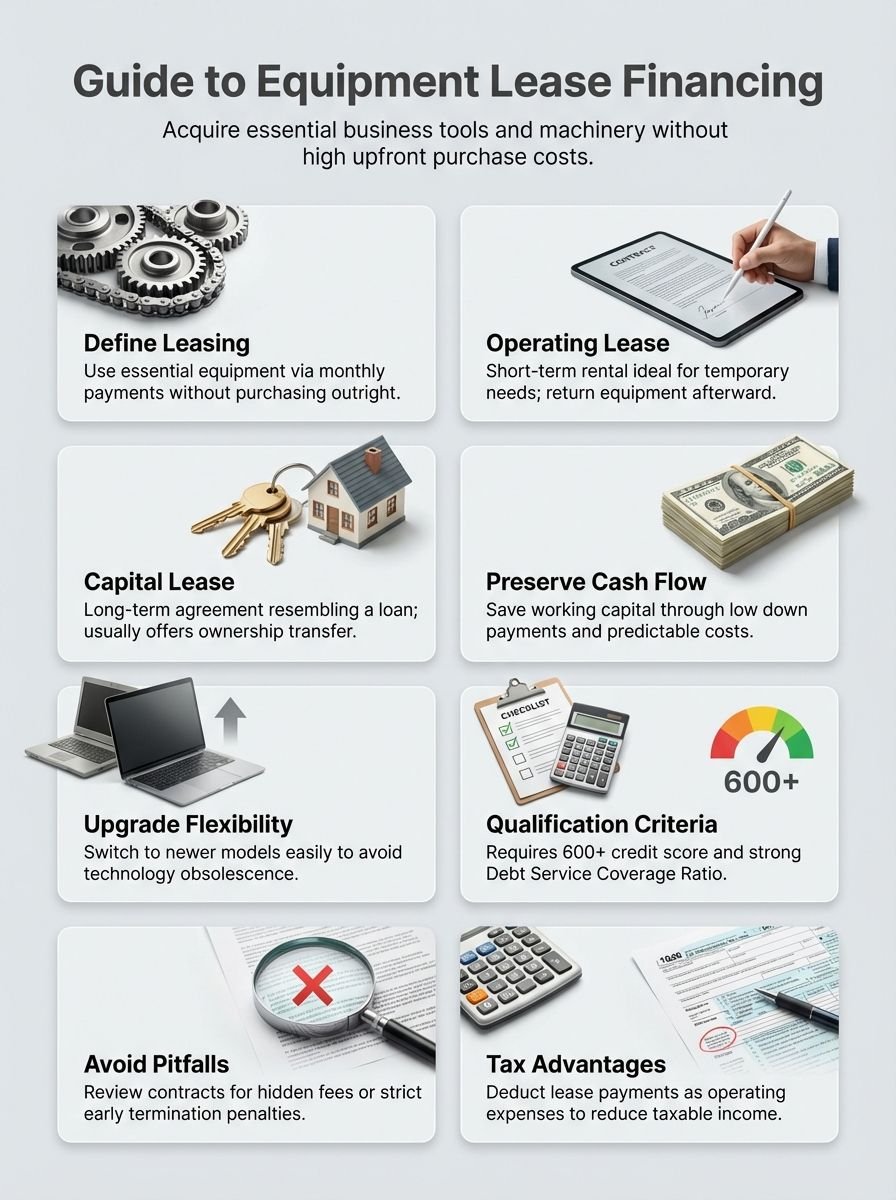
Equipment lease financing lets businesses use needed equipment without buying it outright. The company makes monthly payments to the lessor, who owns the equipment during the lease term.
These leases usually last 6 months to 7 years, with most ranging between 2 and 5 years.
Lease payments are often lower than loan installments and may require little or no down payment. “Leasing allows businesses to stay up-to-date without draining cash flow.” At the end of the lease, companies can buy the equipment, extend the agreement or return it if it’s no longer needed.
What is an Equipment Finance Agreement?
An Equipment Finance Agreement (EFA) is a loan used to buy business equipment. The equipment acts as collateral, protecting the lender if payments stop. Most EFAs require a down payment of 10–20% of the equipment’s price.
For example, if a piece of construction machinery costs $50,000, you may need to pay $5,000-$10,000 upfront. Loan terms can last from months to up to ten years based on what you’re getting and your financial needs.
Once the final payment is made under an EFA, your business owns the equipment outright. This means no strings attached moving forward! If payments are missed though, lenders have full rights to take back what was financed—this might be trucks or even farming tools you planned on using long-term.
To approve these agreements faster for businesses that want new or used assets like vehicles or software systems in place quickly; many creditors often request specific details such as photos or serial numbers before sealing any contract deal officially!
Key Types of Equipment Leases
Equipment leases come in different flavors, each with unique terms and perks—read on to find the right fit for your business!
Operating Lease
An operating lease lets businesses rent equipment for a short time, usually 6 months to 7 years. It is perfect for companies that need temporary access to tools or machines. The lessee does not plan to purchase the equipment at the end of the lease term.
The lessor often handles maintenance and repairs, saving extra costs for the business. Once the lease ends, businesses return the equipment instead of keeping it. Operating leases also help with accounting since they are not listed as liabilities on balance sheets.
This can improve financial ratios and keep taxes lower.
Capital Lease
A capital lease feels more like a loan. The business leases the equipment but plans to own it long-term. At the end of the lease, you may buy the equipment for a small fee, like $1.
Payments made during the term are counted as liabilities on your balance sheet. The leased gear also appears as an asset.
Your business handles insurance and taxes while using the equipment. Sometimes, there’s a big balloon payment at the end if you want full ownership. This type of leasing works well for businesses that need critical tools or machines for many years without buying upfront.
Benefits of Equipment Lease Financing
Leasing helps businesses save cash, stay flexible, and access the tools they need to grow—read on to discover why it matters.
Preserving Cash Flow and Capital
Saving money is key for any business. Leasing helps by requiring little to no down payment. This means you keep cash available for other needs, like payroll or marketing. Monthly lease payments are usually lower than loan payments too, which improves cash flow.
Fixed payment amounts make budgeting simple and predictable.
Instead of spending large sums upfront, leasing allows businesses to use equipment without the big cost. You avoid tying up money in tools that lose value over time; this keeps funds free for growth or emergencies.
For example, a construction company can lease machinery rather than buy it outright, using their savings to bid on more projects instead.
Flexible End-of-Lease Options
Lease agreements often offer several end-of-lease options. You may have the choice to purchase the equipment at a fair market value or a pre-agreed bargain price. Some businesses decide to extend their lease for continued use without high upfront costs.
Another option is simply returning the equipment if it no longer fits your business needs.
Certain leases allow you to upgrade your equipment during or at the end of your lease term without penalties. This flexibility can help keep up with technology or replace outdated machinery.
Master leases also simplify managing multiple items under one contract, saving time and reducing hassle for growing businesses with changing demands.
How to Qualify for Equipment Lease Financing
Good credit, stable finances, and steady revenue can boost your chances—read on to learn how!
Credit History and Business Financials
Lenders check both personal and business credit histories. They do this to measure risk. A good credit score, usually 600 to 660 or higher, boosts your chances of approval. For new businesses with little history, personal credit becomes extra important.
Financial records matter too. Lenders often ask for tax returns, bank statements, and revenue reports. Businesses may need at least two years of operation and $100,000 in yearly income to qualify.
These details help show stability and the ability to make payments on time.
Debt Service Coverage Ratio
A business must show it can handle loan or lease payments. The debt service coverage ratio (DSCR) helps lenders check this ability. A ratio of at least 1.25 is often required to qualify for equipment leasing or financing.
This means the company earns $1.25 for every dollar spent on debt payments.
For example, a transportation company expecting $25,000 in extra monthly revenue needs lower monthly repayments than that amount to meet DSCR requirements. Lenders compare income from using the equipment to these costs.
This keeps finances stable and avoids overloading businesses with debt they cannot manage easily.
Common Pitfalls to Avoid in Equipment Leasing
Watch out for sneaky fees, tricky terms, and deals that seem too good to be true—know the risks before signing on the dotted line!
Hidden Fees and Vague Lease Terms
Hidden fees can add up quickly in lease agreements. Some leases include costs like security deposits, interim rent, late payment charges, and even return fees. Taxes may also show up as a separate line item, especially with capital leases.
Early termination or prepayment often triggers hefty penalties too.
Lease terms can sometimes be unclear or confusing. End-of-lease options might have strict rules or hidden deadlines buried in the fine print. Missing these details might cost you extra money or limit your equipment choices later on.
Stay sharp and review every clause before signing anything!
Inflexible Upgrade Options
Lease terms that lock you in can hurt your business. Equipment like computers or vehicles quickly becomes outdated. If your lease doesn’t allow upgrades, you may end up stuck with obsolete tools.
Some contracts don’t let businesses return equipment early or switch models without a penalty. These rigid agreements can pile on unexpected costs, especially for industries needing the latest tech to stay competitive.
Equipment Leasing vs. Equipment Financing: Key Differences
Leasing and financing serve different business needs, especially when acquiring equipment. Choosing between them depends on your goals, financial situation, and how long you need the equipment.
| Criteria | Equipment Leasing | Equipment Financing |
|---|---|---|
| Ownership | The lessor (leasing company) retains ownership during the lease term. You return the equipment or buy it at the end. | Your business owns the equipment as payments are completed. Ownership starts after making the final payment. |
| Payment Structure | Typically offers lower monthly payments. No or minimal upfront costs. | Higher monthly payments. Often requires 10–20% as a down payment. |
| Term Length | Shorter terms, usually 24–60 months. Ideal for equipment that could become obsolete quickly. | Longer terms, up to 10 years. Suitable for equipment with a long usable life. |
| Best Use Case | Works well for businesses needing flexibility or equipment requiring frequent upgrades. | Fits businesses needing long-term solutions and willing to invest in asset ownership. |
| Flexibility | Allows easy upgrades. You can switch to newer models at the end of the lease. | No upgrade options without additional financing. Equipment remains fixed until sold or replaced. |
| Tax Benefits | Generally, lease payments can be deducted as operating expenses. | Depreciation and interest payments may be tax-deductible. |
| End-of-Term Choices | Return the equipment, renew the lease, or purchase it at a predetermined price. | No end-of-term decision. Once paid off, the equipment is yours. |
| Funding Speed | Typically faster approval. Funding may take days instead of weeks. | Longer approval process. Higher paperwork requirements due to collateral checks. |
Each option comes with strengths and limitations. Matching them to your business needs is key.
Where to Find Equipment Lease Financing
Finding the right financing provider takes effort, but it’s worth it. Many businesses explore different sources to get the equipment they need quickly.
Banks and Financial Institutions
Banks and credit unions offer competitive interest rates for equipment loans. These financial institutions often require strict qualifications, such as a strong credit history or solid business financials.
For example, banks like Bank of America or Citi provide various financing options to help businesses acquire the equipment they need.
Some banks specialize in leasing pieces of equipment through subsidiaries. First American Equipment Finance, part of City National Bank, focuses on customized solutions for businesses needing equipment financing.
While the process may feel rigid at times, it offers stability and lower risk with clear lease terms throughout the lease period.
Equipment Dealers and Independent Leasing Companies
Equipment dealers often provide leasing options through their subsidiaries. This allows businesses to lease the equipment directly from the vendor. These offers sometimes include bundled services like maintenance or extended warranties, making them convenient but less flexible.
Dealers tend to focus on specific types of equipment they sell.
Independent leasing companies operate differently. They are not tied to any single vendor and offer more adaptable terms. Businesses can compare quotes easily for better deals here.
Some independent firms work alongside brokers, who connect you with lenders or manufacturers but may charge fees for their service. APRs in this space can range widely, from 14% up to 99%.
For example, platforms like OnDeck or iBusiness Funding provide term loans, giving alternative solutions depending on your needs.
Tax Advantages of Equipment Lease Financing
Lease payments can qualify as tax-deductible expenses. This is possible if your lease meets IRS guidelines for a true lease, not a sales contract. For operating leases, payments are often treated as rental expenses.
These don’t add liabilities to the balance sheet, keeping your business books clean.
A capital lease might offer depreciation benefits instead. With these leases, you may deduct equipment wear and tear over time. If structured properly, leasing lowers taxable income while letting businesses use much-needed equipment without upfront costs.
Conclusion
Equipment lease financing keeps businesses moving without draining their cash. It offers flexibility, lower upfront costs, and options to upgrade or buy equipment later. By understanding the terms and picking the right type of lease, your business can stay up-to-date while managing expenses smartly.
Choose wisely, avoid hidden fees, and keep growing!
To learn more about the specifics of an Equipment Finance Agreement, please visit our detailed guide here.
FAQs
1. What is equipment lease financing?
Equipment lease financing allows businesses to use necessary equipment without buying it outright. It often involves signing a lease agreement, where the business pays for the right to use the equipment over time.
2. How does leasing equipment work?
Leasing lets you rent or borrow a piece of equipment for your business needs. You make regular payments during the leasing term and may have the option to buy the equipment at the end of the contract.
3. What are some pros and cons of leasing instead of buying?
Leasing offers lower upfront costs and access to up-to-date equipment, but you might pay more over time than purchasing outright. Plus, if you stop paying, you could lose access to what you’re using.
4. Can I claim tax benefits with an equipment lease?
Yes, many leases allow businesses to deduct payments as operating expenses on their taxes; however, this depends on your specific type of lease and location in places like the United States.
5. Does my credit history matter when applying for an equipment loan or lease?
Yes, lenders check credit risk before approving loans or leases. A strong credit score can improve terms while weaker credit might require collateral or higher interest rates.
6. What happens if I no longer need leased equipment during my contract period?
Depending on your agreement’s terms, you may be able to extend or terminate early by paying fees; however, ending early could result in penalties depending on how much remains unpaid under your current plan!
