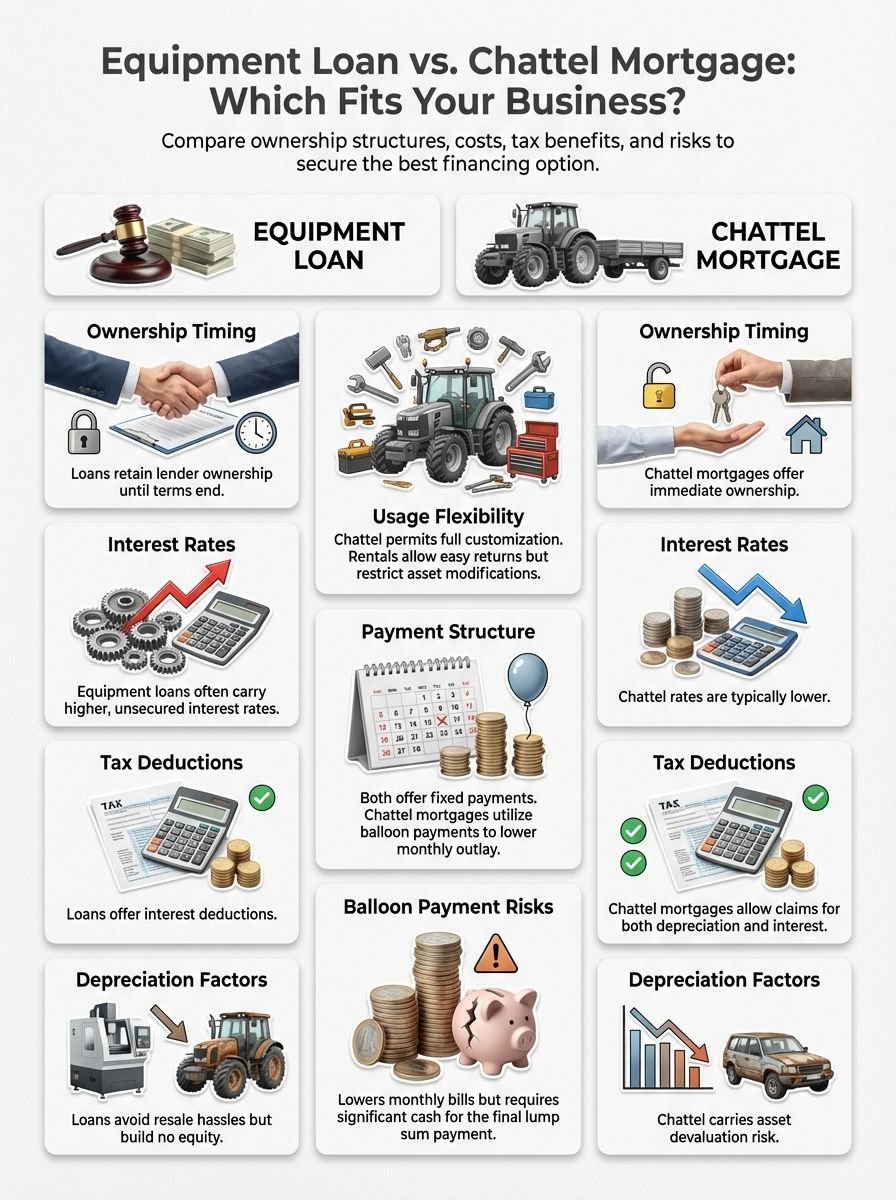
Key Differences Between Equipment Loans and Chattel Mortgages
Equipment loans let you use the asset while paying for it, but with a chattel mortgage, you own the item from day one—want to know which fits your needs? Keep reading!
Ownership structure and payment terms
A chattel mortgage gives your business ownership of the asset once the loan is fully paid. The item, like a vehicle or equipment, will appear on your balance sheet as an asset, while the loan shows up as a liability.
Monthly repayments are fixed, and you can include a balloon payment at the end to reduce regular costs.
In contrast, during an equipment rental term, the lender holds ownership rights. Your business only makes use of it by paying fixed monthly amounts over time. At the end of this lease period, you may buy it for market value or return it altogether.
This structure offers flexibility but no direct ownership until further actions are taken.
With chattel mortgages, control comes sooner; with rentals, flexibility remains king.
Flexibility in use and asset control
Chattel mortgages allow your business to own the asset right away. You can use it however you want for business purposes, while managing cash flow with flexible payment options. Payments can even match seasonal income changes, making it easier during slow months.
Equipment rental offers less control but more freedom from risks. Outdated IT equipment or laptops? You simply return them at the end of the lease term without worrying about resale value.
Servicing and maintenance are often included too, saving time and reducing hassle.
Cost Comparison: Equipment Loan vs. Chattel Mortgage
Comparing costs means looking at interest rates, payment terms, and the final price tag—read on to find out what fits your budget best.
Interest rates and repayment schedules
Interest rates and repayment schedules play a critical role in deciding between equipment loans and chattel mortgages. Costs vary, and understanding the breakdown can help you make smarter financial decisions.
| Aspect | Equipment Loan | Chattel Mortgage |
|---|---|---|
| Interest Rates | Typically higher. This is because equipment loans are often unsecured, increasing risk for lenders. | Lower on average. Securing the loan with the asset reduces risk for the lender. |
| Repayment Terms | Flexible, depending on the lender. Terms may range from 12 to 60 months based on agreement. | Fixed terms, generally ranging from 1 to 5 years. Repayments can align with business cash flow. |
| Monthly Payments | Fixed amounts. These payments include interest, making budgeting predictable. | Fixed amounts but can be reduced if a deposit or trade-in is provided. Balloon payments can further lower monthly costs. |
| Balloon Payments | Not applicable. Equipment loans typically don’t include balloon options. | Available. Balloon payments lower monthly costs but result in higher total interest over the loan term. |
| GST Treatment | Not directly relevant to the loan. Repayments don’t include GST. | No GST on repayments. This can make it more attractive for businesses managing cash flow. |
Decisions rest on these critical variables. Understand what works best for your cash flow.
Balloon payments and their financial impact
A balloon payment is a large sum due at the end of a loan term. For chattel mortgages, this can lower regular monthly payments but requires businesses to plan for the final lump sum.
For example, on a $60,000 equipment finance deal with a 30% balloon over five years, you’ll owe $18,000 when the term ends.
Failing to manage cash flow can create trouble paying off or refinancing this amount. If your asset’s value drops below the balloon amount (depreciation risk), selling it won’t cover the cost.
Ensure this big payment fits your budget and doesn’t strain finances like unpaid bills or payroll delays.
Balloon payments are like juggling—they require focus and timing; drop one ball, and things unravel.
Tax Implications for Businesses
Tax rules can save you money on loans or asset purchases, so check what your business may claim.
Tax deductions for equipment loans
Interest paid on an equipment loan is often tax-deductible if the asset is used for business purposes. For example, a business owner using a loan to purchase machinery may claim the interest as a deductible expense on their tax return.
Loan repayments are not entirely deductible. Only the interest portion qualifies. If your company also pays GST and uses the asset for business, you might be able to claim back GST through input tax credits in your next activity statement.
This can reduce total costs. Maintain precise records of all payments and usage to prevent complications during filing season.
Depreciation benefits with chattel mortgages
Chattel mortgages come with big tax perks. Businesses can claim depreciation on the asset’s value, as long as it’s for business use. For example, in 2016/17, the depreciation cost limit was $57,581.
Larger deductions happen early on but drop over time as the asset loses value.
Both depreciation and interest are often tax-deductible. If your company is registered for GST, you may also be able to claim back GST from the purchase price in the next Business Activity Statement (BAS).
The asset shows up on your balance sheet both as an owned item and a financial liability. This setup allows businesses to enjoy these deductions while using high-value equipment or vehicles daily.
Pros and Cons of Equipment Loans
Equipment loans can help your business get tools quickly, but they might cost more in the long run—keep reading to weigh the trade-offs!
Advantages of lower upfront costs
Lower upfront costs help businesses keep more cash on hand. Leasing equipment requires no initial deposit, making it easier for companies with tight budgets. For example, financing only the GST-exclusive price of an asset lowers the amount to be paid, like $50,000 instead of $55,000 for a car.
Some agreements also include maintenance or servicing fees in the payment plan. This reduces unexpected expenses early on and keeps operations smooth. Lease terms as short as 12 months allow quick upgrades without hefty payments upfront, keeping finances flexible for growing needs.
Limitations in ownership and long-term expenses
The lender keeps ownership of the asset during the loan or lease term. This means businesses can’t modify the equipment as they wish without permission. Restrictions on usage can make it tricky to adapt the asset for specific needs.
Repayment costs often include depreciation, making monthly payments higher over time. At the end of a lease, businesses may face extra expenses if they want to buy the asset outright.
Rapid depreciation adds no equity benefit, leaving companies with more liabilities and fewer long-term gains. Long-term leases typically cost more than purchasing upfront, draining resources over years instead of building value.
Pros and Cons of Chattel Mortgages
Chattel mortgages let you own the asset upfront, but they come with risks tied to its value dropping over time—curious? Read on!
Benefits of immediate asset ownership
Owning an asset outright gives your business full control. You can modify, upgrade, or sell the equipment whenever it suits your needs. There are no restrictions tied to usage like in a rental agreement.
The asset shows up as both an asset and liability on your balance sheet. This enhances equity and strengthens financial standing. Fixed repayments make budgeting easier too, and there’s no GST on those payments or the balloon amount at the end of the term.
Risks tied to depreciation and asset value
Assets lose value over time. This is called depreciation. Some equipment may depreciate faster than expected, especially if it’s outdated or heavily used. If the asset’s value drops below what you owe on a chattel mortgage, you could face financial trouble.
A balloon payment adds risk too. At the loan’s end, the asset might not be worth enough to cover this final payment. Businesses also bear all upkeep costs, like repairs and maintenance.
If the equipment becomes less useful or breaks down often, these expenses can pile up fast and hurt profits.
Understanding Balloon Payments in Financing Options
Balloon payments are large sums due at the end of loans. These lower monthly costs during the term but can bring a hefty final payment. For example, on a $50,000 chattel mortgage with a 20% balloon, you owe $10,000 at the end.
In chattel mortgages, the balloon size depends on asset price and loan length. A higher balloon reduces monthly repayments but increases interest over time. At the term’s end, businesses either refinance or pay it in full to own the equipment outright.
This option isn’t subject to GST under such structures.
Conclusion: Choosing the Right Option for Your Business
Picking between an equipment loan and a chattel mortgage boils down to your business needs. If you prefer lower upfront costs and flexibility, loans might fit better. Chattel mortgages work well if owning the asset outright is key for you.
Think about cash flow, tax benefits, and how much control you want over the equipment. The right choice helps your business grow without breaking the bank!
To further understand the effects of balloon payments on your financing plan, download our free Excel loan amortization schedule with a balloon payment feature today.
FAQs
1. What is the difference between an equipment loan and a chattel mortgage?
An equipment loan helps you borrow funds to purchase business equipment, while a chattel mortgage secures the loan using the asset itself as collateral. With a chattel mortgage, ownership of the asset passes to you immediately.
2. Are there tax benefits with a chattel mortgage?
Yes, you can claim interest paid on a chattel mortgage as tax deductible. You may also benefit from depreciation and Goods and Services Tax (GST) credits if applicable in your region.
3. How does a balloon payment affect my financing choice?
A balloon payment lowers your monthly repayments but leaves you with a larger amount due at the end of your agreement. This option works well if you’re looking to reduce initial costs for car or equipment finance.
4. Should I choose leasing over purchasing for my business equipment?
Leasing lets you use the equipment without owning it, which could lower upfront costs like down payments. However, rental payments don’t build equity in the asset compared to buying through loans or hire purchases.
5. Can I finance different types of business assets with these options?
Yes, both an equipment loan and a chattel mortgage work for various types of business assets like vehicles, modular homes, or other essential tools needed for operations.
6. How do interest rates impact these financing choices?
Interest rates directly affect how much you’ll pay over time on either type of financing solution. Chattel mortgages often offer lower interest rates than conventional loans depending on factors like liability terms and annual percentage rate agreements tied to personal property usage levels within businesses’ needs assessments!
